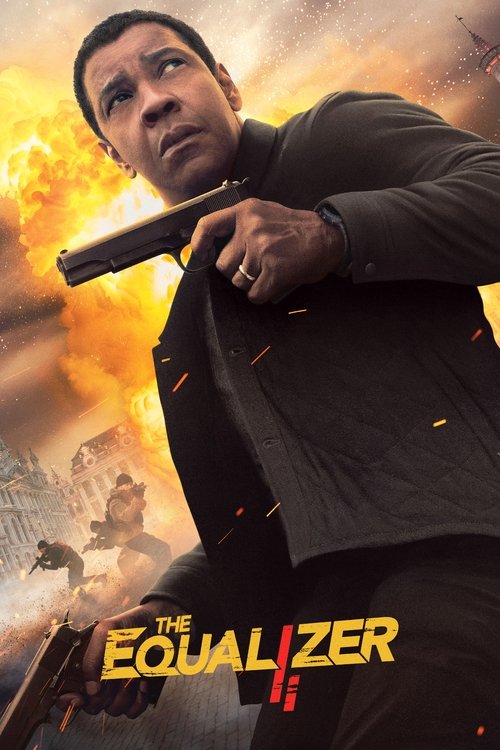
The Equalizer 2
2018 · Directed by Antoine Fuqua
Woke Score
CriticCritic Score
Audience
Ultra Based
Critics rated this 35 points above its woke score. Among Ultra Based films, this critic score ranks #1155 of 1469.
Representation Casting
Score: 35/100
Denzel Washington leads the film as a Black protagonist in a high-profile action role, providing representation in a traditionally white-dominated genre. However, the casting exists within a conventional action framework without explicit commentary on representation itself.
LGBTQ+ Themes
Score: 0/100
No LGBTQ+ themes, characters, or representation are present in the film.
Feminist Agenda
Score: 15/100
The film includes motivations around protecting vulnerable women, consistent with action thriller conventions, but lacks any sustained feminist ideology or gender-consciousness critique.
Racial Consciousness
Score: 12/100
While the protagonist is Black, the film does not explicitly engage with racial themes or commentary. His race is not addressed as a narrative element or source of tension.
Climate Crusade
Score: 0/100
No environmental themes or climate-related content is present in the film.
Eat the Rich
Score: 10/100
The narrative involves corrupt authority figures and exploitation, but without any systematic critique of capitalism or explicit anti-capitalist messaging.
Body Positivity
Score: 0/100
No body positivity themes or representation of diverse body types are present in the film.
Neurodivergence
Score: 0/100
No neurodivergent characters or themes are present in the film.
Revisionist History
Score: 0/100
The film is a contemporary action thriller with no historical elements to revise or reinterpret.
Lecture Energy
Score: 5/100
The film is primarily focused on action and plot momentum rather than moral exposition or preachy messaging, though basic action-film morality is implicit in the narrative structure.


Synopsis
Robert McCall, who serves an unflinching justice for the exploited and oppressed, embarks on a relentless, globe-trotting quest for vengeance when his former partner is murdered.
Consciousness Assessment
The Equalizer 2 presents itself as a straightforward revenge thriller, the kind of film that exists to deliver action sequences and cathartic violence rather than to interrogate the systems it depicts. Denzel Washington anchors the narrative as a Black protagonist who operates outside conventional authority structures, dispensing justice to the exploited. The film's moral framework centers on individual heroism and personal vengeance rather than systemic critique or social commentary. While the premise involves protecting vulnerable populations, the execution remains fundamentally a delivery mechanism for spectacle rather than an examination of the conditions that create such vulnerability.
The film's cultural awareness extends primarily to the casting of Washington in a lead role, which by 2018 was unremarkable in action cinema. The narrative contains no meaningful engagement with contemporary progressive sensibilities. There is no interrogation of class structures beyond the basic villain-as-corrupt-authority trope, no queer representation, no disability consciousness, and no sustained moral lecturing. The film's violence is presented as justified and cathartic, not as something requiring critical examination. The supporting cast exists largely to facilitate the plot rather than to challenge the protagonist's worldview or introduce competing perspectives.
This is a film made in the service of entertainment, and it makes no apologies for that orientation. Whether one views this as a strength or a limitation depends largely on one's appetite for unironic action cinema, but from the perspective of measuring contemporary cultural consciousness, The Equalizer 2 remains resolutely indifferent to the progressive frameworks that have come to define prestige filmmaking in the 2020s. It is a relic of an earlier era of action filmmaking, one in which the hero simply acts and the audience accepts the moral clarity of his actions without question.
Analysis generated by our Consciousness Algorithm
Critic Reviews
“Fuqua is a lyrical director who directed Washington to an Oscar in “Training Day.” He’s not afraid to spend time in the still darkness with McCall and likes to focus on small moody elements, like rain hitting the gutters. But he can also deliver red meat: A sequence in which McCall fights off a passenger in the back seat of his car is a mini-masterpiece of taut, sinewy direction.”
“In The Equalizer 2 the great Denzel Washington hits a variety of notes reprising his role as McCall, in a brilliant performance that often rises above the pulpy, blood-soaked material. ”
““The Equalizer” should be locked in a room with “The Terminator.” Then this lousy series would finally be killed off.”
Consciousness Markers
Denzel Washington leads the film as a Black protagonist in a high-profile action role, providing representation in a traditionally white-dominated genre. However, the casting exists within a conventional action framework without explicit commentary on representation itself.
No LGBTQ+ themes, characters, or representation are present in the film.
The film includes motivations around protecting vulnerable women, consistent with action thriller conventions, but lacks any sustained feminist ideology or gender-consciousness critique.
While the protagonist is Black, the film does not explicitly engage with racial themes or commentary. His race is not addressed as a narrative element or source of tension.
No environmental themes or climate-related content is present in the film.
The narrative involves corrupt authority figures and exploitation, but without any systematic critique of capitalism or explicit anti-capitalist messaging.
No body positivity themes or representation of diverse body types are present in the film.
No neurodivergent characters or themes are present in the film.
The film is a contemporary action thriller with no historical elements to revise or reinterpret.
The film is primarily focused on action and plot momentum rather than moral exposition or preachy messaging, though basic action-film morality is implicit in the narrative structure.