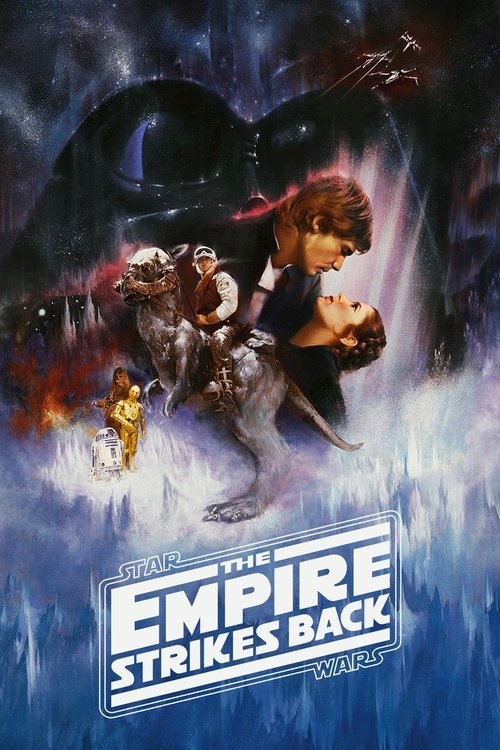
The Empire Strikes Back
1980 · Directed by Irvin Kershner
Woke Score
CriticCritic Score
Ultra Based
Critics rated this 86 points above its woke score. Among Ultra Based films, this critic score ranks #138 of 1469.
Representation Casting
Score: 15/100
Princess Leia is a capable female character, though her role diminishes as the film progresses. Billy Dee Williams provides minimal racial diversity in an otherwise homogeneous cast.
LGBTQ+ Themes
Score: 0/100
No LGBTQ+ themes, representation, or subtext present. The film operates entirely within heteronormative romantic frameworks.
Feminist Agenda
Score: 12/100
Leia demonstrates leadership and courage, but is ultimately sidelined by romantic plotlines and male-centered action sequences. Her agency diminishes significantly in the second half.
Racial Consciousness
Score: 5/100
Billy Dee Williams provides superficial representation without meaningful character depth or cultural consciousness. No engagement with racial themes whatsoever.
Climate Crusade
Score: 0/100
No climate messaging or environmental consciousness present in any form.
Eat the Rich
Score: 2/100
The Empire functions as a generic villain organization. No meaningful critique of economic systems or class structures beyond simple good-versus-evil framing.
Body Positivity
Score: 0/100
No engagement with body diversity or body positivity themes. All characters conform to conventional Hollywood physical standards.
Neurodivergence
Score: 0/100
No representation of neurodivergent characters or conditions. No acknowledgment of disability or cognitive diversity.
Revisionist History
Score: 0/100
Science fiction narrative with no historical commentary or revisionist engagement with actual history.
Lecture Energy
Score: 2/100
Minimal preachy messaging. The film prioritizes plot and spectacle over delivering explicit moral or social lessons to the audience.


Synopsis
The epic saga continues as Luke Skywalker, in hopes of defeating the evil Galactic Empire, learns the ways of the Jedi from aging master Yoda. But Darth Vader is more determined than ever to capture Luke. Meanwhile, rebel leader Princess Leia, cocky Han Solo, Chewbacca, and droids C-3PO and R2-D2 are thrown into various stages of capture, betrayal and despair.
Consciousness Assessment
The Empire Strikes Back stands as a monument to 1980 blockbuster filmmaking, which is precisely the problem when assessing it through the lens of modern social consciousness. The film offers Princess Leia as a female character of agency and competence, though her presence diminishes as the narrative progresses, culminating in a romance subplot that, while charming for its era, subordinates her authority to romantic entanglement. Billy Dee Williams appears as Lando Calrissian, a character of wit and sophistication, yet his inclusion feels more incidental than intentional, a single Black face in a predominantly white ensemble cast without meaningful character development that distinguishes him as anything other than a convenient plot device. The film contains no discernible engagement with contemporary progressive sensibilities. There is no climate anxiety, no critique of imperial capitalism beyond the obvious villain label applied to the Empire, no neurodivergent representation, no LGBTQ+ subtext, and certainly no revisionist historical commentary. One encounters instead a straightforward adventure narrative concerned with nothing beyond spectacle and narrative momentum. The film's cultural context matters here. In 1980, these markers had not yet crystallized into the constellation of expectations that would define progressive filmmaking by the 2020s. The Empire Strikes Back is not failing to meet standards that did not yet exist. It is simply a product of its moment, earnest in its entertainment and innocent of the social consciousness that would later become either a badge of honor or a target of scorn depending on one's perspective. Scoring such a film requires acknowledging that the very concept of "wokeness" as a cultural phenomenon belongs to a different era entirely.
Analysis generated by our Consciousness Algorithm
Critic Reviews
“This isn't just nostalgia talking; TheEmpireStrikesBackearns a perfect score. It took the thrilling adventure of A New Hope and deepened it exponentially with richer characters, a more complex plot, stunning practical effects that still hold up, and an emotional gut-punch of an ending.”
“This isn't just nostalgia talking; TheEmpireStrikesBackearns a perfect score. It took the thrilling adventure of A New Hope and deepened it exponentially with richer characters, a more complex plot, stunning practical effects that still hold up, and an emotional gut-punch of an ending.”
“EmpireStrikesBackmaintains all the fun of its predecessor, while even darker and more mature. Visually it's a marvel to look at, with the stunning special effects and highly imaginative-looking sets.”
“"TheEmpireStrikesBack" is about as personal as a Christmas card from a bank. I assume that Lucas supervised the entire production and made the major decisions or, at least, approved of...”
Consciousness Markers
Princess Leia is a capable female character, though her role diminishes as the film progresses. Billy Dee Williams provides minimal racial diversity in an otherwise homogeneous cast.
No LGBTQ+ themes, representation, or subtext present. The film operates entirely within heteronormative romantic frameworks.
Leia demonstrates leadership and courage, but is ultimately sidelined by romantic plotlines and male-centered action sequences. Her agency diminishes significantly in the second half.
Billy Dee Williams provides superficial representation without meaningful character depth or cultural consciousness. No engagement with racial themes whatsoever.
No climate messaging or environmental consciousness present in any form.
The Empire functions as a generic villain organization. No meaningful critique of economic systems or class structures beyond simple good-versus-evil framing.
No engagement with body diversity or body positivity themes. All characters conform to conventional Hollywood physical standards.
No representation of neurodivergent characters or conditions. No acknowledgment of disability or cognitive diversity.
Science fiction narrative with no historical commentary or revisionist engagement with actual history.
Minimal preachy messaging. The film prioritizes plot and spectacle over delivering explicit moral or social lessons to the audience.