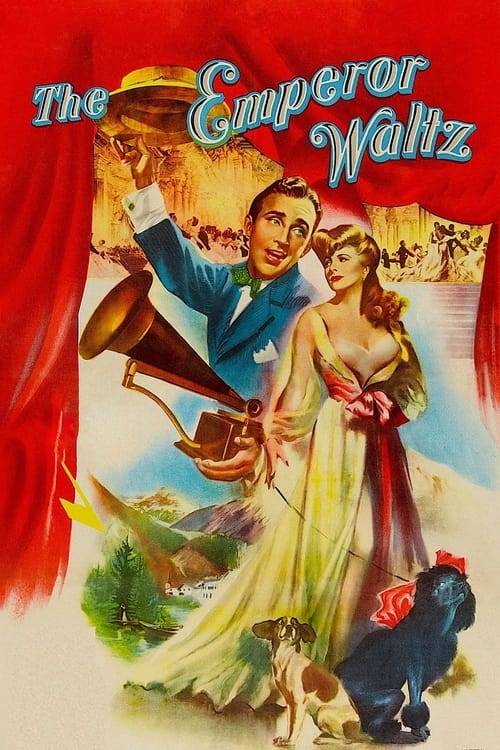
The Emperor Waltz
1948 · Directed by Billy Wilder
Woke Score
CriticCritic Score
Ultra Based
Critics rated this 63 points above its woke score. Among Ultra Based films, this critic score ranks #835 of 1469.
Representation Casting
Score: 0/100
Cast consists entirely of white actors in conventionally attractive roles. No deliberate effort toward diverse representation is evident or intended.
LGBTQ+ Themes
Score: 0/100
No LGBTQ+ characters, themes, or representation of any kind. The film is a straightforward heterosexual romance.
Feminist Agenda
Score: 0/100
The female lead exists primarily to be won over by the male protagonist. Her agency is subordinate to the romantic plot's requirements.
Racial Consciousness
Score: 0/100
Set in Austria with no racial diversity or commentary. No engagement with race as a thematic element whatsoever.
Climate Crusade
Score: 0/100
No environmental themes or climate-related content. The film is entirely indifferent to ecological concerns.
Eat the Rich
Score: 0/100
The protagonist is a successful capitalist entrepreneur whose commercial venture is treated as charming and admirable throughout the narrative.
Body Positivity
Score: 0/100
Both leads conform to conventional 1940s beauty standards. No engagement with body diversity or body positivity discourse.
Neurodivergence
Score: 0/100
No characters with neurodivergent traits or disabilities. No thematic engagement with neurodiversity.
Revisionist History
Score: 0/100
Set in turn-of-the-century Vienna, the film makes no attempt to reexamine or reframe historical events or social structures.
Lecture Energy
Score: 0/100
The film is purely entertainment with no preachy impulse or explicit messaging about social issues whatsoever.
Synopsis
A brash American gramophone salesman tries to get Emperor Franz Joseph's endorsement in turn-of-the-century Austria.
Consciousness Assessment
The Emperor Waltz represents a specific historical artifact: a 1948 Hollywood musical utterly unconcerned with the social consciousness that would come to define contemporary progressive filmmaking decades later. Billy Wilder's charming period comedy about an American salesman romancing an Austrian countess operates within the comedic and romantic conventions of its era, which is to say it operates without irony, without apology, and without self-examination regarding its own assumptions.
The film's treatment of class hierarchy is entirely traditional. The central romance requires Joan Fontaine's countess to overcome her aristocratic reserve and accept the charms of Bing Crosby's brash American entrepreneur, a narrative that affirms both American exceptionalism and the notion that romantic attachment across class lines requires the female character to essentially descend into the male character's orbit. Her agency exists primarily as an obstacle to overcome rather than as a fully realized perspective. The film presents this arrangement as charming rather than as a statement about power dynamics or gender expectations.
What distinguishes this work is its complete indifference to any of the markers we now use to evaluate contemporary social consciousness. There is no representation as a deliberate project, no interrogation of historical hierarchies, no awareness that such categories even merit consideration. It is a film that simply was, made by talented people who were simply doing their jobs without the burden of thinking about what their storytelling choices might signify. In this sense, its score reflects not contempt for progressive values but rather their complete absence from the filmmaker's conceptual universe.
Analysis generated by our Consciousness Algorithm
Critic Reviews
“The Emperor Waltz is certainly a worthwhile sit, if only to appreciate the bracing Wilderian satire at the core of the outwardly silly narrative.”
“Multiple functions of Charles Brackett and Billy Wilder on Waltz have given film an infectious quality that surmounts the gorgeously apt trappings.”
Consciousness Markers
Cast consists entirely of white actors in conventionally attractive roles. No deliberate effort toward diverse representation is evident or intended.
No LGBTQ+ characters, themes, or representation of any kind. The film is a straightforward heterosexual romance.
The female lead exists primarily to be won over by the male protagonist. Her agency is subordinate to the romantic plot's requirements.
Set in Austria with no racial diversity or commentary. No engagement with race as a thematic element whatsoever.
No environmental themes or climate-related content. The film is entirely indifferent to ecological concerns.
The protagonist is a successful capitalist entrepreneur whose commercial venture is treated as charming and admirable throughout the narrative.
Both leads conform to conventional 1940s beauty standards. No engagement with body diversity or body positivity discourse.
No characters with neurodivergent traits or disabilities. No thematic engagement with neurodiversity.
Set in turn-of-the-century Vienna, the film makes no attempt to reexamine or reframe historical events or social structures.
The film is purely entertainment with no preachy impulse or explicit messaging about social issues whatsoever.