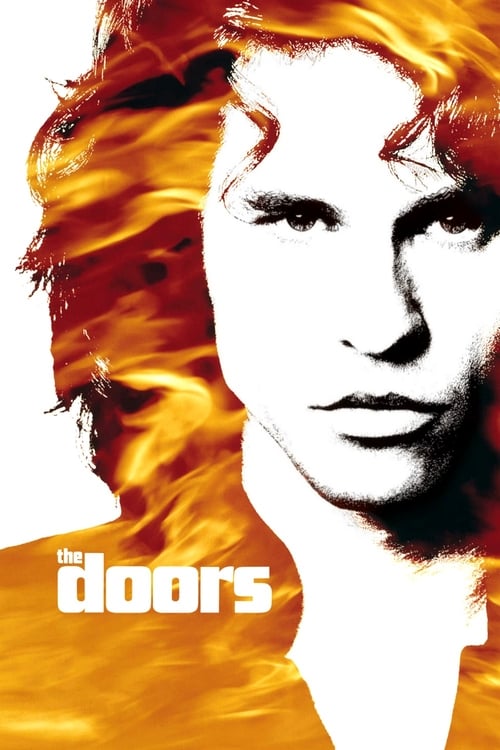
The Doors
1991 · Directed by Oliver Stone
Woke Score
CriticCritic Score
Audience
Ultra Based
Critics rated this 58 points above its woke score. Among Ultra Based films, this critic score ranks #853 of 1469.
Representation Casting
Score: 0/100
The cast is predominantly white with no evidence of inclusive or representative casting decisions. Representation consciousness is entirely absent from the film.
LGBTQ+ Themes
Score: 0/100
No LGBTQ+ themes, representation, or narratives are present in the film. Morrison's sexuality is not explored.
Feminist Agenda
Score: 0/100
Meg Ryan's character serves as a supporting love interest with minimal agency. No feminist reframing or consciousness is evident in the narrative.
Racial Consciousness
Score: 0/100
The film focuses on white rock musicians and white counterculture with no engagement with racial themes or racial awareness.
Climate Crusade
Score: 0/100
No environmental or climate-related themes appear in the film.
Eat the Rich
Score: 0/100
While the film depicts excess and wealth, it portrays this as artistic decadence rather than critiquing capitalism or wealth accumulation.
Body Positivity
Score: 0/100
No body positivity themes or representation of diverse body types. The film does not engage with this framework.
Neurodivergence
Score: 0/100
No representation of neurodivergence or discussion of mental health conditions. This marker is entirely absent.
Revisionist History
Score: 0/100
The film tells a straightforward biographical account without attempting to rewrite historical events through a contemporary progressive lens.
Lecture Energy
Score: 5/100
The film contains occasional preachy moments regarding Morrison's poetry and artistic philosophy, though these serve the narrative rather than deliver progressive social messaging.


Synopsis
The story of the famous and influential 1960s rock band and its lead singer and composer, Jim Morrison.
Consciousness Assessment
Oliver Stone's 1991 opus about Jim Morrison and The Doors is a relic from an era when filmmakers concerned themselves with artistic excess and psychedelic authenticity rather than contemporary social consciousness. Val Kilmer's performance dominates the film, a chameleonic embodiment of Morrison's charisma and self-destruction. The narrative unfolds as a fairly conventional biopic, tracking Morrison's rise from unknown poet to rock deity and his subsequent spiral into dissolution, all while Stone employs his characteristic visual excess and kaleidoscopic editing to mirror Morrison's drug-fueled worldview.
The film operates entirely within the registers of 1990s filmmaking sensibilities. The cast is uniformly pale, the gender dynamics are unremarkable (Meg Ryan exists as girlfriend rather than character), and there is no discernible engagement with racial, environmental, or social justice frameworks. Stone's interest lies in Morrison as artistic martyr, a figure corrupted by fame and substances, not as a subject for progressive reexamination. The film's occasional philosophical moments about poetry and consciousness-expansion are presented as personal artistic philosophy rather than social messaging.
What we have here is a straightforward rock and roll biography made by a director known for his maximalist approach to filmmaking. It contains no markers of modern progressive sensibility because it was created before such markers became the dominant cultural vocabulary. To score it highly on contemporary progressive metrics would be to misread its historical moment entirely. It is a film about artistic transgression in the service of rock mythology, nothing more and nothing less.
Analysis generated by our Consciousness Algorithm
Critic Reviews
“An excessive, expressionistic, agreeably nonjudgmental period biography that carries with it an enormous emotional wallop. [01 Mar 1991]”
“As writer/director, he manages to make both Morrison and the period seem real without being self-conscious, an observed milieu rather than a film set. [01 Mar 1991]”
“The Doors is a thrilling spectacle - the King Kong of rock movies - featuring a starmaking, ball-of-fire performance by Val Kilmer as Morrison.”
“Maybe it was fun to bathe in decadence back then. But this is no time to wallow in that mire.”
Consciousness Markers
The cast is predominantly white with no evidence of inclusive or representative casting decisions. Representation consciousness is entirely absent from the film.
No LGBTQ+ themes, representation, or narratives are present in the film. Morrison's sexuality is not explored.
Meg Ryan's character serves as a supporting love interest with minimal agency. No feminist reframing or consciousness is evident in the narrative.
The film focuses on white rock musicians and white counterculture with no engagement with racial themes or racial awareness.
No environmental or climate-related themes appear in the film.
While the film depicts excess and wealth, it portrays this as artistic decadence rather than critiquing capitalism or wealth accumulation.
No body positivity themes or representation of diverse body types. The film does not engage with this framework.
No representation of neurodivergence or discussion of mental health conditions. This marker is entirely absent.
The film tells a straightforward biographical account without attempting to rewrite historical events through a contemporary progressive lens.
The film contains occasional preachy moments regarding Morrison's poetry and artistic philosophy, though these serve the narrative rather than deliver progressive social messaging.