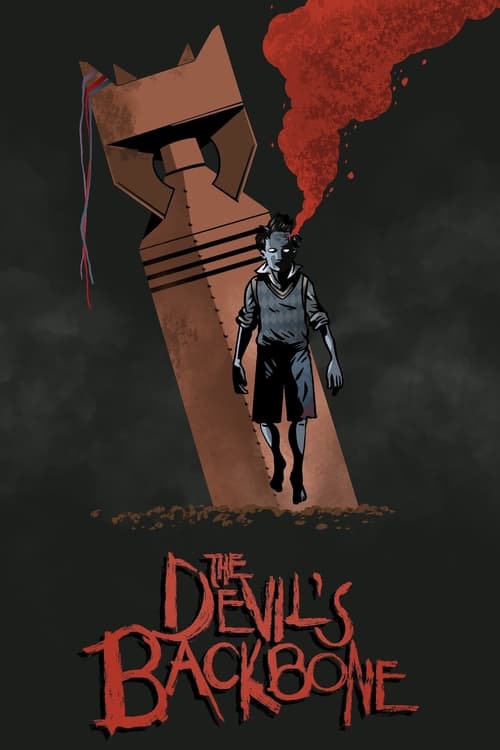
The Devil's Backbone
2001 · Directed by Guillermo del Toro
Woke Score
CriticCritic Score
Audience
Ultra Based
Critics rated this 74 points above its woke score. Among Ultra Based films, this critic score ranks #417 of 1469.
Representation Casting
Score: 0/100
The cast is composed entirely of Spanish actors reflecting the film's setting and historical authenticity, with no apparent attempt to pursue contemporary diversity in representation.
LGBTQ+ Themes
Score: 0/100
No LGBTQ+ themes or representation are evident in the film's narrative, which focuses on children's experiences during wartime.
Feminist Agenda
Score: 0/100
While the film includes female characters, there is no explicit feminist agenda or commentary on gender dynamics as a central concern.
Racial Consciousness
Score: 0/100
The film does not engage with racial consciousness or contemporary frameworks around race and systemic racism.
Climate Crusade
Score: 0/100
Climate themes are entirely absent from this historical war drama set in 1939.
Eat the Rich
Score: 5/100
The orphanage is run by Republican loyalists and the film implicitly critiques institutional power, but this reflects 1930s Spanish politics rather than contemporary anti-capitalist ideology.
Body Positivity
Score: 0/100
The film contains no engagement with body positivity discourse or contemporary standards around body representation.
Neurodivergence
Score: 0/100
Neurodivergence is not a theme or consideration in the film's portrayal of its characters.
Revisionist History
Score: 20/100
The film uses supernatural metaphor to reframe Spanish Civil War trauma, treating history through a gothic lens that emphasizes emotional and spiritual damage rather than factual revisionism.
Lecture Energy
Score: 0/100
The film trusts its audience to understand historical context through narrative and atmosphere rather than explicit exposition or preachy messaging.


Synopsis
Spain, 1939. In the last days of the Spanish Civil War, the young Carlos arrives at the Santa Lucía orphanage, where he will make friends and enemies as he follows the quiet footsteps of a mysterious presence eager for revenge.
Consciousness Assessment
Guillermo del Toro's "The Devil's Backbone" is a film of genuine historical and emotional weight, yet one that exists largely outside the frameworks of contemporary progressive cultural consciousness. Set in 1939 Spain during the final collapse of Republican resistance, the film uses the orphanage as both literal setting and metaphorical space for exploring the violence and repression that defined the period. The narrative centers on children experiencing trauma, displacement, and moral complexity in the face of institutional cruelty. These are serious humanist concerns, and del Toro treats them with appropriate gravity and visual sophistication.
However, the film's engagement with social themes operates according to the logic of early 2000s art cinema rather than the specific markers of 2020s progressive sensibility. The cast is almost entirely Spanish, reflecting the film's geographic and historical authenticity rather than pursuing contemporary diversity protocols. The orphans are portrayed as individuals responding to circumstance, not as identity categories requiring representation. The political content centers on Spanish Republican ideals and the weight of history, not on the identity-based social consciousness that has come to define modern progressive filmmaking. There is no explicit discussion of systemic oppression along contemporary lines, no interrogation of power structures through an intersectional lens, and no visible engagement with modern social justice vocabulary.
The film remains a work of considerable artistic merit and moral seriousness, which is precisely why it scores so low on the scale we are employing. "The Devil's Backbone" is an important film about a tragic historical moment, but it is not a film composed according to the aesthetic and ideological conventions that define the contemporary woke sensibility. It predates that framework by years and was created in service of different artistic and thematic ambitions. This is not a criticism but a categorization.
Analysis generated by our Consciousness Algorithm
Critic Reviews
“The political and the supernatural come together beautifully (and violently), and the unsentimental portrayal of childhood is refreshing, with terrific performances from the boy actors. It’s altogether a supremely satisfying tale.”
“Del Toro builds excitement, dread, and melodrama in equal layers.”
“What gives the story resonance is the tenderness and sacrifice and even innocence del Toro reveals amid the savagery.”
“That The Devil's Backbone makes any sense at all -- with its many, swirling plotlines -- seems like a little wonder.”
Consciousness Markers
The cast is composed entirely of Spanish actors reflecting the film's setting and historical authenticity, with no apparent attempt to pursue contemporary diversity in representation.
No LGBTQ+ themes or representation are evident in the film's narrative, which focuses on children's experiences during wartime.
While the film includes female characters, there is no explicit feminist agenda or commentary on gender dynamics as a central concern.
The film does not engage with racial consciousness or contemporary frameworks around race and systemic racism.
Climate themes are entirely absent from this historical war drama set in 1939.
The orphanage is run by Republican loyalists and the film implicitly critiques institutional power, but this reflects 1930s Spanish politics rather than contemporary anti-capitalist ideology.
The film contains no engagement with body positivity discourse or contemporary standards around body representation.
Neurodivergence is not a theme or consideration in the film's portrayal of its characters.
The film uses supernatural metaphor to reframe Spanish Civil War trauma, treating history through a gothic lens that emphasizes emotional and spiritual damage rather than factual revisionism.
The film trusts its audience to understand historical context through narrative and atmosphere rather than explicit exposition or preachy messaging.