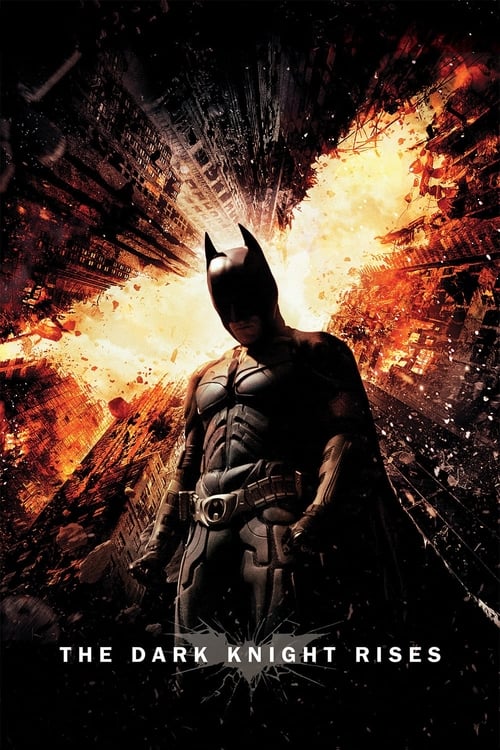
The Dark Knight Rises
2012 · Directed by Christopher Nolan
Woke Score
CriticCritic Score
Audience
Ultra Based
Critics rated this 60 points above its woke score. Among Ultra Based films, this critic score ranks #410 of 1469.
Representation Casting
Score: 35/100
Anne Hathaway and Marion Cotillard provide female presence in significant roles, though representation remains predominantly male and white. Hathaway's Catwoman has agency but ultimately finds resolution through romantic partnership.
LGBTQ+ Themes
Score: 0/100
No LGBTQ+ themes, characters, or representation are present in the film. The romantic and sexual dynamics are entirely heterosexual.
Feminist Agenda
Score: 25/100
Catwoman operates with moral agency and independence, but her character arc ultimately emphasizes romantic relationship with Batman rather than standalone triumph or systemic critique of gender.
Racial Consciousness
Score: 10/100
The cast is predominantly white. While Morgan Freeman and others appear in significant roles, there is no meaningful engagement with racial consciousness or examination of systemic racism.
Climate Crusade
Score: 0/100
Climate change and environmental consciousness are entirely absent from the film's thematic concerns.
Eat the Rich
Score: 35/100
The film engages with class conflict and wealth inequality as surface-level narrative elements, but ultimately endorses the preservation of existing hierarchies. Bane's anti-capitalist rhetoric is presented as villainous justification for terrorism.
Body Positivity
Score: 0/100
No engagement with body positivity or diverse body representation. The film presents conventionally attractive actors in conventionally idealized form.
Neurodivergence
Score: 0/100
No representation of neurodivergence or engagement with neurodivergent experiences.
Revisionist History
Score: 0/100
The film does not engage in revisionist history. It presents a fictional narrative without commentary on historical narratives or reinterpretation of historical events.
Lecture Energy
Score: 5/100
While the film contains philosophical dialogue about justice and sacrifice, it avoids the preachy lecture energy of overtly message-driven cinema. Themes emerge organically from narrative rather than explicit exposition.


Synopsis
Following the death of District Attorney Harvey Dent, Batman assumes responsibility for Dent's crimes to protect the late attorney's reputation and is subsequently hunted by the Gotham City Police Department. Eight years later, Batman encounters the mysterious Selina Kyle and the villainous Bane, a new terrorist leader who overwhelms Gotham's finest. The Dark Knight resurfaces to protect a city that has branded him an enemy.
Consciousness Assessment
The Dark Knight Rises operates as a deliberately apolitical action thriller dressed in the language of class conflict. Christopher Nolan's film engages with the aesthetic and vocabulary of wealth inequality and populist upheaval, particularly the Occupy Wall Street movement that was active during production, yet it uses these elements as mere narrative scaffolding rather than genuine ideological commitment. Bane's rhetoric about breaking the system and liberating the masses functions as a villain's justification for terrorism, not as a sympathetic articulation of working-class grievance. The film's ultimate message is fundamentally conservative: the existing order must be preserved, and those who challenge it are either deluded or malevolent.
On representation, the film remains largely traditional. Anne Hathaway's Catwoman is the film's most interesting female character, operating with agency and moral complexity, though her arc culminates in romantic partnership with Batman rather than independent triumph. The cast is predominantly white and male, with Marion Cotillard and Hathaway as the only significant female roles. There is no meaningful engagement with LGBTQ+ themes, neurodivergence, body positivity, or climate consciousness. The film makes no attempt at revisionist history, nor does it burden itself with the lecture energy that characterizes overtly preachy cinema.
This is a film that gestures toward social consciousness while ultimately retreating into individualism and the preservation of hierarchical power structures. It is technically a masterwork of cinema, but it contains almost no markers of the specific progressive cultural awareness that defines contemporary social consciousness.
Analysis generated by our Consciousness Algorithm
Critic Reviews
“Makes everything in the rival Marvel universe look thoroughly silly and childish. Entirely enveloping and at times unnerving in a relevant way one would never have imagined, as a cohesive whole this ranks as the best of Nolan's trio, even if it lacks -- how could it not? -- an element as unique as Heath Ledger's immortal turn in The Dark Knight. It's a blockbuster by any standard.”
“A smart, stirring spectacle that faces down impossible expectations to pull off a hugely satisfying end to business.”
“With spectacle in abundance and sexiness in (supporting) parts, this is superhero filmmaking on an unprecedented scale. Rises may lack the surprise of Begins or the anarchy of Knight, but it makes up for that in pure emotion.”
“Halfheartedly, I give The Dark Knight Rises - the third and final Batflick in the Nolan trilogy - one star for eardrum-busting sound effects and glaucoma-inducing computerized images in blinding Imax, but talk about stretching things. ”
Consciousness Markers
Anne Hathaway and Marion Cotillard provide female presence in significant roles, though representation remains predominantly male and white. Hathaway's Catwoman has agency but ultimately finds resolution through romantic partnership.
No LGBTQ+ themes, characters, or representation are present in the film. The romantic and sexual dynamics are entirely heterosexual.
Catwoman operates with moral agency and independence, but her character arc ultimately emphasizes romantic relationship with Batman rather than standalone triumph or systemic critique of gender.
The cast is predominantly white. While Morgan Freeman and others appear in significant roles, there is no meaningful engagement with racial consciousness or examination of systemic racism.
Climate change and environmental consciousness are entirely absent from the film's thematic concerns.
The film engages with class conflict and wealth inequality as surface-level narrative elements, but ultimately endorses the preservation of existing hierarchies. Bane's anti-capitalist rhetoric is presented as villainous justification for terrorism.
No engagement with body positivity or diverse body representation. The film presents conventionally attractive actors in conventionally idealized form.
No representation of neurodivergence or engagement with neurodivergent experiences.
The film does not engage in revisionist history. It presents a fictional narrative without commentary on historical narratives or reinterpretation of historical events.
While the film contains philosophical dialogue about justice and sacrifice, it avoids the preachy lecture energy of overtly message-driven cinema. Themes emerge organically from narrative rather than explicit exposition.