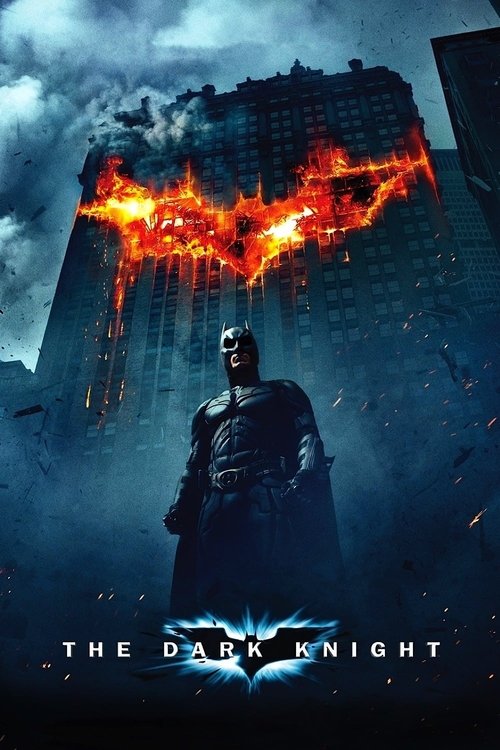
The Dark Knight
2008 · Directed by Christopher Nolan
Woke Score
CriticCritic Score
Audience
Ultra Based
Critics rated this 73 points above its woke score. Among Ultra Based films, this critic score ranks #241 of 1469.
Representation Casting
Score: 15/100
The cast is predominantly white and male-dominated. Maggie Gyllenhaal provides some female presence but limited development. No meaningful diversity among key characters.
LGBTQ+ Themes
Score: 5/100
No LGBTQ+ representation or themes. The film is entirely heteronormative in its romantic and character dynamics.
Feminist Agenda
Score: 10/100
Rachel Dawes has agency but functions primarily as a love interest and plot device. No meaningful engagement with feminist themes or female-centered narrative.
Racial Consciousness
Score: 5/100
While set in a diverse urban environment, the film shows minimal engagement with racial themes. Power structures remain overwhelmingly white.
Climate Crusade
Score: 0/100
No environmental or climate-related themes present in the film.
Eat the Rich
Score: 20/100
The Joker's philosophy contains destructive critiques of social order, but these are not framed as progressive anti-capitalist arguments. The film ultimately affirms existing power structures.
Body Positivity
Score: 0/100
Not applicable to this action thriller focused on physical prowess and masculine heroism.
Neurodivergence
Score: 10/100
The Joker's mental state is referenced but portrayed as the source of villainy. No positive or nuanced representation of neurodivergence.
Revisionist History
Score: 0/100
Not a historical film. The fictional Gotham setting is not revisionist in nature.
Lecture Energy
Score: 15/100
Philosophical monologues about chaos and order emerge from character interactions rather than preachy preaching. Relatively restrained compared to more explicitly message-driven films.


Synopsis
Batman raises the stakes in his war on crime. With the help of Lt. Jim Gordon and District Attorney Harvey Dent, Batman sets out to dismantle the remaining criminal organizations that plague the streets. The partnership proves to be effective, but they soon find themselves prey to a reign of chaos unleashed by a rising criminal mastermind known to the terrified citizens of Gotham as the Joker.
Consciousness Assessment
The Dark Knight presents itself as a serious meditation on chaos, order, and the moral compromises required to maintain civilization, yet it remains almost entirely indifferent to the social consciousness that would come to dominate prestige filmmaking in the following decade. The film's Gotham is a city of crime and corruption, yet one populated almost exclusively by white men in positions of power. Maggie Gyllenhaal's Rachel Dawes exists primarily to be threatened and eventually killed, serving the narrative needs of the male characters around her rather than functioning as a fully realized presence.
The philosophical framework here concerns itself with abstract questions of morality rather than systemic inequality or representation. When the film engages with ideas of surveillance, it does so through the lens of a Batman-constructed citywide monitoring system, treated as a necessary evil rather than a subject for genuine critical examination. The Joker's nihilism, while dramatically compelling, offers no coherent political vision. He is chaos incarnate, not a figure offering progressive critique.
Christopher Nolan's vision is fundamentally a conservative one, committed to the restoration of order and the preservation of existing institutions. The film's refusal to grapple with representation or systemic themes reflects the priorities of 2008 blockbuster filmmaking, when such considerations remained peripheral to the concerns of major studios and audiences alike. This is not a flaw, necessarily, but rather a historical fact worth registering.
Analysis generated by our Consciousness Algorithm
Critic Reviews
“Enthralling...An ambitious, full-bodied crime epic of gratifying scope and moral complexity, this is seriously brainy pop entertainment that satisfies every expectation raised by its hit predecessor and then some.”
“Bale again brilliantly personifies all the deep traumas and misgivings of Batman's alter ego, Bruce Wayne. A bit of Hamlet is in this Batman.”
“Beyond dark. It's as black -- and teeming and toxic -- as the mind of the Joker. "Batman Begins," the 2005 film that launched Nolan's series, was a mere five-finger exercise. This is the full symphony.”
“A handsome, accomplished piece of work, but it drove me from absorption to excruciation within 20 minutes, and then it went on for two hours more.”
Consciousness Markers
The cast is predominantly white and male-dominated. Maggie Gyllenhaal provides some female presence but limited development. No meaningful diversity among key characters.
No LGBTQ+ representation or themes. The film is entirely heteronormative in its romantic and character dynamics.
Rachel Dawes has agency but functions primarily as a love interest and plot device. No meaningful engagement with feminist themes or female-centered narrative.
While set in a diverse urban environment, the film shows minimal engagement with racial themes. Power structures remain overwhelmingly white.
No environmental or climate-related themes present in the film.
The Joker's philosophy contains destructive critiques of social order, but these are not framed as progressive anti-capitalist arguments. The film ultimately affirms existing power structures.
Not applicable to this action thriller focused on physical prowess and masculine heroism.
The Joker's mental state is referenced but portrayed as the source of villainy. No positive or nuanced representation of neurodivergence.
Not a historical film. The fictional Gotham setting is not revisionist in nature.
Philosophical monologues about chaos and order emerge from character interactions rather than preachy preaching. Relatively restrained compared to more explicitly message-driven films.