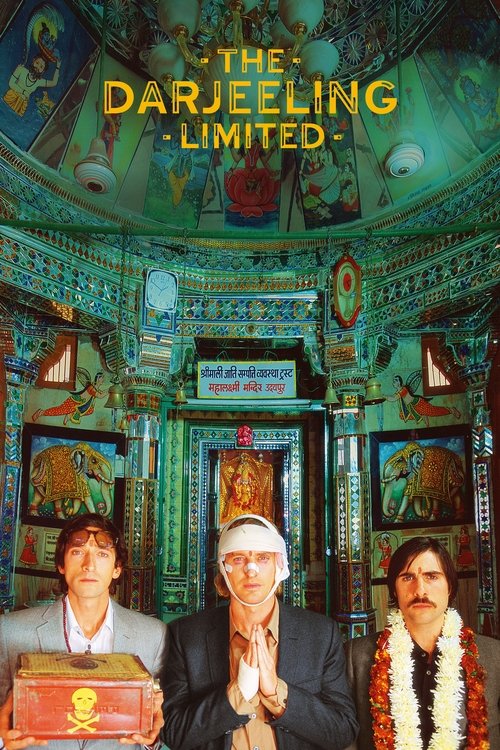
The Darjeeling Limited
2007 · Directed by Wes Anderson
Woke Score
CriticCritic Score
Audience
Based
Critics rated this 45 points above its woke score. Among Based films, this critic score ranks #182 of 345.
Representation Casting
Score: 35/100
The cast includes Indian actors in supporting roles (Irrfan Khan, Waris Ahluwalia, Amara Karan), but the emotional core and narrative focus remain centered on white American male characters. Supporting roles do not constitute meaningful representation.
LGBTQ+ Themes
Score: 0/100
No LGBTQ+ themes, characters, or subtext present in the film. The narrative focuses exclusively on heterosexual family dynamics.
Feminist Agenda
Score: 0/100
The film is centered entirely on male characters with minimal female presence or agency. No feminist themes or messaging are present.
Racial Consciousness
Score: 45/100
While the film engages with India as a setting, it does so through an Orientalist lens that reinforces colonial narratives rather than interrogating them. The racial consciousness present is inadvertent and problematic rather than intentional and progressive.
Climate Crusade
Score: 0/100
No climate-related themes, messaging, or narrative elements present in the film.
Eat the Rich
Score: 0/100
No anti-capitalist themes or critique of wealth inequality present. The narrative does not engage with economic systems or class consciousness.
Body Positivity
Score: 0/100
No body positivity messaging or diverse body representation. Characters conform to conventional physical standards.
Neurodivergence
Score: 0/100
No neurodivergent characters or representation present in the film.
Revisionist History
Score: 0/100
The film does not engage with historical narratives or attempt any revisionism. It is set in contemporary times with no historical framing.
Lecture Energy
Score: 15/100
The film contains minimal preachy or preachy elements. Anderson's style is deliberately understated, though the Orientalist framing could be read as implicitly lecturing through aesthetic choices.


Synopsis
Three American brothers who have not spoken to each other in a year set off on a train voyage across India with a plan to find themselves and bond with each other -- to become brothers again like they used to be. Their "spiritual quest", however, veers rapidly off-course (due to events involving over-the-counter pain killers, Indian cough syrup, and pepper spray).
Consciousness Assessment
The Darjeeling Limited presents a curious case study in the hazards of aesthetic colonialism. Wes Anderson's meticulously composed 2007 film follows three white American brothers seeking spiritual reconciliation aboard a train through India, transforming the subcontinent into a picturesque backdrop for their emotional introspection. The film has aged poorly in the eyes of contemporary cultural criticism, which correctly identifies its visual exoticism as a modern form of Orientalism, wherein India exists primarily as a setting for Western self-discovery rather than as a place with its own narrative coherence.
The cast arrangement reveals the film's fundamental orientation: Owen Wilson, Adrien Brody, and Jason Schwartzman occupy the emotional center, while Indian actors (Irrfan Khan, Waris Ahluwalia, Amara Karan) occupy supporting positions. This is not incidental; it is structural. The film's spiritual quest belongs entirely to the white characters, and India serves as their therapist rather than their peer. Anderson's signature symmetrical framing and pastel color palette, while undeniably beautiful, function as a kind of visual colonization that renders the country as an aesthetic object rather than a living place.
What emerges from this analysis is a film that scores moderately on contemporary wokeness markers primarily through its cast diversity in supporting roles, yet simultaneously fails on the deeper question of whose story is being centered and whose culture is being aestheticized. The film contains no explicit progressive messaging, no climate consciousness, no interrogation of capitalism, and no particular feminist or neurodivergent representation. It is, in essence, a technically accomplished but culturally tone-deaf product of the mid-2000s, now viewed through the corrective lens of modern sensibilities.
Analysis generated by our Consciousness Algorithm
Critic Reviews
“A picture that certain Brits and connoisseurs of British colloquial English might call "a grower" … more moving and funny the more I think about it.”
“All the acting is exemplary. Brody, new to Wes' World, is revelatory as Peter.”
“Anderson is like Dave Brubeck, who I'm listening to right now. He knows every note of the original song, but the fun and genius come in the way he noodles around. And in his movie's cast, especially with Owen Wilson, Anderson takes advantage of champion noodlers.”
“A frustrating movie, a work of immaturity from a director who should be past the empty gestures and self-protective distance of his early work.”
Consciousness Markers
The cast includes Indian actors in supporting roles (Irrfan Khan, Waris Ahluwalia, Amara Karan), but the emotional core and narrative focus remain centered on white American male characters. Supporting roles do not constitute meaningful representation.
No LGBTQ+ themes, characters, or subtext present in the film. The narrative focuses exclusively on heterosexual family dynamics.
The film is centered entirely on male characters with minimal female presence or agency. No feminist themes or messaging are present.
While the film engages with India as a setting, it does so through an Orientalist lens that reinforces colonial narratives rather than interrogating them. The racial consciousness present is inadvertent and problematic rather than intentional and progressive.
No climate-related themes, messaging, or narrative elements present in the film.
No anti-capitalist themes or critique of wealth inequality present. The narrative does not engage with economic systems or class consciousness.
No body positivity messaging or diverse body representation. Characters conform to conventional physical standards.
No neurodivergent characters or representation present in the film.
The film does not engage with historical narratives or attempt any revisionism. It is set in contemporary times with no historical framing.
The film contains minimal preachy or preachy elements. Anderson's style is deliberately understated, though the Orientalist framing could be read as implicitly lecturing through aesthetic choices.