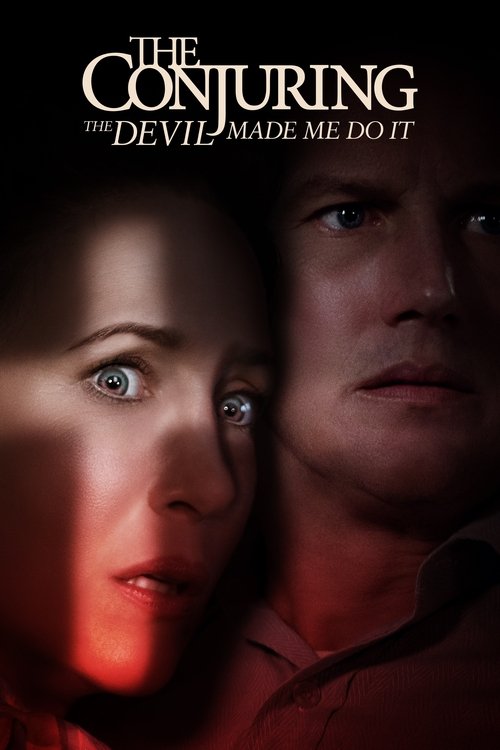
The Conjuring: The Devil Made Me Do It
2021 · Directed by Michael Chaves
Woke Score
CriticCritic Score
Audience
Ultra Based
Critics rated this 49 points above its woke score. Among Ultra Based films, this critic score ranks #1077 of 1469.
Representation Casting
Score: 15/100
The cast includes performers of various backgrounds, but this reflects standard contemporary casting practice rather than any deliberate commitment to representation. Diversity exists without commentary or centering of marginalized perspectives.
LGBTQ+ Themes
Score: 20/100
A same-sex couple appears briefly in a supporting role and is treated matter-of-factly, neither emphasized nor subverted. The inclusion feels incidental to the narrative rather than thematically significant.
Feminist Agenda
Score: 0/100
The film contains no feminist themes or critique of patriarchal structures. Female characters serve functional roles within the horror narrative without any examination of gender dynamics.
Racial Consciousness
Score: 0/100
There is no engagement with racial themes, systemic racism, or racial identity. The narrative operates without any racial consciousness or commentary.
Climate Crusade
Score: 0/100
Climate change and environmental concerns are entirely absent from this supernatural thriller focused on demonic possession and historical murder case investigation.
Eat the Rich
Score: 0/100
The film contains no critique of capitalism or commentary on economic systems. It makes no attempt to examine class structures or wealth inequality.
Body Positivity
Score: 0/100
Body positivity themes are absent. The film does not engage with body image, disability representation, or physical diversity in any meaningful way.
Neurodivergence
Score: 0/100
There is no representation of neurodivergent characters or engagement with neurodivergence as a theme. The film does not address mental health or neurological difference.
Revisionist History
Score: 0/100
While based on a historical case, the film treats the material as a vehicle for supernatural horror rather than engaging in any revisionist historical interpretation or reexamination of past events.
Lecture Energy
Score: 0/100
The film contains no preachy elements, moral lectures, or attempts to educate the audience about social issues. It functions purely as entertainment.


Synopsis
Paranormal investigators Ed and Lorraine Warren encounter what would become one of the most sensational cases from their files. The fight for the soul of a young boy takes them beyond anything they'd ever seen before, to mark the first time in U.S. history that a murder suspect would claim demonic possession as a defense.
Consciousness Assessment
The Conjuring: The Devil Made Me Do It arrives as a thoroughly conventional supernatural thriller, concerned primarily with jump scares and demonic possession rather than any examination of contemporary cultural anxieties. The film follows paranormal investigators Ed and Lorraine Warren through a case based on the Arne Johnson trial, treating the historical material as raw material for atmospheric horror rather than as an opportunity for social commentary. One could watch this film from beginning to end without encountering a single moment designed to provoke reflection on systemic injustice, identity politics, or the various preoccupations that dominate modern cultural discourse.
The cast is competent and diverse, but diversity itself does not constitute progressive sensibility. Vera Farmiga and Patrick Wilson return as the Warrens, and the supporting cast includes performers of various backgrounds, yet these casting choices appear to reflect nothing more than standard contemporary Hollywood practice. There is no effort to center marginalized perspectives or to interrogate the power structures implicit in the story itself. The film treats its narrative as apolitical entertainment, which in the context of contemporary filmmaking is perhaps the most honest position available to a studio horror sequel.
The film's sole concession to modern sensibilities appears in its treatment of a same-sex couple in a supporting role, which receives neither emphasis nor subversion, existing simply as a fact of the world the film depicts. Beyond this minor inclusion, the work remains stubbornly resistant to the sorts of cultural interventions that characterize progressive filmmaking. It is horror cinema in its most straightforward form, interested only in the mechanics of dread and the logistics of supernatural investigation.
Analysis generated by our Consciousness Algorithm
Critic Reviews
““The Devil Made Me Do It” opens with a disturbing sequence, set in 1981, that stands as the scariest part of the supernatural saga to date. That’s not to say that the nearly two hours that ensue are devoid of tension and well-paced jump scares, but the sheer chaos and malevolence on display right out of the gate are unmatched elsewhere.”
“The film is chilling, balancing its actually scary horror with a lot of heart, advancing the Warrens’ story and providing audiences with a change of pace from their usual cases. ”
“In this new Conjuring, every scene of demonic possession, every demonic hallucination, and every underworld visit and visitation land with unsettling impact. These are, in a sense, action scenes, and they’re creepy, chilling and very well done. ”
“An eccentric local priest spouts nonsense, blood gushes out of the shower, bodies twist and contort at impossible angles, and creatures from hell crawl towards the camera. By the time the convoluted, shrieky finale arrives, it all blends together into nothing more than dull background noise. Your investment in the story will be indirectly proportional to its running time.”
Consciousness Markers
The cast includes performers of various backgrounds, but this reflects standard contemporary casting practice rather than any deliberate commitment to representation. Diversity exists without commentary or centering of marginalized perspectives.
A same-sex couple appears briefly in a supporting role and is treated matter-of-factly, neither emphasized nor subverted. The inclusion feels incidental to the narrative rather than thematically significant.
The film contains no feminist themes or critique of patriarchal structures. Female characters serve functional roles within the horror narrative without any examination of gender dynamics.
There is no engagement with racial themes, systemic racism, or racial identity. The narrative operates without any racial consciousness or commentary.
Climate change and environmental concerns are entirely absent from this supernatural thriller focused on demonic possession and historical murder case investigation.
The film contains no critique of capitalism or commentary on economic systems. It makes no attempt to examine class structures or wealth inequality.
Body positivity themes are absent. The film does not engage with body image, disability representation, or physical diversity in any meaningful way.
There is no representation of neurodivergent characters or engagement with neurodivergence as a theme. The film does not address mental health or neurological difference.
While based on a historical case, the film treats the material as a vehicle for supernatural horror rather than engaging in any revisionist historical interpretation or reexamination of past events.
The film contains no preachy elements, moral lectures, or attempts to educate the audience about social issues. It functions purely as entertainment.