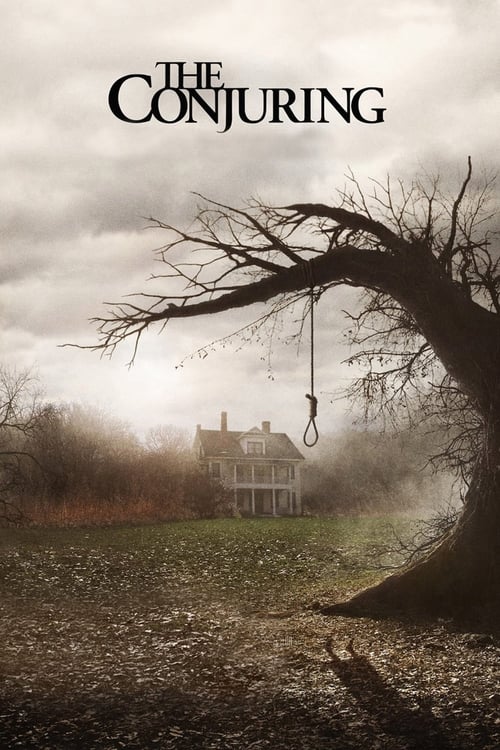
The Conjuring
2013 · Directed by James Wan
Woke Score
CriticCritic Score
Audience
Ultra Based
Critics rated this 64 points above its woke score. Among Ultra Based films, this critic score ranks #676 of 1469.
Representation Casting
Score: 5/100
The cast reflects 2013 horror conventions with primarily white actors in lead roles. While the ensemble is professional and competent, there is no deliberate effort toward expanded representation or meaningful diversity in casting decisions.
LGBTQ+ Themes
Score: 0/100
No LGBTQ+ themes, characters, or representation appear in the film. The narrative centers exclusively on heterosexual relationships and traditional family structures.
Feminist Agenda
Score: 8/100
Vera Farmiga's Lorraine Warren is presented as a capable professional and co-lead, though the film ultimately positions her within traditional gender roles as wife and mother. Lili Taylor's mother character is sympathetic but victimized by supernatural forces rather than empowered.
Racial Consciousness
Score: 0/100
The film contains no engagement with racial themes, racial consciousness, or any acknowledgment of systemic racial issues. Race is simply absent from the narrative concerns.
Climate Crusade
Score: 0/100
Climate change, environmental degradation, or ecological themes are entirely absent from the film's preoccupations. The horror derives from supernatural forces, not environmental catastrophe.
Eat the Rich
Score: 0/100
There is no critique of capitalism, wealth inequality, or economic systems. The Perron family's financial struggles are incidental to the plot and treated as backdrop rather than thematic focus.
Body Positivity
Score: 0/100
Body positivity messaging is entirely absent. The film presents conventional attractiveness standards without commentary on body diversity or acceptance.
Neurodivergence
Score: 0/100
No representation of neurodivergent characters or engagement with neurodiversity issues appears in the film. Mental health is not meaningfully explored beyond the supernatural possession narrative.
Revisionist History
Score: 0/100
While the film draws on historical elements like the Salem Witch Trials, it does not engage in revisionist reframing of historical events or marginalized perspectives on history.
Lecture Energy
Score: 2/100
The film maintains the entertainment-forward approach typical of its genre, with minimal preachy messaging. Religious faith is presented as naturally integrated into the characters' worldview rather than as explicit moral instruction.


Synopsis
Paranormal investigators Ed and Lorraine Warren work to help a family terrorized by a dark presence in their farmhouse. Forced to confront a powerful entity, the Warrens find themselves caught in the most terrifying case of their lives.
Consciousness Assessment
The Conjuring arrives as a perfectly calibrated exercise in classical horror craft, which is to say it remains largely indifferent to the cultural anxieties that would come to dominate mainstream cinema in subsequent years. James Wan constructs his narrative around the sanctity of the American family home and the restorative power of Christian faith, positioning Vera Farmiga and Patrick Wilson as competent professionals whose marriage itself serves as an anchor against supernatural chaos. The film's concerns are timeless rather than contemporary: it frets about demonic possession and family trauma, not about systemic inequities or the marginalized experiences of those outside its narrow demographic focus.
The cast, while professionally assembled, reflects the casting conventions of 2013 horror cinema without meaningful attention to representation beyond the incidental. The Perron family and their investigators are presented as universally relatable protagonists, but this universality comes through whiteness and middle-class stability rather than through any deliberate expansion of whose stories matter. Lili Taylor's performance as the afflicted mother carries genuine pathos, yet the film never suggests that her suffering connects to anything larger than personal tragedy and spiritual warfare.
What emerges from The Conjuring is fundamentally a work of escapist entertainment that sees social consciousness as orthogonal to its mission. It seeks only to terrify and, in this, it succeeds without complication. The film makes no apparent arguments about society, justice, or the human condition beyond the rather traditional observation that faith and family provide shelter against darkness. In the vocabulary of contemporary cultural assessment, this represents a kind of blank slate: neither resistant to progressive sensibilities nor enthusiastically embracing them, simply operating in a register where such concerns do not register.
Analysis generated by our Consciousness Algorithm
Critic Reviews
“Like the wood-grained farmhouse itself — a beautiful piece of production design by Julie Berghoff — The Conjuring has an analog solidity that makes the terror to come almost unbearable.”
“I'd be shocked if we see a better horror film in 2013.”
“Wan masterfully tightens the vise on the audience's nerves, using mood and sound effects for shocks that never feel cheap (the harmless kids' game of hide-and-clap has never been so bloodcurdling).”
“The Conjuring is as toothless as it is because it's two different kinds of boring. The film's plot is explained exhaustively whenever loud noises aren't blaring, and random objects aren't teasingly leaping out at you from the corner of your eye. ”
Consciousness Markers
The cast reflects 2013 horror conventions with primarily white actors in lead roles. While the ensemble is professional and competent, there is no deliberate effort toward expanded representation or meaningful diversity in casting decisions.
No LGBTQ+ themes, characters, or representation appear in the film. The narrative centers exclusively on heterosexual relationships and traditional family structures.
Vera Farmiga's Lorraine Warren is presented as a capable professional and co-lead, though the film ultimately positions her within traditional gender roles as wife and mother. Lili Taylor's mother character is sympathetic but victimized by supernatural forces rather than empowered.
The film contains no engagement with racial themes, racial consciousness, or any acknowledgment of systemic racial issues. Race is simply absent from the narrative concerns.
Climate change, environmental degradation, or ecological themes are entirely absent from the film's preoccupations. The horror derives from supernatural forces, not environmental catastrophe.
There is no critique of capitalism, wealth inequality, or economic systems. The Perron family's financial struggles are incidental to the plot and treated as backdrop rather than thematic focus.
Body positivity messaging is entirely absent. The film presents conventional attractiveness standards without commentary on body diversity or acceptance.
No representation of neurodivergent characters or engagement with neurodiversity issues appears in the film. Mental health is not meaningfully explored beyond the supernatural possession narrative.
While the film draws on historical elements like the Salem Witch Trials, it does not engage in revisionist reframing of historical events or marginalized perspectives on history.
The film maintains the entertainment-forward approach typical of its genre, with minimal preachy messaging. Religious faith is presented as naturally integrated into the characters' worldview rather than as explicit moral instruction.