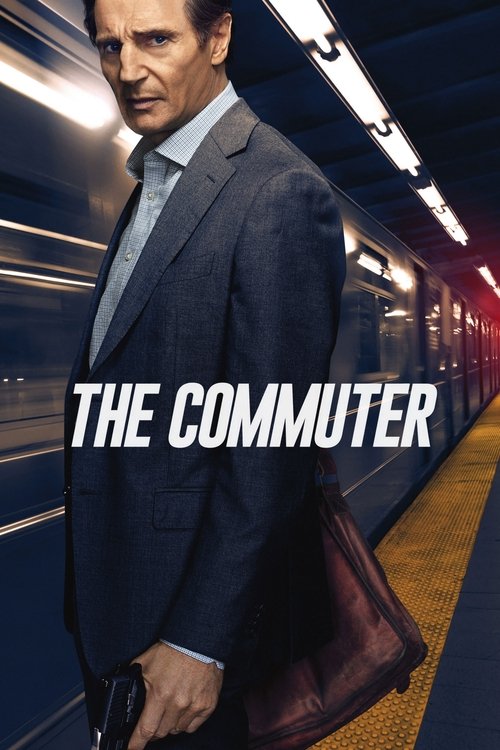
The Commuter
2018 · Directed by Jaume Collet-Serra
Woke Score
CriticCritic Score
Audience
Ultra Based
Critics rated this 52 points above its woke score. Among Ultra Based films, this critic score ranks #1015 of 1469.
Representation Casting
Score: 25/100
The cast includes some actors of color in supporting roles, but they serve purely functional plot purposes without thematic weight or development.
LGBTQ+ Themes
Score: 0/100
No LGBTQ+ themes, characters, or subtext present in the film.
Feminist Agenda
Score: 0/100
No feminist themes or gender-conscious storytelling evident in the narrative.
Racial Consciousness
Score: 0/100
The film contains no examination of race, racial dynamics, or racial justice.
Climate Crusade
Score: 0/100
Climate or environmental concerns are entirely absent from the film.
Eat the Rich
Score: 5/100
Corporate villainy serves as plot mechanics rather than social critique, with no systemic critique of capitalism implied.
Body Positivity
Score: 0/100
No body positivity themes or commentary on body image present.
Neurodivergence
Score: 0/100
No representation or discussion of neurodivergence in the film.
Revisionist History
Score: 0/100
The film contains no historical elements or revisionist historical narratives.
Lecture Energy
Score: 0/100
No preachy or preachy dialogue explaining social themes to the audience.


Synopsis
A businessman, on his daily commute home, gets unwittingly caught up in a criminal conspiracy that threatens not only his life but the lives of those around him.
Consciousness Assessment
The Commuter presents itself as a serviceable action thriller, the kind of film that understands its own modest ambitions and pursues them with the dedication of a man checking his watch on the 5:47 to Grand Central. Liam Neeson, now thoroughly established as cinema's preferred avatar of late-middle-age competence, navigates a plot that hinges entirely on a MacGuffin-adjacent conspiracy with the grim determination one might expect from someone who has made this exact film before, possibly multiple times. The narrative concerns itself with nothing beyond the immediate mechanics of survival and plot momentum. There is no social commentary, no examination of class dynamics despite the commuter setting, no interrogation of corporate malfeasance beyond what is necessary to move the story forward.
The cast demonstrates a baseline level of diversity that reflects contemporary casting practices rather than any conscious commitment to representation. Vera Farmiga appears as a fellow passenger, competent and present, but her role never exceeds the functional requirements of the thriller template. The supporting cast includes actors of various backgrounds, but they are deployed as components of the narrative machine rather than as vessels for any particular thematic statement. A film about strangers on a train need not make a statement about community or connection, and this one does not attempt to do so.
The film is so thoroughly committed to its genre obligations that it achieves a kind of purity through disinterest in anything beyond plot. The Commuter wants nothing from the audience except temporary engagement with its twists, and it offers nothing in return except those twists themselves. In this, it is admirably honest. The film remains resolutely, almost stubbornly apolitical, which in the context of 2018 cinema feels less like a choice and more like a default setting.
Analysis generated by our Consciousness Algorithm
Critic Reviews
“The director’s stylistic obsessions (harried close-ups of cell-service signal bars) and thematic integrity (witness the overworked 9-to-5 crowd banding together in solidarity) elevate the cheap-paperback plot without tipping the movie over into pomposity.”
“If Collet-Serra put Neeson on a merry-go-round and added some danger, I’d gladly show up.”
“The Commuter’s script may not be an exercise in fool-proof logic (the actual plot makes almost no sense in retrospect), but its politics are consistent — a rare quality for a contemporary thriller.”
“The story (by Byron Willinger, Philip de Blasi and Ryan Engle) does not exist to serve the needs of logic, but those of Neeson, who, as has become his habit in this sort of thing, delivers, at minimum, a modicum of guilty pleasure as the middle-aged, tender-but-tough Everyman in a tight spot.”
Consciousness Markers
The cast includes some actors of color in supporting roles, but they serve purely functional plot purposes without thematic weight or development.
No LGBTQ+ themes, characters, or subtext present in the film.
No feminist themes or gender-conscious storytelling evident in the narrative.
The film contains no examination of race, racial dynamics, or racial justice.
Climate or environmental concerns are entirely absent from the film.
Corporate villainy serves as plot mechanics rather than social critique, with no systemic critique of capitalism implied.
No body positivity themes or commentary on body image present.
No representation or discussion of neurodivergence in the film.
The film contains no historical elements or revisionist historical narratives.
No preachy or preachy dialogue explaining social themes to the audience.