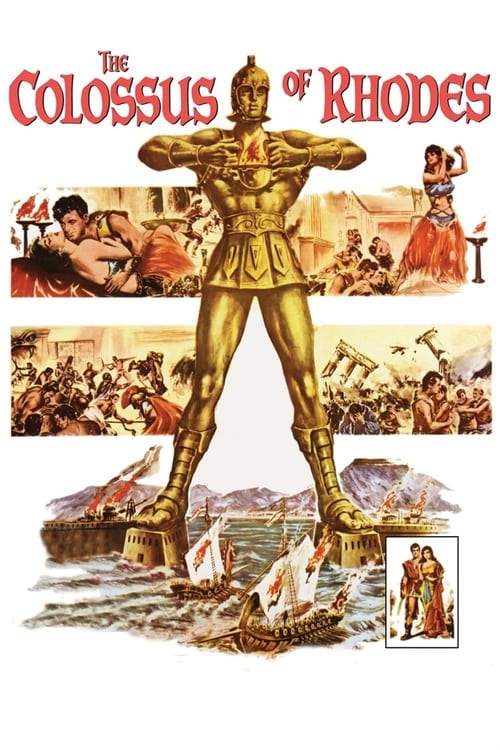
The Colossus of Rhodes
1961 · Directed by Sergio Leone
Woke Score
CriticCritic Score
Ultra Based
Critics rated this 55 points above its woke score. Among Ultra Based films, this critic score ranks #1010 of 1469.
Representation Casting
Score: 0/100
The cast is entirely European with no meaningful representation of diverse backgrounds. Characters are cast according to 1960s European epic film conventions without consideration for inclusive casting.
LGBTQ+ Themes
Score: 0/100
No LGBTQ+ themes or characters are present in the film. The narrative focuses entirely on heterosexual romantic subplots and political intrigue.
Feminist Agenda
Score: 0/100
Female characters serve as romantic interests and plot devices without agency or character development. No feminist themes or critique of gender dynamics are evident.
Racial Consciousness
Score: 0/100
The film contains no examination of racial or ethnic dynamics. Characters are presented as generic historical figures without engagement with questions of identity or colonial power.
Climate Crusade
Score: 0/100
Climate themes are entirely absent from this historical adventure narrative.
Eat the Rich
Score: 2/100
The film depicts resistance to a tyrannical king, which could be read as anti-authoritarian, but this reflects classical adventure storytelling rather than any critique of economic systems.
Body Positivity
Score: 0/100
No body positivity themes are present. The film adheres to conventional 1960s standards of physical appearance without commentary.
Neurodivergence
Score: 0/100
Neurodivergence is not represented or discussed in the film.
Revisionist History
Score: 0/100
The film makes no attempt to revise or reinterpret historical events. It presents ancient Rhodes as a straightforward historical setting for adventure.
Lecture Energy
Score: 1/100
The film maintains the expository dialogue typical of 1960s epics but does not impose contemporary social messaging or preachy lectures.


Synopsis
While on holiday in Rhodes, Athenian war hero Darios becomes involved in two different plots to overthrow the tyrannical king, one from Rhodian patriots and the other from sinister Phoenician agents.
Consciousness Assessment
The Colossus of Rhodes represents Sergio Leone in his pre-western phase, a period when he was still learning the craft of epic filmmaking before he revolutionized the genre. This 1961 historical adventure, set in ancient Rhodes during a time of political upheaval, concerns itself with the classical preoccupations of the era: sword-and-sandal spectacle, international intrigue, and the noble warrior confronting tyranny. The narrative unfolds with the earnest sincerity of a historical pageant, content to deploy its European cast as ciphers within a plot about competing factions seeking control of a Mediterranean kingdom.
What emerges from viewing this film through the contemporary cultural lens is a work almost entirely untouched by the social consciousness that would come to dominate cinema decades later. The female characters exist as romantic interests and plot devices without agency or complexity. The film makes no attempt at historical revisionism, racial consciousness, or any interrogation of power structures beyond the basic melodrama of good versus evil. The production design and casting reflect the conventions of European epic filmmaking circa 1960, which is to say they reflect the assumptions of that moment without self-awareness or critical distance.
This is not a condemnation. The film simply predates the entire vocabulary we now use to discuss cultural representation and social themes. Leone would go on to create far more interesting work, and this early effort stands as a curiosity, a stepping stone between his earlier work and the stylistic innovations that would define his legacy. For our purposes, it registers as a historical artifact rather than an active participant in contemporary cultural discourse.
Analysis generated by our Consciousness Algorithm
Critic Reviews
“Sergio Leone — "The Colossus of Rhodes" (1961)Critic score: 57%”
Consciousness Markers
The cast is entirely European with no meaningful representation of diverse backgrounds. Characters are cast according to 1960s European epic film conventions without consideration for inclusive casting.
No LGBTQ+ themes or characters are present in the film. The narrative focuses entirely on heterosexual romantic subplots and political intrigue.
Female characters serve as romantic interests and plot devices without agency or character development. No feminist themes or critique of gender dynamics are evident.
The film contains no examination of racial or ethnic dynamics. Characters are presented as generic historical figures without engagement with questions of identity or colonial power.
Climate themes are entirely absent from this historical adventure narrative.
The film depicts resistance to a tyrannical king, which could be read as anti-authoritarian, but this reflects classical adventure storytelling rather than any critique of economic systems.
No body positivity themes are present. The film adheres to conventional 1960s standards of physical appearance without commentary.
Neurodivergence is not represented or discussed in the film.
The film makes no attempt to revise or reinterpret historical events. It presents ancient Rhodes as a straightforward historical setting for adventure.
The film maintains the expository dialogue typical of 1960s epics but does not impose contemporary social messaging or preachy lectures.