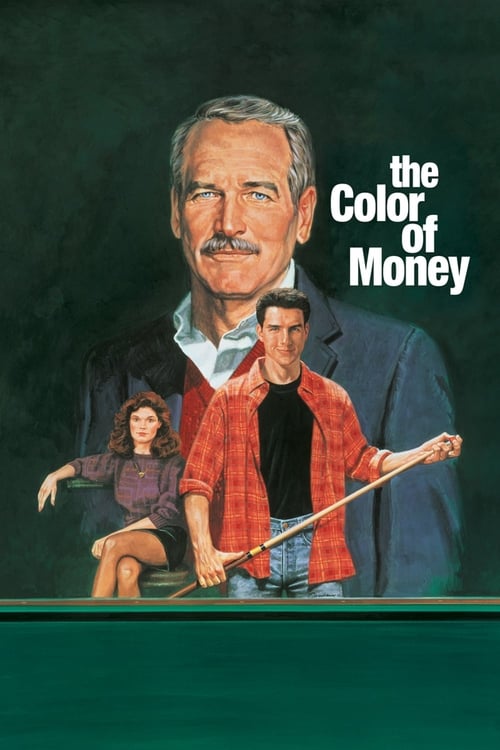
The Color of Money
1986 · Directed by Martin Scorsese
Woke Score
CriticCritic Score
Audience
Ultra Based
Critics rated this 77 points above its woke score. Among Ultra Based films, this critic score ranks #440 of 1469.
Representation Casting
Score: 0/100
While the ensemble includes actors of various backgrounds, the film does not employ conscious representation casting or explore identity as a theme. Characters are present without commentary on their demographic identity.
LGBTQ+ Themes
Score: 0/100
No LGBTQ+ characters, themes, or subtext are present in this pool hustling drama.
Feminist Agenda
Score: 0/100
Female characters occupy peripheral roles as romantic interests rather than focal points of feminist exploration or commentary.
Racial Consciousness
Score: 0/100
Although Black actors appear in the cast, race is not engaged with as a theme and characters are not explored through a racial lens.
Climate Crusade
Score: 0/100
No environmental themes or climate consciousness appear in the film.
Eat the Rich
Score: 0/100
The film does not mount a critique of capitalism, wealth, or economic systems. The narrative focuses on personal redemption rather than systemic critique.
Body Positivity
Score: 0/100
No representation of or commentary on body diversity, acceptance, or positivity.
Neurodivergence
Score: 0/100
No engagement with or representation of neurodivergence in any form.
Revisionist History
Score: 0/100
The film is fictional and not based on historical events, therefore contains no revisionist history elements.
Lecture Energy
Score: 0/100
While the film involves mentorship and teaching, it does so organically within the narrative rather than adopting a preachy or preachy tone.


Synopsis
Former pool hustler "Fast Eddie" Felson decides he wants to return to the game by taking a pupil. He meets talented but green Vincent Lauria and proposes a partnership. As they tour pool halls, Eddie teaches Vincent the tricks of scamming, but he eventually grows frustrated with Vincent's showboat antics, leading to an argument and a falling-out. Eddie takes up playing again and soon crosses paths with Vincent as an opponent.
Consciousness Assessment
Martin Scorsese's 1986 follow-up to "The Hustler" is a meditation on mentorship, pride, and the slow erosion of competitive fire. Paul Newman, in his eighth nomination and first win, reprises "Fast Eddie" Felson as a man reclaiming his place in a world he thought he had left behind. The film moves with the deliberate pacing of a chess match played in dim lighting, each scene a negotiation between ambition and wisdom. Tom Cruise's Vincent Lauria serves as the mirror through which we watch Eddie confront his own younger self, all ego and flash. The supporting cast drifts through the narrative like figures in a pool hall mural, present but not examined. Scorsese treats the material as a character study rather than a social document. The film is interested in the psychology of competition, the education of a talent, and the question of whether a man can reclaim what he once surrendered. There is no agenda here, only the precise observation of men and their games. The pool tables are mere stages for the drama of human ambition. This is craft without commentary, storytelling without instruction. It is the work of a director engaged in the oldest form of cinema, character and consequence, untouched by any desire to instruct the audience in contemporary morality.
Analysis generated by our Consciousness Algorithm
Critic Reviews
“Paul Newman could win an Oscar for his strong, complex performance in The Color of Money. His Eddie Felson, so quick-witted and seemingly imperturbable in the early scenes, eventually drops his foxy pose to reveal some of the raw vulnerability of his Hustler days.”
“A keenly observed and immaculately crafted vision of the raw side of life. Pic has a distinctive pulse of its own with exceptional performances by Paul Newman and Tom Cruise.”
“''The Color of Money'' isn't ''Mean Streets'' or ''Raging Bull.'' It is, however, a stunning vehicle - a white Cadillac among the other mainstream American movies of the season.”
“We get the feeling that whatever it is Scorsese and Price have to say about these marvelous characters, it is not anything very interesting.”
Consciousness Markers
While the ensemble includes actors of various backgrounds, the film does not employ conscious representation casting or explore identity as a theme. Characters are present without commentary on their demographic identity.
No LGBTQ+ characters, themes, or subtext are present in this pool hustling drama.
Female characters occupy peripheral roles as romantic interests rather than focal points of feminist exploration or commentary.
Although Black actors appear in the cast, race is not engaged with as a theme and characters are not explored through a racial lens.
No environmental themes or climate consciousness appear in the film.
The film does not mount a critique of capitalism, wealth, or economic systems. The narrative focuses on personal redemption rather than systemic critique.
No representation of or commentary on body diversity, acceptance, or positivity.
No engagement with or representation of neurodivergence in any form.
The film is fictional and not based on historical events, therefore contains no revisionist history elements.
While the film involves mentorship and teaching, it does so organically within the narrative rather than adopting a preachy or preachy tone.