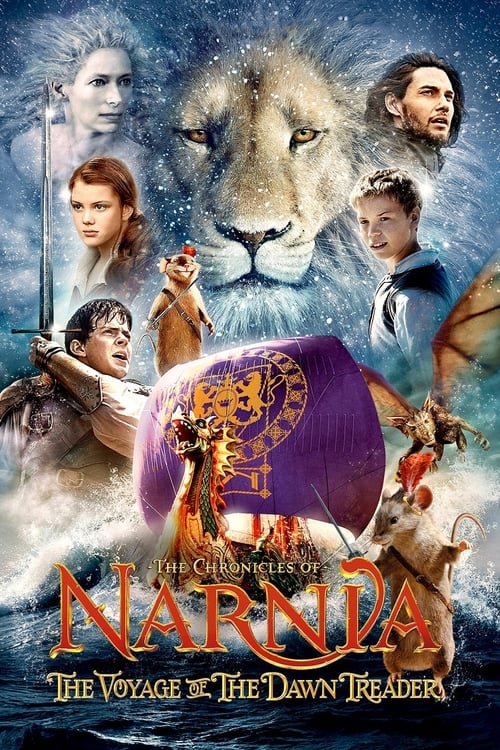
The Chronicles of Narnia: The Voyage of the Dawn Treader
2010 · Directed by Michael Apted
Woke Score
CriticCritic Score
Audience
Ultra Based
Critics rated this 51 points above its woke score. Among Ultra Based films, this critic score ranks #1084 of 1469.
Representation Casting
Score: 0/100
The cast is predominantly white with no meaningful diversity in principal roles, reflecting 2010 fantasy cinema conventions rather than conscious representation efforts.
LGBTQ+ Themes
Score: 0/100
No LGBTQ+ themes, characters, or subtext are present in the film.
Feminist Agenda
Score: 5/100
Lucy Pevensie is an active participant in the adventure, though her role remains secondary to male characters and reflects the source material rather than a deliberate feminist statement.
Racial Consciousness
Score: 0/100
The film contains no exploration of racial themes or racial consciousness.
Climate Crusade
Score: 0/100
No climate-related themes or environmental messaging are present.
Eat the Rich
Score: 0/100
The film contains no anti-capitalist or 'eat the rich' messaging.
Body Positivity
Score: 0/100
No body positivity themes or diverse body representation are evident.
Neurodivergence
Score: 0/100
No neurodivergent characters or representation is present.
Revisionist History
Score: 0/100
The film does not revise or reinterpret historical narratives.
Lecture Energy
Score: 0/100
The film contains no preachy messaging or lecture energy regarding social issues.


Synopsis
This time around Edmund and Lucy Pevensie, along with their pesky cousin Eustace Scrubb find themselves swallowed into a painting and on to a fantastic Narnian ship headed for the very edges of the world.
Consciousness Assessment
The Voyage of the Dawn Treader represents a curious artifact of the pre-woke era, arriving in 2010 as a relatively faithful adaptation of C.S. Lewis's 1952 novel. Director Michael Apted's film concerns itself primarily with the time-worn mechanics of adventure fantasy: a ship, a sea voyage, magical perils, and the redemptive arc of a young boy learning courage. The narrative impulses are fundamentally spiritual and allegorical in the Lewis tradition, rooted in Christian symbolism and medieval fantasy conventions rather than contemporary social consciousness. Lucy Pevensie exists as an active participant in the story, though her role remains secondary to the male characters, which tracks faithfully with both the source material and the prevailing cinematic norms of the period.
The film's modest woke score reflects not moral deficiency but temporal displacement. A cast composed almost entirely of white British and American actors, the absence of any LGBTQ+ representation, the lack of racial consciousness or environmental messaging, and the complete disinterest in body positivity or neurodivergent inclusion are not deliberate provocations but rather the default settings of 2010 family fantasy cinema. One observes here the comfortable unconsciousness of a moment before these considerations became mandatory. The film lectures to no one, crusades against no injustice, and deconstructs no historical narrative. It simply tells its story of sailing ships and dragons and temptation with the earnest, straightforward manner of someone who believes in the material.
What distinguishes this film is precisely its refusal to contemporize. In an era when every adaptation seems compelled to retrofit progressive sensibilities onto source material, Apted allows Lewis's original vision to remain largely intact, for better or worse. The result is a film that feels almost quaint in its lack of cultural self-consciousness, neither offensive nor particularly aware that offense might be possible. This makes it a useful artifact for measuring how much has changed in the cultural conversation in merely fifteen years.
Analysis generated by our Consciousness Algorithm
Critic Reviews
“Michael Apted opts for a certain dated and mannered appeal with a whiff of nostalgia for more innocent times, which lends added enchantment. ”
“True to the intent of the Christian apologist Lewis' novels, there are lessons to be learned, many of them delivered by the chivalrous mouse, Reepicheep, voiced with a plummy verve by Simon Pegg.”
“This is a rip-snorting adventure fantasy for families, especially the younger members who are not insistent on continuity. Director Michael Apted may be too good for this material, but he attacks with gusto.”
“An utter shipwreck, a would-be adventure with meager rations of magic and a listless crew.”
Consciousness Markers
The cast is predominantly white with no meaningful diversity in principal roles, reflecting 2010 fantasy cinema conventions rather than conscious representation efforts.
No LGBTQ+ themes, characters, or subtext are present in the film.
Lucy Pevensie is an active participant in the adventure, though her role remains secondary to male characters and reflects the source material rather than a deliberate feminist statement.
The film contains no exploration of racial themes or racial consciousness.
No climate-related themes or environmental messaging are present.
The film contains no anti-capitalist or 'eat the rich' messaging.
No body positivity themes or diverse body representation are evident.
No neurodivergent characters or representation is present.
The film does not revise or reinterpret historical narratives.
The film contains no preachy messaging or lecture energy regarding social issues.