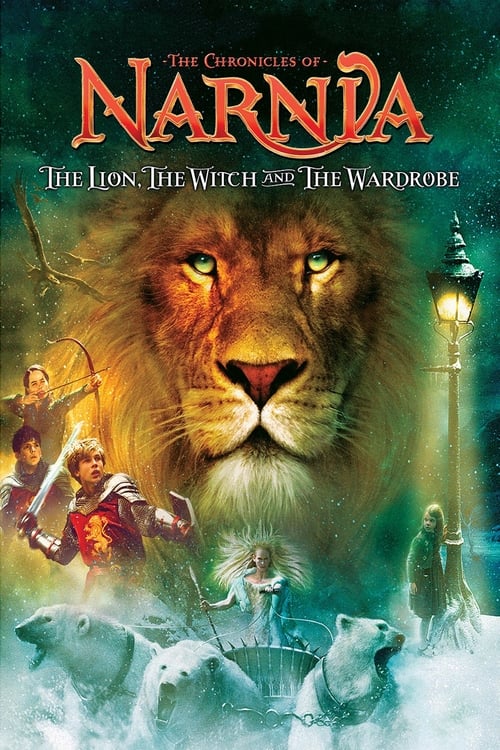
The Chronicles of Narnia: The Lion, the Witch and the Wardrobe
2005 · Directed by Andrew Adamson
Woke Score
CriticCritic Score
Audience
Ultra Based
Critics rated this 67 points above its woke score. Among Ultra Based films, this critic score ranks #478 of 1469.
Representation Casting
Score: 12/100
The cast is entirely white and European in appearance. While the film includes both male and female characters, the racial composition reflects neither contemporary diversity standards nor any deliberate attempt at inclusive representation.
LGBTQ+ Themes
Score: 0/100
No LGBTQ+ themes or representation are present. The source material predates such considerations, and the adaptation makes no additions or contemporary reframing that would introduce such elements.
Feminist Agenda
Score: 15/100
Susan and Lucy are active participants in the narrative but occupy secondary roles to their brothers Edmund and Peter. The film adapts the source material's gender dynamics without apparent reexamination or revision to expand the female characters' agency.
Racial Consciousness
Score: 8/100
The film contains no engagement with racial themes or consciousness. The medieval fantasy setting and creature design reflect traditional European fantasy aesthetics without any multicultural perspective or deliberate diversification.
Climate Crusade
Score: 5/100
The eternal winter created by the Witch functions as a narrative plot device representing evil and oppression rather than as commentary on environmental systems or climate change. Any environmental themes are purely metaphorical.
Eat the Rich
Score: 10/100
The film presents a hierarchical medieval fantasy world with kings, witches, and magical authority structures. While the narrative opposes the Witch's tyranny, there is no critique of economic systems or wealth distribution.
Body Positivity
Score: 0/100
The film does not engage with body diversity or body positivity themes. Characters are presented according to conventional fantasy archetypes without commentary on appearance or embodiment.
Neurodivergence
Score: 0/100
No representation of neurodivergence is present. The film makes no attempt to depict or discuss neurodiversity among its characters.
Revisionist History
Score: 5/100
The adaptation stays faithful to the source material's fantasy world-building. While it adds some cinematic elements, it does not reinterpret historical narratives or present alternative historical perspectives.
Lecture Energy
Score: 20/100
The film carries the theological weight of its source material, with Aslan's sacrifice serving as explicit Christian allegory. However, it presents this through narrative and spectacle rather than preachy dialogue, limiting overt moralizing.


Synopsis
Siblings Lucy, Edmund, Susan and Peter step through a magical wardrobe and find the land of Narnia. There, they discover a charming, once peaceful kingdom that has been plunged into eternal winter by the evil White Witch, Jadis. Aided by the wise and magnificent lion, Aslan, the children lead Narnia into a spectacular, climactic battle to be free of the Witch's glacial powers forever.
Consciousness Assessment
The Chronicles of Narnia represents that curious artifact of mid-2000s family filmmaking, a period when the studio system had not yet fully absorbed the vocabulary of contemporary progressive sensibilities. Director Andrew Adamson's adaptation of C.S. Lewis's foundational Christian allegory remains stubbornly tethered to the source material's medieval gender hierarchies and theological framework. The film presents its narrative with a kind of earnest sincerity that feels almost quaint by modern standards, offering no self-aware commentary on the structures it depicts. Susan and Lucy function primarily as supporting players to their brothers' arcs, which the film accepts without apparent irony. The Witch herself, portrayed with considerable menace by Tilda Swinton, serves as the embodiment of evil rather than a figure whose villainy might be interrogated through any contemporary lens.
What we observe here is a film from an era when major studio productions could still exist largely outside the current discourse around representation and social consciousness. The cast is uniformly pale, the medieval setting populated with creatures of European fantasy stock, and the underlying theology remains explicitly Christian without any attempt at universalization or pluralistic reframing. The narrative structure itself, with its emphasis on traditional heroism and sacrifice, contains no apparent anxiety about its own assumptions. A magical wardrobe functions as portal, not as metaphor for anything beyond itself. Good and evil are rendered in primary colors, lacking the moral complexity that contemporary family entertainment increasingly feels obligated to perform.
Yet one must resist the temptation to read this absence as sinister rather than merely reflective of its historical moment. The film is not aggressively reactionary so much as it is pre-conscious of the categories we now deploy. This is the work of a production that existed before these concerns became industry standard, and it bears that innocence lightly. The result is a film that scores modestly on our contemporary rubric not because it violates progressive principles but because it simply precedes them, operating according to an older set of aesthetic and narrative assumptions that time has rendered visible.
Analysis generated by our Consciousness Algorithm
Critic Reviews
“A generation-spanning journey that feels both comfortingly familiar and excitingly original.”
“Plunges into an imaginative landscape as large as all creation - and never slackens its barreling pace or shrinks its panoramic scope.”
“A movie of intelligence and power, of beauty, universality and largeness of spirit.”
Consciousness Markers
The cast is entirely white and European in appearance. While the film includes both male and female characters, the racial composition reflects neither contemporary diversity standards nor any deliberate attempt at inclusive representation.
No LGBTQ+ themes or representation are present. The source material predates such considerations, and the adaptation makes no additions or contemporary reframing that would introduce such elements.
Susan and Lucy are active participants in the narrative but occupy secondary roles to their brothers Edmund and Peter. The film adapts the source material's gender dynamics without apparent reexamination or revision to expand the female characters' agency.
The film contains no engagement with racial themes or consciousness. The medieval fantasy setting and creature design reflect traditional European fantasy aesthetics without any multicultural perspective or deliberate diversification.
The eternal winter created by the Witch functions as a narrative plot device representing evil and oppression rather than as commentary on environmental systems or climate change. Any environmental themes are purely metaphorical.
The film presents a hierarchical medieval fantasy world with kings, witches, and magical authority structures. While the narrative opposes the Witch's tyranny, there is no critique of economic systems or wealth distribution.
The film does not engage with body diversity or body positivity themes. Characters are presented according to conventional fantasy archetypes without commentary on appearance or embodiment.
No representation of neurodivergence is present. The film makes no attempt to depict or discuss neurodiversity among its characters.
The adaptation stays faithful to the source material's fantasy world-building. While it adds some cinematic elements, it does not reinterpret historical narratives or present alternative historical perspectives.
The film carries the theological weight of its source material, with Aslan's sacrifice serving as explicit Christian allegory. However, it presents this through narrative and spectacle rather than preachy dialogue, limiting overt moralizing.