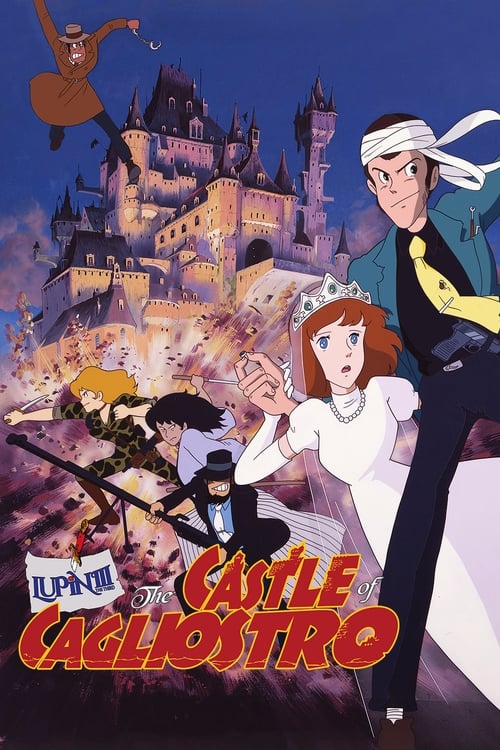
The Castle of Cagliostro
1979 · Directed by Hayao Miyazaki
Ultra Based
Consciousness Score: 0%
Representation Casting
Score: 0/100
The cast is overwhelmingly male with meaningful roles. Female characters like Clarisse and Fujiko are supporting players without substantive agency or development. No attempt is made to diversify representation.
LGBTQ+ Themes
Score: 0/100
There is no evidence of LGBTQ+ themes, representation, or subtext in the film. The narrative is entirely heteronormative and conventional.
Feminist Agenda
Score: 0/100
The female protagonist exists primarily as a damsel to be rescued, a traditional narrative structure that predates feminist consciousness in cinema. There is no interrogation of gender roles or patriarchal power dynamics.
Racial Consciousness
Score: 0/100
The film contains no engagement with racial themes, identity, or consciousness. The story operates in a fairy-tale European setting divorced from any racial or ethnic commentary.
Climate Crusade
Score: 0/100
There is no evidence of climate activism, environmental consciousness, or ecological themes in the narrative or visual presentation.
Eat the Rich
Score: 0/100
While the protagonist is a thief, the film does not critique capitalism, wealth inequality, or systemic exploitation. The heist is treated as adventure rather than social commentary.
Body Positivity
Score: 0/100
There is no indication of body positivity messaging or challenge to conventional beauty standards. Characters are drawn in conventional animation styles without commentary.
Neurodivergence
Score: 0/100
There is no representation of neurodivergence or engagement with disability and neurodiversity themes in the film.
Revisionist History
Score: 0/100
The film is a fantasy adventure set in a fictional European duchy, not a historical narrative requiring revisionist examination or reinterpretation.
Lecture Energy
Score: 0/100
The film is purely entertainment-focused with no preachy messaging, moral lectures, or attempts to educate audiences about social issues.


Synopsis
After a successful robbery leaves famed thief Lupin the Third and his partner Jigen with nothing but a large amount of expertly crafted counterfeit bills, he decides to track down the forgers responsible—and steal any other treasures he may find in the Castle of Cagliostro, including the 'damsel in distress' he finds imprisoned there.
Consciousness Assessment
The Castle of Cagliostro is a technical masterpiece of animation that arrived in 1979 with the sensibilities of its era fully intact. The film centers on rescuing Princess Clarisse from the machinations of the villainous Count Cagliostro, a narrative structure that bears the unmistakable imprint of classical European adventure fiction rather than contemporary progressive concerns. Clarisse exists primarily as a plot mechanism, gentle and passive, requiring rescue by male protagonists. She has agency only in the margins of the story, serving more as an object to be protected than a character with autonomous goals or desires.
The cast is uniformly male in any meaningful sense, with female characters relegated to supporting or purely decorative roles. Fujiko Mine, the only woman among Lupin's associates, appears briefly and departs early, her presence almost an afterthought. The film makes no attempt to interrogate gender dynamics or power structures beyond the conventional villain-versus-hero framework. There is no visible concern with representation, diversity, identity politics, or the social consciousness that would become the hallmark of progressive cultural production decades later.
What emerges instead is pure spectacle and craft, a heist adventure that succeeds entirely on its technical and narrative merits. Miyazaki's directorial debut in feature animation demonstrates his mastery of action, pacing, and visual storytelling. The film influenced generations of filmmakers and remains a benchmark of animation excellence. Yet viewed through the lens of contemporary cultural markers, it registers as fundamentally apolitical, animated in the idiom of its moment, concerned with thrills and charm rather than consciousness-raising. This is not a weakness of the film itself, only an accurate reflection of what it is: a work of its time, untouched by the social preoccupations that would define later decades.
Analysis generated by our Consciousness Algorithm
Consciousness Markers
The cast is overwhelmingly male with meaningful roles. Female characters like Clarisse and Fujiko are supporting players without substantive agency or development. No attempt is made to diversify representation.
There is no evidence of LGBTQ+ themes, representation, or subtext in the film. The narrative is entirely heteronormative and conventional.
The female protagonist exists primarily as a damsel to be rescued, a traditional narrative structure that predates feminist consciousness in cinema. There is no interrogation of gender roles or patriarchal power dynamics.
The film contains no engagement with racial themes, identity, or consciousness. The story operates in a fairy-tale European setting divorced from any racial or ethnic commentary.
There is no evidence of climate activism, environmental consciousness, or ecological themes in the narrative or visual presentation.
While the protagonist is a thief, the film does not critique capitalism, wealth inequality, or systemic exploitation. The heist is treated as adventure rather than social commentary.
There is no indication of body positivity messaging or challenge to conventional beauty standards. Characters are drawn in conventional animation styles without commentary.
There is no representation of neurodivergence or engagement with disability and neurodiversity themes in the film.
The film is a fantasy adventure set in a fictional European duchy, not a historical narrative requiring revisionist examination or reinterpretation.
The film is purely entertainment-focused with no preachy messaging, moral lectures, or attempts to educate audiences about social issues.