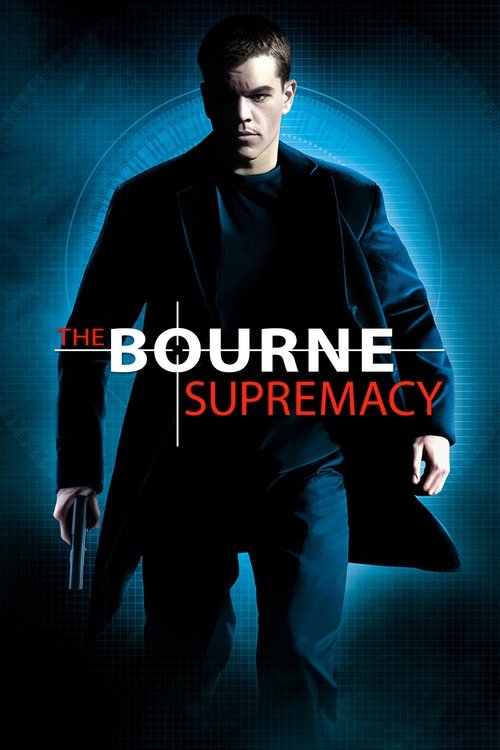
The Bourne Supremacy
2004 · Directed by Paul Greengrass
Woke Score
CriticCritic Score
Audience
Ultra Based
Critics rated this 69 points above its woke score. Among Ultra Based films, this critic score ranks #534 of 1469.
Representation Casting
Score: 15/100
Marie is a female character with agency, though she ultimately exists primarily to motivate the male protagonist. The supporting cast is predominantly white and male, typical of mid-2000s action films.
LGBTQ+ Themes
Score: 0/100
No LGBTQ+ themes, characters, or representation present in the film.
Feminist Agenda
Score: 5/100
Marie participates in the plot and makes decisions, but she is ultimately killed off to further Bourne's character development, a trope that undercuts any feminist positioning.
Racial Consciousness
Score: 0/100
No evidence of racial consciousness or thematic engagement with race. Cast diversity is minimal and unremarkable for a 2004 action thriller.
Climate Crusade
Score: 0/100
No climate-related themes or environmental consciousness present in the narrative.
Eat the Rich
Score: 0/100
While the film critiques state institutions and corporate conspiracy, there is no systematic critique of capitalism itself.
Body Positivity
Score: 0/100
No body positivity messaging or representation of diverse body types. The film presents conventional action hero physiques without comment.
Neurodivergence
Score: 10/100
Bourne's psychogenic amnesia could be read as neurodivergence, but the film treats it as a clinical problem to be solved rather than a condition to be understood or celebrated.
Revisionist History
Score: 0/100
No reinterpretation or reframing of historical events. The film is set in a contemporary (for 2004) espionage scenario.
Lecture Energy
Score: 0/100
The film contains no preachy or preachy moments. It is purely functional in its storytelling, unconcerned with educating the audience about social issues.


Synopsis
A CIA operation to purchase classified Russian documents is blown by a rival agent, who then shows up in the sleepy seaside village where Bourne and Marie have been living. The pair run for their lives and Bourne, who promised retaliation should anyone from his former life attempt contact, is forced to once again take up his life as a trained assassin to survive.
Consciousness Assessment
The Bourne Supremacy is, in the most technical sense, a film that exists. It is also a film that contains within it a woman named Marie, who participates in the narrative before being eliminated from it. This constitutes the totality of what might charitably be called its progressive sensibilities. The film concerns itself with espionage, murder, and the mechanisms of institutional betrayal, all of which are pursued with the grim efficiency of a man who has forgotten how to do anything except kill people.
Paul Greengrass brought to the sequel a kinetic visual language that would come to define action cinema for the next two decades. This is a film of pure narrative utility, where every scene exists to move the plot forward and every character serves an instrumental function. Marie is present. She is played by an actress. The film does not make this into a statement. There is no consciousness here, progressive or otherwise, only the cold machinery of espionage and the exploitation of a man whose brain has been broken by the state apparatus.
Consider what is not here: no interrogation of capitalism, no environmental anxiety, no neurodivergent representation treated with anything resembling care, no LGBTQ+ presence, no racial consciousness, no body positivity, no revisionist history, and certainly no lecture energy. This is a film from 2004 made by people who had other things on their minds. It remains, in its way, refreshingly unconcerned with the cultural conversations that would come to dominate the medium two decades later.
Analysis generated by our Consciousness Algorithm
Critic Reviews
“A conventionally heightened series of escapes and clashes and hide-and-seek gambits, yet the way the film has been made, nothing that happens seems inevitable -- which is to say, anything seems possible. There's a word for that sensation. It's called excitement. ”
“This is high-speed action realism carried off with the dexterity of a magician pulling a hundred rabbits out of a hat in one graceful gesture. The crowning flourish is an extended car chase through the streets and tunnels of Moscow that ranks as one of the three or four most exciting demolition derbies ever filmed. ”
“I had some trouble with the plot, but I'm not the only one -- so did the screenwriter.”
Consciousness Markers
Marie is a female character with agency, though she ultimately exists primarily to motivate the male protagonist. The supporting cast is predominantly white and male, typical of mid-2000s action films.
No LGBTQ+ themes, characters, or representation present in the film.
Marie participates in the plot and makes decisions, but she is ultimately killed off to further Bourne's character development, a trope that undercuts any feminist positioning.
No evidence of racial consciousness or thematic engagement with race. Cast diversity is minimal and unremarkable for a 2004 action thriller.
No climate-related themes or environmental consciousness present in the narrative.
While the film critiques state institutions and corporate conspiracy, there is no systematic critique of capitalism itself.
No body positivity messaging or representation of diverse body types. The film presents conventional action hero physiques without comment.
Bourne's psychogenic amnesia could be read as neurodivergence, but the film treats it as a clinical problem to be solved rather than a condition to be understood or celebrated.
No reinterpretation or reframing of historical events. The film is set in a contemporary (for 2004) espionage scenario.
The film contains no preachy or preachy moments. It is purely functional in its storytelling, unconcerned with educating the audience about social issues.