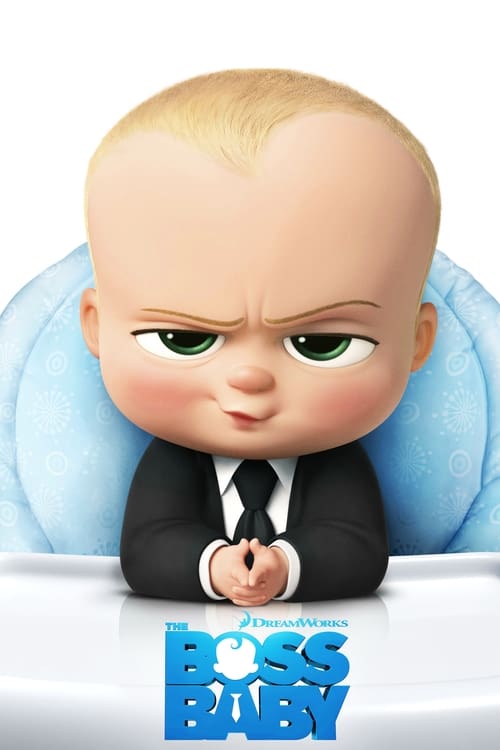
The Boss Baby
2017 · Directed by Tom McGrath
Woke Score
CriticCritic Score
Audience
Ultra Based
Critics rated this 46 points above its woke score. Among Ultra Based films, this critic score ranks #1157 of 1469.
Representation Casting
Score: 5/100
The film features a standard voice cast with no deliberate effort toward diverse or underrepresented representation. Female and supporting characters exist but serve traditional roles without commentary.
LGBTQ+ Themes
Score: 0/100
No LGBTQ+ themes, characters, or representation present in the film.
Feminist Agenda
Score: 5/100
Female characters appear in the narrative but occupy supporting roles without any engagement with feminist themes or gender commentary.
Racial Consciousness
Score: 0/100
The film contains no racial commentary, discussion of systemic issues, or deliberate engagement with questions of representation and marginalization.
Climate Crusade
Score: 0/100
No environmental themes, climate messaging, or ecological consciousness present.
Eat the Rich
Score: 10/100
The corporate setting and Baby Corporation conceit offer light satirical treatment of business culture, but this functions as comedic backdrop rather than genuine critique.
Body Positivity
Score: 0/100
No engagement with body image, disability representation, or acceptance of non-standard bodies.
Neurodivergence
Score: 0/100
No representation or discussion of neurodivergent characters or conditions.
Revisionist History
Score: 0/100
Not applicable to a contemporary fictional animated comedy.
Lecture Energy
Score: 15/100
The film prioritizes humor and entertainment over preachy messaging, allowing lessons about family to emerge naturally rather than through preachy dialogue.


Synopsis
A story about how a new baby's arrival impacts a family, told from the point of view of a delightfully unreliable narrator, a wildly imaginative 7 year old named Tim.
Consciousness Assessment
The Boss Baby represents the cultural moment of 2017 animated comedy, which is to say it represents virtually nothing in terms of progressive sensibilities or cultural consciousness. The film is fundamentally a story about two boys learning to love each other, a narrative so timeless it could have been told in any era. The presence of female characters and a racially unmarked cast registers as mere demographic background rather than intentional representation. The film's satirical corporate setting, while vaguely anti-establishment in tone, functions as pure comedic window dressing. A baby executive battling a puppy corporation is not a critique of capitalism but rather a playground for absurdist humor designed to entertain children and their parents. The film mistakes gentle family dysfunction for social commentary, offering no genuine examination of class, gender, race, or any cultural fault line of the 2020s.
What emerges from The Boss Baby is a film so thoroughly committed to mainstream entertainment that it achieves a kind of perfect neutrality. The humor derives from slapstick and character quips rather than from any desire to lecture audiences about contemporary values. Even the film's ultimate message, that family bonds matter more than ambition, is presented as emotional revelation rather than ideological instruction. The voice acting by Alec Baldwin and the supporting cast serves the comedy without any apparent concern for representation or visibility. One encounters no neurodivergent characters, no climate anxiety, no queer subtext, and no revisionist history. The film is content to be exactly what it appears: a commercially calculated entertainment product for families seeking 90 minutes of distraction on a weekend afternoon.
This is not a criticism. The Boss Baby is competent animation executed with professional craftsmanship. It is simply a film that exists outside the constellation of contemporary progressive sensibilities, neither embracing nor rejecting them with any particular intensity. It is what mainstream commercial animation looks like when freed from any obligation to perform cultural consciousness.
Analysis generated by our Consciousness Algorithm
Critic Reviews
“Words like "inventive" and "inspired" are very rarely applied to the parade of cookie cutter animated features that pass through the multiplex each year, but The Boss Baby proves a refreshing exception.”
“I connected with its out-there take on the first days of sibling rivalry, the acknowledgement that humanity is utterly distracted by cute puppy videos on the Internet and with Baldwin, a silky-smooth comic bully whose onscreen bark is always a lot worse than his bite.”
“The Boss Baby (adapted from the 2010 book by author and illustrator Marla Frazee) is a sweet adventure tale about sibling rivalry that ultimately becomes a moving tribute to family and brotherhood.”
“It’s all very bizarrely, pointlessly complicated.”
Consciousness Markers
The film features a standard voice cast with no deliberate effort toward diverse or underrepresented representation. Female and supporting characters exist but serve traditional roles without commentary.
No LGBTQ+ themes, characters, or representation present in the film.
Female characters appear in the narrative but occupy supporting roles without any engagement with feminist themes or gender commentary.
The film contains no racial commentary, discussion of systemic issues, or deliberate engagement with questions of representation and marginalization.
No environmental themes, climate messaging, or ecological consciousness present.
The corporate setting and Baby Corporation conceit offer light satirical treatment of business culture, but this functions as comedic backdrop rather than genuine critique.
No engagement with body image, disability representation, or acceptance of non-standard bodies.
No representation or discussion of neurodivergent characters or conditions.
Not applicable to a contemporary fictional animated comedy.
The film prioritizes humor and entertainment over preachy messaging, allowing lessons about family to emerge naturally rather than through preachy dialogue.