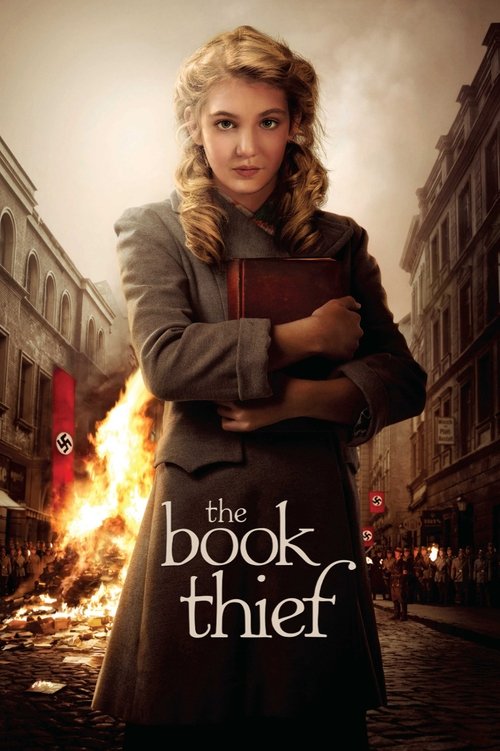
The Book Thief
2013 · Directed by Brian Percival
Woke Score
CriticCritic Score
Audience
Ultra Based
Critics rated this 45 points above its woke score. Among Ultra Based films, this critic score ranks #1080 of 1469.
Representation Casting
Score: 15/100
The cast features international and diverse actors, though casting reflects period authenticity rather than deliberate modern diversity initiatives.
LGBTQ+ Themes
Score: 0/100
No LGBTQ+ themes, characters, or representation present in the film.
Feminist Agenda
Score: 20/100
Liesel is an active female protagonist who challenges authority and seeks knowledge, but feminism is implicit to the character rather than explicitly foregrounded.
Racial Consciousness
Score: 5/100
The film addresses antisemitism through the Jewish refugee subplot, but as historical context rather than modern progressive racial justice advocacy.
Climate Crusade
Score: 0/100
No environmental themes or climate messaging of any kind.
Eat the Rich
Score: 0/100
No critique of capitalism or anti-capitalist messaging present.
Body Positivity
Score: 0/100
No body positivity themes or commentary about body image.
Neurodivergence
Score: 0/100
No representation of or thematic engagement with neurodivergence.
Revisionist History
Score: 10/100
The film presents a conventional historical narrative without major reframing, though it does emphasize ordinary German humanity during the Nazi era.
Lecture Energy
Score: 15/100
Some explicit messaging about the power of words and books through narration and dialogue, but not aggressively preachy in a contemporary progressive manner.


Synopsis
While subjected to the horrors of WWII Germany, young Liesel finds solace by stealing books and sharing them with others. Under the stairs in her home, a Jewish refugee is being sheltered by her adoptive parents.
Consciousness Assessment
The Book Thief arrives bearing the weight of its subject matter with the earnestness of a film that knows it is tackling something grave. This is a competent historical drama about a young girl navigating Nazi Germany while sheltering a Jewish refugee, adapted from Markus Zusak's bestselling novel and directed with technical proficiency by Brian Percival. Geoffrey Rush delivers a performance of considerable restraint as the adoptive father, while Sophie Nélisse anchors the narrative with appropriate youthful resolve. The cinematography is handsome, the score swells at predetermined moments, and everyone speaks their lines with the measured tones of actors aware they are participating in a Film About Important Things.
Yet there exists a curious tension between the film's moral seriousness and its aesthetic conservatism. The picture concerns itself with how ordinary people endured extraordinary evil, how small acts of compassion persisted amid systematic dehumanization, and how books provided solace when the world descended into barbarism. These are legitimate and weighty themes that deserve engagement. However, the film pursues them through a thoroughly conventional narrative framework, offering no particularly novel insights into the period or its mechanisms of oppression. The Jewish refugee remains largely a symbol of persecution rather than a fully realized character, and the film's humanism, while sincere, never achieves the complexity that might elevate it beyond well-intentioned historical recreation.
What distinguishes this analysis is the recognition that moral importance and contemporary cultural consciousness operate on different registers entirely. A film about the Holocaust occupies a different categorical space than a film exhibiting modern progressive sensibilities. The Book Thief is neither better nor worse for its lack of engagement with 2020s frameworks of representation, equity, and social justice. It is simply a different kind of work, one that measures itself against historical tragedy rather than contemporary cultural movements. One might argue that this restraint is itself admirable, or one might find it limiting. Either way, the classification remains clear.
Analysis generated by our Consciousness Algorithm
Critic Reviews
“This is one of the best movies of the year, featuring one of the most perfect endings of any movie in recent memory.”
“Books themselves become the story's key symbol, representing the past and future, loss and possibility, of a place that's ground zero for some of history's darkest days.”
“Overall, it’s engaging and serves its young audience well — a rare Holocaust movie that doesn’t strain to become Oscar bait.”
“The Book Thief is a shameless piece of Oscar-seeking Holocaust kitsch.”
Consciousness Markers
The cast features international and diverse actors, though casting reflects period authenticity rather than deliberate modern diversity initiatives.
No LGBTQ+ themes, characters, or representation present in the film.
Liesel is an active female protagonist who challenges authority and seeks knowledge, but feminism is implicit to the character rather than explicitly foregrounded.
The film addresses antisemitism through the Jewish refugee subplot, but as historical context rather than modern progressive racial justice advocacy.
No environmental themes or climate messaging of any kind.
No critique of capitalism or anti-capitalist messaging present.
No body positivity themes or commentary about body image.
No representation of or thematic engagement with neurodivergence.
The film presents a conventional historical narrative without major reframing, though it does emphasize ordinary German humanity during the Nazi era.
Some explicit messaging about the power of words and books through narration and dialogue, but not aggressively preachy in a contemporary progressive manner.