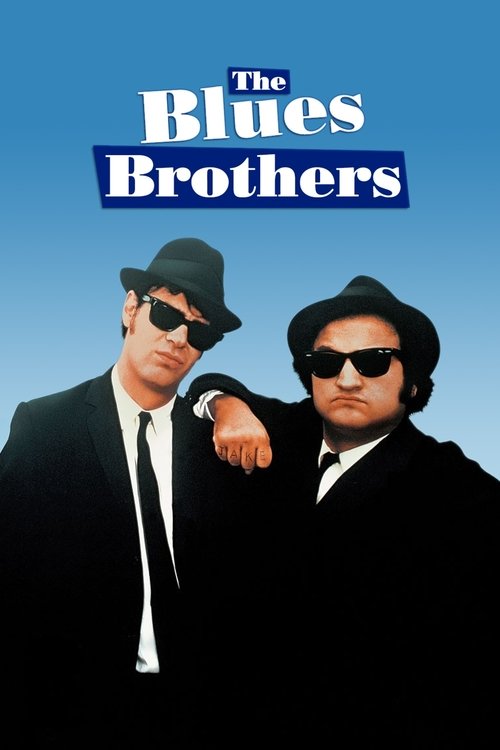
The Blues Brothers
1980 · Directed by John Landis
Woke Score
CriticCritic Score
Audience
Ultra Based
Critics rated this 42 points above its woke score. Among Ultra Based films, this critic score ranks #916 of 1469.
Representation Casting
Score: 35/100
The film features numerous Black musicians in significant roles (Ray Charles, Aretha Franklin, Cab Calloway, James Brown), though they are positioned as supporting acts in a narrative centered on white protagonists. The casting reflects the music's authentic origins rather than a deliberate diversity strategy.
LGBTQ+ Themes
Score: 0/100
The film contains no LGBTQ+ themes, representation, or subtext of any kind. Sexual orientation plays no role in the narrative or characterization.
Feminist Agenda
Score: 5/100
Aretha Franklin appears in a brief but commanding scene as a soul food restaurant owner and performs 'Think,' which contains feminist messaging. However, she remains a supporting character, and the film's primary narrative focuses on male characters and their redemption.
Racial Consciousness
Score: 25/100
While the film celebrates Black musical tradition and features Black artists prominently, it lacks any explicit engagement with racial issues or systemic racism. The appropriation of Black culture by white protagonists is presented without ironic distance or critical reflection.
Climate Crusade
Score: 0/100
Environmental concerns are entirely absent from the film. No climate-related themes, messaging, or narrative elements appear in this action comedy.
Eat the Rich
Score: 15/100
The film's plot involves saving a Catholic orphanage from closure, which gestures toward concern for institutional preservation and social welfare. However, this is treated as a personal mission of redemption rather than systemic critique of capitalist structures.
Body Positivity
Score: 0/100
Body positivity is not a theme in this film. Characters are not presented with any particular consciousness regarding body image, size, or physical appearance as social categories.
Neurodivergence
Score: 0/100
No representation of or engagement with neurodivergence appears in the film. No characters are portrayed with autism, ADHD, dyslexia, or other neurodivergent conditions.
Revisionist History
Score: 0/100
The film does not engage in revisionist historical narratives. It is a straightforward comedy without historical claims or reinterpretations of past events.
Lecture Energy
Score: 10/100
The film occasionally indulges in moral messaging about helping the less fortunate and preserving community institutions, though this remains light and embedded in musical performance rather than delivered as explicit moral instruction.


Synopsis
Jake Blues, just released from prison, puts his old band back together to save the Catholic home where he and his brother Elwood were raised.
Consciousness Assessment
The Blues Brothers stands as a curious artifact from an era when cultural awareness had not yet achieved its current refinement. The film's central conceit involves two white men appropriating Black musical tradition, a choice that would be regarded as deeply problematic through contemporary lenses. Yet the picture's saving grace lies in its genuine reverence for its source material and the iconic Black musicians who appear throughout. Ray Charles, Aretha Franklin, Cab Calloway, and James Brown are not mere set dressing but occupy positions of dignity and musical authority, performing their own material with complete creative control. The film's heart, insofar as it has one, beats for the preservation of a Black cultural institution, the South Side orphanage, though this narrative framing hardly absolves its fundamental approach.
The production exists in a liminal space where good intentions cannot quite overcome structural problems. The Blues Brothers themselves are essentially performing in a tradition that does not belong to them, and the film asks us to celebrate their commitment to this appropriation rather than interrogate it. From a contemporary perspective, this represents a failure of cultural consciousness that was perhaps less visible in 1980 but remains entirely visible now. The supporting cast of legendary musicians functions as a corrective of sorts, their presence suggesting that genuine Black artistry is the true subject of veneration, yet they remain supporting players in a narrative centered on white redemption.
In terms of modern progressive sensibilities, the film registers as almost entirely pre-conscious. It contains no explicit engagement with systemic inequality, no interrogation of power structures, and certainly no awareness that its own framing mechanisms might warrant scrutiny. The diversity on screen emerges from the music itself rather than from any deliberate representational strategy. For those seeking evidence of 2020s cultural awareness in a 1980 comedy, this is not the place to look.
Analysis generated by our Consciousness Algorithm
Critic Reviews
“The film also has stunning car chases, choreographed like the dancing in a musical, as the Blues Brothers are pursued throughout Chicago, at one point even tearing through a shopping mall, in their 'Bluesmobile', a retired 1974 Mount Prospect, Illinois Dodge Monaco patrol car.”
“An exceptional comedy...Car wrecks and blues-related music galore in the best movie ever made in Chicago. [11 July 1980, p.3-8]”
“The stunts are still awe-inspiring, and there's plenty of laughs. They really were thinking big.”
“Ironically, the stars didn't get it together either. The Blues Brothers offers the melancholy spectacle of them sinking deeper and deeper into a comic grave.”
Consciousness Markers
The film features numerous Black musicians in significant roles (Ray Charles, Aretha Franklin, Cab Calloway, James Brown), though they are positioned as supporting acts in a narrative centered on white protagonists. The casting reflects the music's authentic origins rather than a deliberate diversity strategy.
The film contains no LGBTQ+ themes, representation, or subtext of any kind. Sexual orientation plays no role in the narrative or characterization.
Aretha Franklin appears in a brief but commanding scene as a soul food restaurant owner and performs 'Think,' which contains feminist messaging. However, she remains a supporting character, and the film's primary narrative focuses on male characters and their redemption.
While the film celebrates Black musical tradition and features Black artists prominently, it lacks any explicit engagement with racial issues or systemic racism. The appropriation of Black culture by white protagonists is presented without ironic distance or critical reflection.
Environmental concerns are entirely absent from the film. No climate-related themes, messaging, or narrative elements appear in this action comedy.
The film's plot involves saving a Catholic orphanage from closure, which gestures toward concern for institutional preservation and social welfare. However, this is treated as a personal mission of redemption rather than systemic critique of capitalist structures.
Body positivity is not a theme in this film. Characters are not presented with any particular consciousness regarding body image, size, or physical appearance as social categories.
No representation of or engagement with neurodivergence appears in the film. No characters are portrayed with autism, ADHD, dyslexia, or other neurodivergent conditions.
The film does not engage in revisionist historical narratives. It is a straightforward comedy without historical claims or reinterpretations of past events.
The film occasionally indulges in moral messaging about helping the less fortunate and preserving community institutions, though this remains light and embedded in musical performance rather than delivered as explicit moral instruction.