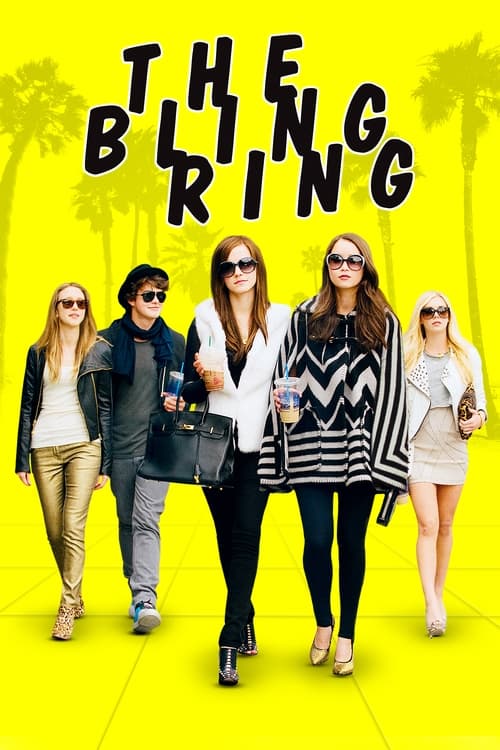
The Bling Ring
2013 · Directed by Sofia Coppola
Woke Score
CriticCritic Score
Audience
Based
Critics rated this 38 points above its woke score. Among Based films, this critic score ranks #193 of 345.
Representation Casting
Score: 35/100
The film features a diverse cast with female leads and a female director, though the character development remains superficial and the diversity is not thematically engaged with in any substantial way.
LGBTQ+ Themes
Score: 0/100
No LGBTQ+ themes, characters, or representation are present in the film.
Feminist Agenda
Score: 15/100
While the film centers female protagonists, it does not advance feminist analysis or critique. The girls are presented as vacuous consumers rather than complex subjects worthy of feminist examination.
Racial Consciousness
Score: 0/100
The film contains no examination of race, racial identity, or racial dynamics despite featuring a diverse cast in a Los Angeles setting.
Climate Crusade
Score: 0/100
No climate-related themes or environmental consciousness appears in the film.
Eat the Rich
Score: 65/100
The film is fundamentally a critique of consumer capitalism and celebrity culture, depicting consumerism as dehumanizing and showing how materialism corrupts youth. This represents the film's strongest engagement with progressive themes.
Body Positivity
Score: 0/100
No body positivity messaging or celebration of diverse body types appears in the film, which instead aestheticizes and often mocks the physical appearance of its characters.
Neurodivergence
Score: 0/100
No representation of neurodivergence or neurodivergent characters is present in the film.
Revisionist History
Score: 0/100
The film adapts a true story from recent events and makes no claims to rewrite or reinterpret historical narrative.
Lecture Energy
Score: 5/100
Coppola's approach is observational rather than preachy. While the film critiques consumerism, it does so through aesthetic and narrative means rather than explicit moral instruction or messaging.


Synopsis
Inspired by actual events, a group of fame-obsessed teenagers use the Internet to track celebrities' whereabouts in order to rob their homes.
Consciousness Assessment
Sofia Coppola's 2013 adaptation presents itself as a cultural autopsy of celebrity obsession and consumer capitalism during the Great Recession, examining how social media and tabloid culture can transform ordinary teenagers into criminals. The film's primary engagement with progressive sensibilities lies in its relentless critique of materialism and the commodification of identity, treating consumerism not as liberation but as a form of spiritual death. Coppola's aesthetic approach, all cool surfaces and vapid interiors, functions as a form of cultural analysis, suggesting that the pursuit of luxury goods and celebrity proximity has hollowed out the interior lives of her characters.
The film's gender politics remain fundamentally ambiguous. While centered on female characters and directed by a woman, "The Bling Ring" resists the impulse to valorize or psychologically deepen its subjects. The girls are presented as symptoms rather than protagonists, emblems of a particular cultural pathology rather than complex human beings deserving of empathy or feminist solidarity. Emma Watson's performance was praised by critics precisely for her commitment to portraying vacuousness, not for any subversive reclamation of femininity or female agency. The cast is diverse, yet the film makes no thematic use of this diversity, nor does it interrogate questions of access, privilege, or identity along racial lines despite its Los Angeles setting.
What emerges is a film whose progressive credentials rest almost entirely on its anti-capitalist framework and its refusal to make its crimes glamorous or sympathetic. Yet this critique, while sincere, operates at the level of social observation rather than systematic analysis. Coppola criticizes consumer culture through form and tone, not through preachy messaging, which explains both the film's aesthetic intelligence and its relative lack of engagement with the constellation of modern progressive sensibilities that define contemporary cultural discourse. The film is a mirror held up to a society, not a manifesto or call to action.
Analysis generated by our Consciousness Algorithm
Critic Reviews
“For a while, the girls' personalities seem almost interchangeable, but that's part of the texture. Katie Chang gives the leader a ripe synthetic glow, and Emma Watson does a remarkable job of demonstrating that glassy-eyed insensitivity need not be stupid.”
“As with her best films, Coppola is utterly at ease in this milieu and it shows.”
“In other words, this punkish, sleek film about beautiful kids wallowing in purloined Prada could have been written by a grumpy 65-year-old white guy in gabardine, provided he had a sense of irony. The Bling Ring is the bridge between Coppola and Bill O’Reilly.”
“The point of the film is vacuous materialism, but the way these larcenous children return the camera's impassive gaze suggests that no one is home behind their beautiful faces and dead eyes.”
Consciousness Markers
The film features a diverse cast with female leads and a female director, though the character development remains superficial and the diversity is not thematically engaged with in any substantial way.
No LGBTQ+ themes, characters, or representation are present in the film.
While the film centers female protagonists, it does not advance feminist analysis or critique. The girls are presented as vacuous consumers rather than complex subjects worthy of feminist examination.
The film contains no examination of race, racial identity, or racial dynamics despite featuring a diverse cast in a Los Angeles setting.
No climate-related themes or environmental consciousness appears in the film.
The film is fundamentally a critique of consumer capitalism and celebrity culture, depicting consumerism as dehumanizing and showing how materialism corrupts youth. This represents the film's strongest engagement with progressive themes.
No body positivity messaging or celebration of diverse body types appears in the film, which instead aestheticizes and often mocks the physical appearance of its characters.
No representation of neurodivergence or neurodivergent characters is present in the film.
The film adapts a true story from recent events and makes no claims to rewrite or reinterpret historical narrative.
Coppola's approach is observational rather than preachy. While the film critiques consumerism, it does so through aesthetic and narrative means rather than explicit moral instruction or messaging.