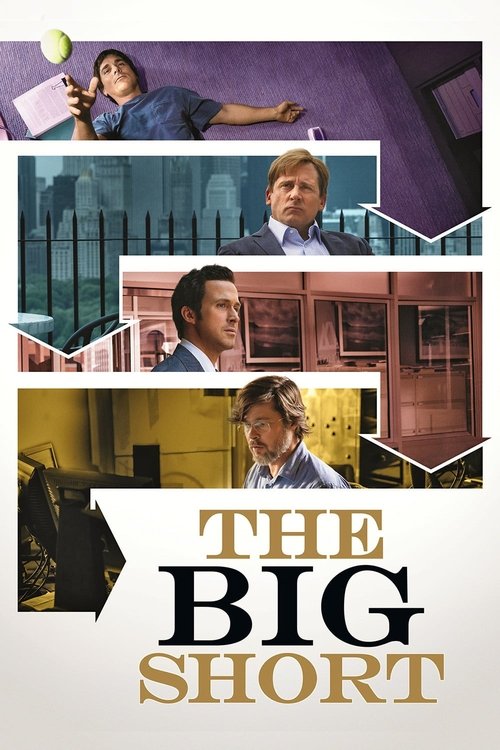
The Big Short
2015 · Directed by Adam McKay
Woke Score
CriticCritic Score
Audience
Based
Critics rated this 53 points above its woke score. Among Based films, this critic score ranks #63 of 345.
Representation Casting
Score: 15/100
Cast is predominantly white and male (Bale, Carell, Gosling, Pitt are the leads), with female actors relegated to minor roles. Lacks meaningful diversity in principal characters.
LGBTQ+ Themes
Score: 0/100
No LGBTQ+ characters, themes, or representation present in the film.
Feminist Agenda
Score: 5/100
The film fails the Bechdel Test and features women primarily in peripheral roles. Female characters lack agency and narrative significance in the story.
Racial Consciousness
Score: 10/100
The film depicts a predominantly white financial sector without examining racial dimensions of the housing crisis or its disparate impact on communities of color.
Climate Crusade
Score: 0/100
No climate-related themes or environmental messaging present in the film.
Eat the Rich
Score: 85/100
The entire narrative framework critiques Wall Street corruption, financial fraud, and systemic exploitation. The film explicitly demonstrates how capitalist institutions prioritize profit over human welfare.
Body Positivity
Score: 0/100
No body positivity themes or representation of diverse body types featured in the film.
Neurodivergence
Score: 15/100
Christian Bale's character Michael Burry is portrayed as having autism spectrum traits (social discomfort, obsessive focus on numbers), but this is treated as character eccentricity rather than representation.
Revisionist History
Score: 0/100
The film documents the actual 2008 financial crisis and the real practices that caused it, without reinterpreting historical events.
Lecture Energy
Score: 70/100
The film frequently breaks the fourth wall and employs celebrity cameos to explain financial concepts directly to the audience, adopting a preachy tone about systemic corruption.


Synopsis
The men who made millions from a global economic meltdown.
Consciousness Assessment
Adam McKay's "The Big Short" represents a peculiar strain of cultural artifact: a film aggressively hostile to capitalist malfeasance, yet conspicuously uncomfortable with any representation of those harmed by it. The narrative centers the righteous indignation of a handful of mostly white male investors who profit spectacularly from the system's collapse, their moral awakening positioned as the film's primary emotional throughline. The fourth-wall breaking and celebrity cameos function as pedagogical devices, suggesting that complex financial corruption can be made palatable through pop culture accessibility rather than through structural examination.
The film's treatment of gender represents its most glaring contradiction. Despite featuring prominent actresses like Marisa Tomei and Melissa Leo, their roles remain peripheral, and the narrative itself fails the Bechdel Test, a remarkable achievement for a 2015 film. The banking world depicted is fundamentally a boys' club, and McKay appears content to document this reality without interrogation. We witness the systemic theft that devastated millions of American households, yet the victims remain abstractions, their dispossession never rendered as human consequence. The female presence in the film functions primarily as decoration in the margins of male ambition.
What emerges from this contradiction is a film that critiques capitalism with one hand while maintaining patriarchal and demographic status quo with the other. Its progressive fury at financial institutions coexists with a profound indifference to who deserves representation in the narrative of that fury. "The Big Short" wants credit for moral clarity while accepting no responsibility for whose stories get told, or more accurately, whose stories remain untold beneath the surface of its righteous anger.
Analysis generated by our Consciousness Algorithm
Critic Reviews
“The best film of the year? Possibly …”
“I suppose you could call The Big Short a comedy. It’s very, very funny. But it’s also a tragedy. Behind every easy drive-by laugh is a sincere holler of outrage.”
“Simply the most relentlessly entertaining film of the last few months.”
“McKay's bumptious movie awkwardly combines fourth-wall-breaking gimmickry and flaccid indignation with the goofball energy that defines his comedies.”
Consciousness Markers
Cast is predominantly white and male (Bale, Carell, Gosling, Pitt are the leads), with female actors relegated to minor roles. Lacks meaningful diversity in principal characters.
No LGBTQ+ characters, themes, or representation present in the film.
The film fails the Bechdel Test and features women primarily in peripheral roles. Female characters lack agency and narrative significance in the story.
The film depicts a predominantly white financial sector without examining racial dimensions of the housing crisis or its disparate impact on communities of color.
No climate-related themes or environmental messaging present in the film.
The entire narrative framework critiques Wall Street corruption, financial fraud, and systemic exploitation. The film explicitly demonstrates how capitalist institutions prioritize profit over human welfare.
No body positivity themes or representation of diverse body types featured in the film.
Christian Bale's character Michael Burry is portrayed as having autism spectrum traits (social discomfort, obsessive focus on numbers), but this is treated as character eccentricity rather than representation.
The film documents the actual 2008 financial crisis and the real practices that caused it, without reinterpreting historical events.
The film frequently breaks the fourth wall and employs celebrity cameos to explain financial concepts directly to the audience, adopting a preachy tone about systemic corruption.