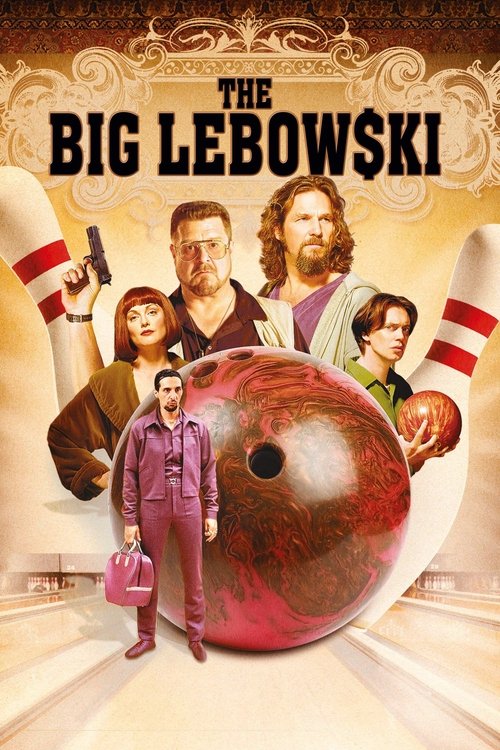
The Big Lebowski
1998 · Directed by Joel Coen
Woke Score
CriticCritic Score
Audience
Ultra Based
Critics rated this 67 points above its woke score. Among Ultra Based films, this critic score ranks #597 of 1469.
Representation Casting
Score: 5/100
The cast includes Julianne Moore and Tara Reid, but their characters are thin and portrayed primarily for comedic effect rather than substantive representation.
LGBTQ+ Themes
Score: 0/100
No LGBTQ+ themes, characters, or representation present in the film.
Feminist Agenda
Score: 3/100
Female characters are treated as objects of humor and derision, with their bodies and sexuality rendered absurd for comedic purposes rather than dignity.
Racial Consciousness
Score: 2/100
The few non-white characters are portrayed as ethnic caricatures, particularly the nihilists who are presented with cartoonish menace.
Climate Crusade
Score: 0/100
No environmental or climate-related themes present in the film.
Eat the Rich
Score: 0/100
The film does not interrogate or critique capitalism, wealth, or economic systems in any meaningful way.
Body Positivity
Score: 0/100
No body positivity messaging present; bodies are used primarily for comedy and physical humor.
Neurodivergence
Score: 0/100
No representation of neurodivergence or neurodivergent characters in the film.
Revisionist History
Score: 0/100
The film does not engage with historical narratives or attempt any revisionist history.
Lecture Energy
Score: 2/100
While not preachy, the film occasionally includes speeches about masculinity and philosophy that border on self-satisfied pontification.


Synopsis
Jeffrey 'The Dude' Lebowski, a Los Angeles slacker who only wants to bowl and drink White Russians, is mistaken for another Jeffrey Lebowski, a wheelchair-bound millionaire, and finds himself dragged into a strange series of events involving nihilists, adult film producers, ferrets, errant toes, and large sums of money.
Consciousness Assessment
The Big Lebowski is a 1998 film that exists in an entirely different cultural universe from our current moment of social consciousness. The Coen Brothers crafted a loose pastiche of Raymond Chandler's detective fiction, complete with all the casual sexism and dismissive treatment of women that characterized both the source material and the era in which it was made. Julianne Moore's character is presented primarily as an eccentric object of derision, her sexuality rendered absurd for comedic effect. The film's treatment of disability, embodied in the wheelchair-bound millionaire Jeffrey Lebowski, uses his condition as a punchline rather than a vehicle for any genuine engagement with the disabled experience.
The film's universe is almost entirely male and white, populated by an ensemble of characters whose defining traits are their obsessions with bowling, money, and the various schemes that drive the plot forward. There is no meaningful representation of any marginalized group, nor any attempt to interrogate systems of power or wealth. The millionaire Lebowski, while physically disabled, remains fundamentally a figure of contempt rather than complexity. The nihilists who appear as antagonists are foreigners portrayed with a kind of cartoonish menace that trades in ethnic caricature. The film does not grapple with capitalism, environmentalism, gender dynamics, or any of the social markers that would later define progressive cultural sensibilities.
The work is a product of its era, indifferent to questions that did not yet occupy the cultural mainstream. For a 1998 film, this is unremarkable. The Big Lebowski was not ahead of its time in any progressive sense, nor was it particularly regressive for its moment. It simply declines to engage with social consciousness in any form, preferring instead to operate in the realm of pure stylistic pastiche and absurdist comedy.
Analysis generated by our Consciousness Algorithm
Critic Reviews
“It's paved with delightfully irregular and unanticipated bits of business that stimulate the viewer to stay fully alert, while renewing our faith in the sheer joy of watching movies.”
“It put a smile on my face that never left for 117 minutes. ”
“It’s a great performance from Bridges, and he seems weirdly young in this film, certainly compared to the brilliant craggy oldsters that later became his acting birthright. You can still see the boyish, vulnerable figure that he was in Peter Bogdanovich’s The Last Picture Show. One of a kind. [20th Anniversary]”
“If it's all supposed to be in fun, why does it feel so much like an insult?”
Consciousness Markers
The cast includes Julianne Moore and Tara Reid, but their characters are thin and portrayed primarily for comedic effect rather than substantive representation.
No LGBTQ+ themes, characters, or representation present in the film.
Female characters are treated as objects of humor and derision, with their bodies and sexuality rendered absurd for comedic purposes rather than dignity.
The few non-white characters are portrayed as ethnic caricatures, particularly the nihilists who are presented with cartoonish menace.
No environmental or climate-related themes present in the film.
The film does not interrogate or critique capitalism, wealth, or economic systems in any meaningful way.
No body positivity messaging present; bodies are used primarily for comedy and physical humor.
No representation of neurodivergence or neurodivergent characters in the film.
The film does not engage with historical narratives or attempt any revisionist history.
While not preachy, the film occasionally includes speeches about masculinity and philosophy that border on self-satisfied pontification.