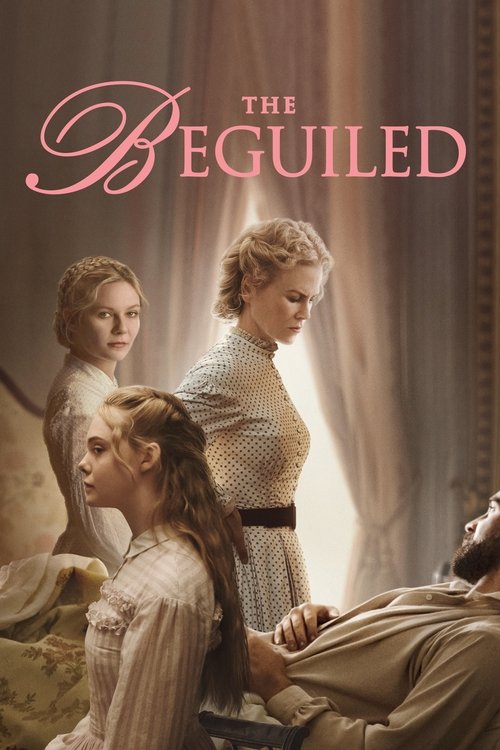
The Beguiled
2017 · Directed by Sofia Coppola
Woke Score
CriticCritic Score
Audience
Woke-Adjacent
Critics rated this 22 points above its woke score. Among Woke-Adjacent films, this critic score ranks #50 of 151.
Representation Casting
Score: 20/100
All-white cast in a Civil War narrative despite the director's stated openness to diverse casting. Female leads are present but racial representation is entirely absent.
LGBTQ+ Themes
Score: 0/100
No LGBTQ+ themes, representation, or storylines present in the film.
Feminist Agenda
Score: 75/100
The entire film is structured as a feminist reframing of the 1971 original, centering female agency, desire, and power dynamics. Themes of self-actualization under patriarchal constraint are central to the narrative.
Racial Consciousness
Score: 5/100
Set during the Civil War with no engagement with racial themes or racial consciousness. The historical setting serves as backdrop but carries no thematic weight regarding race.
Climate Crusade
Score: 0/100
No climate or environmental themes present in the film.
Eat the Rich
Score: 0/100
While the boarding school setting involves class dynamics, there is no anti-capitalist critique or messaging present.
Body Positivity
Score: 0/100
No body positivity messaging or diverse body representation evident in the film.
Neurodivergence
Score: 0/100
No neurodivergent representation or themes present in the narrative.
Revisionist History
Score: 25/100
The film reframes the 1971 source material to center female agency and perspective, but this is primarily a gender-focused reframing rather than historical revisionism of the Civil War era itself.
Lecture Energy
Score: 15/100
Coppola explores themes through visual storytelling and character dynamics rather than explicit preachy messaging. The feminist themes are intentional but communicated through aesthetic means rather than exposition.


Synopsis
During the Civil War, at a Southern girls' boarding school, young women take in an injured enemy soldier. As they provide refuge and tend to his wounds, the house is taken over with sexual tension and dangerous rivalries, and taboos are broken in an unexpected turn of events.
Consciousness Assessment
Sofia Coppola's remake arrives as a deliberate inversion of the 1971 Don Siegel film, trading the male gaze for what we might call a distinctly female-centered perspective on desire, agency, and power. Where the original framed the schoolgirls as victims of their own passions, Coppola positions them as architects of their fate, strategic operators within the constraints of their confined world. The film explores self-actualization under patriarchal restriction with the visual precision we have come to expect from its director, treating each frame as a composition of feminine interiority and suppressed yearning.
The problem, and it is a substantial one, is that this exploration of female agency occurs entirely within an all-white vacuum. Here we have a Civil War narrative set in the American South, a moment of the nation's most profound racial reckoning, and the film treats race as if it does not exist. Coppola has acknowledged her desire for more diverse casting in future projects, but the irony remains sharp: a film about women's liberation from constraint exhibits no consciousness of the racial hierarchies that structured the world being depicted. The feminist framing is intentional and executed with sophistication, yet it functions as a kind of tunnel vision, sophisticated but fundamentally incomplete.
The film's artistic merit cannot be dismissed, nor can the genuine thought Coppola has invested in its gender dynamics. But progressive sensibilities of the 2020s demand more than elegant female revenge narratives told through an exclusively white lens. The Beguiled succeeds as a statement about gender but fails to extend its consciousness beyond that particular axis of power, leaving it in the uncomfortable position of being simultaneously thoughtful and myopic.
Analysis generated by our Consciousness Algorithm
Critic Reviews
“The strength of her film transcends the soldier’s power to seduce. We’re beguiled, as an audience, by seeing this male animal as he is seen, and for better and worse experienced, by a diverse and dynamic group of females. And by seeing, in the end, how The Beguiled gives new and memorable meaning to the notion of a finishing school. ”
“Witty, menacing and steamy (in every sense), The Beguiled is an intelligent update and Coppola’s best work to date. Oscars await.”
“The Beguiled is a lurid, sweltering, and sensationally fun potboiler that doesn’t find Coppola leaving her comfort zone so much as redecorating it with a fresh layer of soft-core scuzz.”
“Coppola stripped the tale, cut the length, eschews menace and goes easy on the malice, which made the earlier version of the story work. Even as an arch, serio-comic female revenge fantasy, this Beguiled fails to cast the necessary spell.”
Consciousness Markers
All-white cast in a Civil War narrative despite the director's stated openness to diverse casting. Female leads are present but racial representation is entirely absent.
No LGBTQ+ themes, representation, or storylines present in the film.
The entire film is structured as a feminist reframing of the 1971 original, centering female agency, desire, and power dynamics. Themes of self-actualization under patriarchal constraint are central to the narrative.
Set during the Civil War with no engagement with racial themes or racial consciousness. The historical setting serves as backdrop but carries no thematic weight regarding race.
No climate or environmental themes present in the film.
While the boarding school setting involves class dynamics, there is no anti-capitalist critique or messaging present.
No body positivity messaging or diverse body representation evident in the film.
No neurodivergent representation or themes present in the narrative.
The film reframes the 1971 source material to center female agency and perspective, but this is primarily a gender-focused reframing rather than historical revisionism of the Civil War era itself.
Coppola explores themes through visual storytelling and character dynamics rather than explicit preachy messaging. The feminist themes are intentional but communicated through aesthetic means rather than exposition.