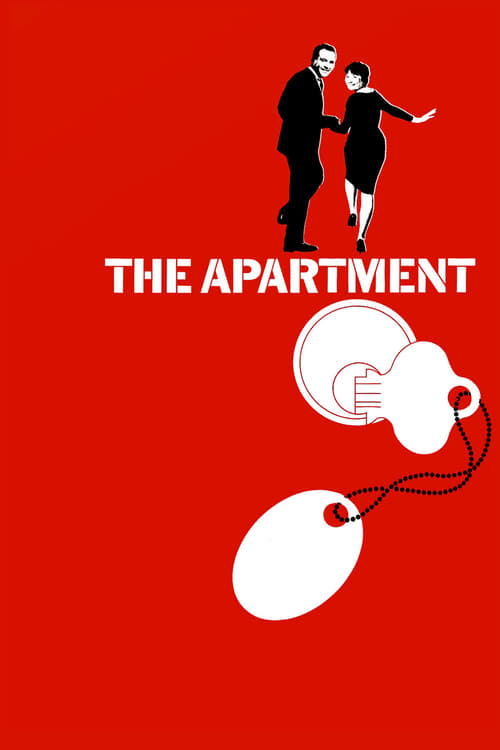
The Apartment
1960 · Directed by Billy Wilder
Woke Score
CriticCritic Score
Audience
Ultra Based
Critics rated this 86 points above its woke score. Among Ultra Based films, this critic score ranks #75 of 1469.
Representation Casting
Score: 5/100
The film features an all-white principal cast reflecting 1960 Hollywood demographics. No meaningful minority representation is present.
LGBTQ+ Themes
Score: 0/100
No LGBTQ+ characters, themes, or representation appear in the film.
Feminist Agenda
Score: 15/100
Shirley MacLaine's character receives sympathetic portrayal as a victim of workplace predation, but the film lacks explicit feminist critique or gender-consciousness framework.
Racial Consciousness
Score: 0/100
The film contains no racial themes, racial consciousness, or engagement with questions of race.
Climate Crusade
Score: 0/100
Climate themes are entirely absent from this urban corporate drama.
Eat the Rich
Score: 25/100
The film critiques corporate dehumanization and the moral compromise required for advancement within capitalist hierarchies, though not from an explicitly anti-capitalist ideological position.
Body Positivity
Score: 0/100
No body positivity themes or content are present in the film.
Neurodivergence
Score: 0/100
No neurodivergent representation or themes appear in the narrative.
Revisionist History
Score: 0/100
The film presents 1960s corporate America as understood in its moment, without revisionist historical framing.
Lecture Energy
Score: 10/100
Wilder's approach is dramatically sophisticated rather than preachy. The film's moral dimensions emerge through character and narrative rather than direct address to the audience.


Synopsis
Bud Baxter is a minor clerk in a huge New York insurance company, until he discovers a quick way to climb the corporate ladder. He lends out his apartment to the executives as a place to take their mistresses. Although he often has to deal with the aftermath of their visits, one night he's left with a major problem to solve.
Consciousness Assessment
Billy Wilder's "The Apartment" remains a masterwork of moral complexity, a film that understands compromise, ambition, and the cost of climbing ladders both literal and metaphorical. Jack Lemmon's Bud Baxter is a portrait of a man slowly surrendering his conscience for advancement, each small transgression mounting toward a crisis of character. The film's true strength lies not in any programmatic social vision but in its unflinching observation of human behavior under pressure.
Shirley MacLaine's Fran Kubelik is treated with genuine sympathy rather than judgment, a woman victimized by the casual predation of powerful men. Yet the film does not frame this victimization through any contemporary lens of social consciousness. Instead, it presents her suffering as a human tragedy, one that prompts moral reckoning in the protagonist. This is the work of a humanist filmmaker, not an activist one.
The corporate landscape depicted here is indeed a hellscape of moral compromise, where advancement requires the surrender of dignity and ethics. Wilder's critique of this system is real but emerges through narrative and character rather than through preachy confrontation. The film asks us to recognize ourselves in Bud's moral deterioration, to see how systems of power corrupt incrementally. This is sophisticated filmmaking, but it is not the product of contemporary progressive sensibility. It is a film of its own moment, concerned with universal moral questions rather than the specific cultural markers of the 2020s.
Analysis generated by our Consciousness Algorithm
Critic Reviews
“The underlying seriousness of MacLaine's performance helps anchor the picture--it raises the stakes, and steers it away from any tendency to become musical beds.”
“Absolutely brilliant. It's funnier, sadder and cooler on the big screen.”
“I wouldn't call this 1960 picture one of Billy Wilder's best comedies—it's drab, sappy, and overlong at 125 minutes.”
Consciousness Markers
The film features an all-white principal cast reflecting 1960 Hollywood demographics. No meaningful minority representation is present.
No LGBTQ+ characters, themes, or representation appear in the film.
Shirley MacLaine's character receives sympathetic portrayal as a victim of workplace predation, but the film lacks explicit feminist critique or gender-consciousness framework.
The film contains no racial themes, racial consciousness, or engagement with questions of race.
Climate themes are entirely absent from this urban corporate drama.
The film critiques corporate dehumanization and the moral compromise required for advancement within capitalist hierarchies, though not from an explicitly anti-capitalist ideological position.
No body positivity themes or content are present in the film.
No neurodivergent representation or themes appear in the narrative.
The film presents 1960s corporate America as understood in its moment, without revisionist historical framing.
Wilder's approach is dramatically sophisticated rather than preachy. The film's moral dimensions emerge through character and narrative rather than direct address to the audience.