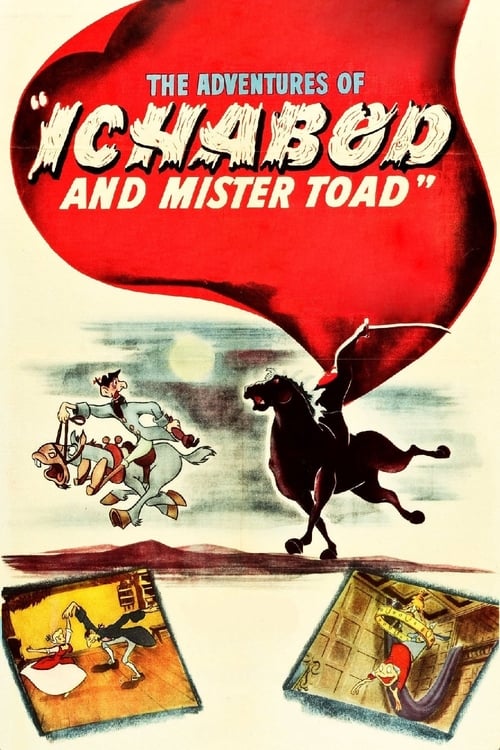
The Adventures of Ichabod and Mr. Toad
1949 · Directed by Clyde Geronimi
Woke Score
CriticCritic Score
Audience
Ultra Based
Critics rated this 70 points above its woke score. Among Ultra Based films, this critic score ranks #516 of 1469.
Representation Casting
Score: 0/100
The film features only white characters in all roles. There is no attempt at diverse representation in casting or character design.
LGBTQ+ Themes
Score: 0/100
No LGBTQ+ themes, characters, or subtext are present. The narratives center entirely on heterosexual relationships and male-male friendships without any contemporary queer consciousness.
Feminist Agenda
Score: 2/100
Katrina Van Tassel is portrayed as a passive prize in a romantic competition rather than an active agent. The female character exists primarily as an object of desire between two male rivals.
Racial Consciousness
Score: 0/100
No racial consciousness or commentary is present. The film contains no non-white characters and no examination of race as a social category.
Climate Crusade
Score: 0/100
There is no environmental or climate-related content. The natural settings exist as mere backdrop for the narrative.
Eat the Rich
Score: 0/100
The film contains no critique of capitalism or wealth. The Toad's status as a wealthy landowner is presented without commentary, and his problems stem from personal folly rather than systemic critique.
Body Positivity
Score: 0/100
No body positivity messaging is evident. Character designs follow standard animation conventions of the era without any intentional commentary on body diversity.
Neurodivergence
Score: 0/100
No neurodivergent representation or themes are present. Character traits are portrayed through standard personality archetypes without contemporary understanding of neurodiversity.
Revisionist History
Score: 0/100
The film adapts classic literature without any revisionist historical framing. It remains faithful to source material from the early 1900s without modern reinterpretation.
Lecture Energy
Score: 2/100
The Toad's story carries a mild moral lesson about the dangers of faddish behavior, though this is presented through narrative consequence rather than explicit preachiness.


Synopsis
The Wind in the Willows: Concise version of Kenneth Grahame's story of the same name. J. Thaddeus Toad, owner of Toad Hall, is prone to fads, such as the newfangled motor car. This desire for the very latest lands him in much trouble with the wrong crowd, and it is up to his friends, Mole, Rat and Badger to save him from himself. - The Legend of Sleepy Hollow: Retelling of Washington Irving's story set in a tiny New England town. Ichabod Crane, the new schoolmaster, falls for the town beauty, Katrina Van Tassel, and the town Bully Brom Bones decides that he is a little too successful and needs "convincing" that Katrina is not for him.
Consciousness Assessment
The Adventures of Ichabod and Mr. Toad represents a curious artifact of 1949 animation, a period when the progressive sensibilities we now scrutinize had not yet crystallized into their modern form. The film consists of two narrative segments adapted from classic literature, neither of which exhibits the hallmarks of contemporary cultural consciousness. In "The Wind in the Willows," the animal characters operate within a rigid class hierarchy that goes entirely unexamined, with the wealthy Toad at the narrative center and his working-class friends relegated to supporting roles designed to rescue him from his own folly. The characterization exists in a bubble where such social stratification requires no commentary or critique.
The "Sleepy Hollow" segment presents Katrina Van Tassel as a prize to be won, her agency limited to choosing between two suitors while remaining largely passive throughout her own romantic narrative. She exists as an object of desire rather than an active participant in her own story, a reflection of the era's standard treatment of female characters in mainstream animation. Ichabod Crane's status as an outsider schoolmaster receives no deeper examination of class or educational access, and the film treats the setting's implied rural hierarchy as mere backdrop rather than subject for analysis.
This is a film that predates modern progressive sensibilities by more than two decades. It contains no representation of non-white characters, no LGBTQ themes, no environmental consciousness, no challenge to existing power structures. It is simply a competently executed adaptation of beloved literary properties, animated with the technical proficiency Disney had by that point achieved, utterly innocent of the cultural preoccupations that would emerge in later decades. To judge it by contemporary standards would be to mistake historical documentation for intentional cultural positioning.
Analysis generated by our Consciousness Algorithm
Critic Reviews
“Split into two sequences, this feature-length cartoon is one of Disney's finest efforts, with attention paid to every animated detail.”
“The credits outweigh the debits and Mr. Disney has included enough elements of entertainment to make his newest film package a solid entertainment.”
“An uneven doubleheader by Walt Disney, who has combined into one film two dissimilar literary classics: Washington Irving's Legend of Sleepy Hollow, and Kenneth Grahame's The Wind in the Willows. The contrast in the handling of the two unrelated stories neatly illustrates some of Disney's outstanding vices & virtues.”
Consciousness Markers
The film features only white characters in all roles. There is no attempt at diverse representation in casting or character design.
No LGBTQ+ themes, characters, or subtext are present. The narratives center entirely on heterosexual relationships and male-male friendships without any contemporary queer consciousness.
Katrina Van Tassel is portrayed as a passive prize in a romantic competition rather than an active agent. The female character exists primarily as an object of desire between two male rivals.
No racial consciousness or commentary is present. The film contains no non-white characters and no examination of race as a social category.
There is no environmental or climate-related content. The natural settings exist as mere backdrop for the narrative.
The film contains no critique of capitalism or wealth. The Toad's status as a wealthy landowner is presented without commentary, and his problems stem from personal folly rather than systemic critique.
No body positivity messaging is evident. Character designs follow standard animation conventions of the era without any intentional commentary on body diversity.
No neurodivergent representation or themes are present. Character traits are portrayed through standard personality archetypes without contemporary understanding of neurodiversity.
The film adapts classic literature without any revisionist historical framing. It remains faithful to source material from the early 1900s without modern reinterpretation.
The Toad's story carries a mild moral lesson about the dangers of faddish behavior, though this is presented through narrative consequence rather than explicit preachiness.