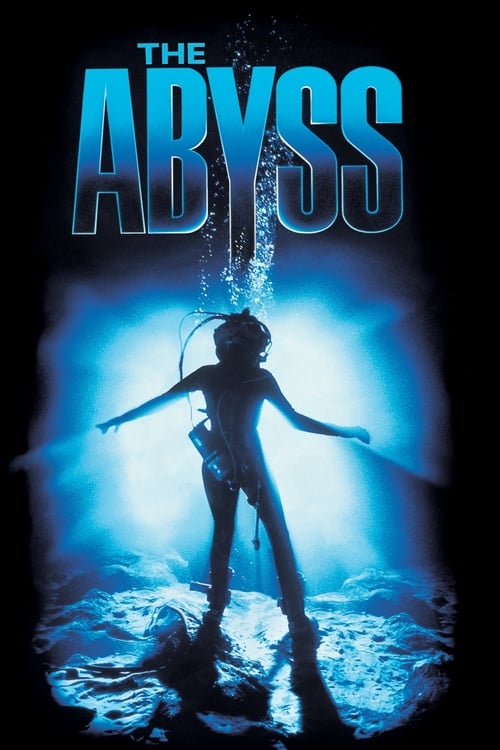
The Abyss
1989 · Directed by James Cameron
Woke Score
CriticCritic Score
Audience
Ultra Based
Critics rated this 58 points above its woke score. Among Ultra Based films, this critic score ranks #854 of 1469.
Representation Casting
Score: 22/100
Mary Elizabeth Mastrantonio plays a capable engineer with agency, unusual for 1989 action films, though she remains the sole significant female character and functions partly as a romantic subplot rather than fully autonomous protagonist.
LGBTQ+ Themes
Score: 0/100
No LGBTQ+ themes, representation, or subtext present in this geopolitical military thriller.
Feminist Agenda
Score: 15/100
While Mastrantonio's character is competent and essential to the plot, the film's thematic concerns remain centered on masculine conflict and military authority, with no feminist critique or consciousness evident.
Racial Consciousness
Score: 0/100
The cast is predominantly white with no meaningful engagement with racial themes, representation, or cultural diversity.
Climate Crusade
Score: 0/100
Despite being set underwater, the film contains no environmental consciousness, climate themes, or ecological critique.
Eat the Rich
Score: 0/100
The conflict is geopolitical and military in nature, with no critique of corporate power or capitalist systems.
Body Positivity
Score: 0/100
Not applicable to this action-thriller; no engagement with body image, disability representation, or physical diversity.
Neurodivergence
Score: 0/100
No representation of neurodivergent characters or meaningful exploration of neurodiversity.
Revisionist History
Score: 0/100
This is an entirely fictional narrative with no basis in historical events requiring reinterpretation or revision.
Lecture Energy
Score: 5/100
The film is action-driven and entertainment-focused with minimal preachy elements, though military exposition sequences provide brief technical information without ideological messaging.


Synopsis
A civilian oil rig crew is recruited to conduct a search and rescue effort when a nuclear submarine mysteriously sinks. One diver soon finds himself on a spectacular odyssey 25,000 feet below the ocean's surface where he confronts a mysterious force that has the power to change the world or destroy it.
Consciousness Assessment
James Cameron's 1989 deep-sea thriller remains a technical marvel of practical effects and underwater cinematography, a film concerned almost entirely with the mechanics of survival and masculine tension rather than any meaningful engagement with contemporary social consciousness. The presence of Mary Elizabeth Mastrantonio as a capable engineer and active participant in the rescue mission represents a modest deviation from the genre conventions of its era, though she functions primarily as a plot device caught between two men rather than as a character with autonomous narrative weight. The film's preoccupations center on Cold War paranoia, military brinkmanship, and the discovery of an otherworldly intelligence in the depths, leaving no bandwidth for the progressive sensibilities that would later become cultural fixtures.
Viewing this film through the lens of modern social markers reveals a complete absence of intentional cultural messaging. The cast is uniformly white, the conflicts are geopolitical rather than ideological, and any themes of reconciliation or peace operate at the level of personal relationship drama rather than systemic critique. The mysterious aquatic entity serves as both antagonist and potential savior, but the film never approaches this scenario as an opportunity for commentary on environmental stewardship, corporate malfeasance, or human hubris in the face of nature. Instead, it remains devoted to the established action-thriller vocabulary of the late 1980s: men in confined spaces, military hardware, and the triumph of individual will over circumstance.
The film's low score reflects not its quality as cinema but rather its indifference to the specific constellation of progressive themes that define contemporary cultural consciousness. This is not condemnation but rather accurate classification, the equivalent of assigning a Riesling a low score on the Barolo scale. Cameron was making an entertainment vehicle, not a manifesto, and that choice is evident in every frame.
Analysis generated by our Consciousness Algorithm
Critic Reviews
“Stupendously exciting and emotionally engulfing... With probing intelligence and passionate feeling, Cameron has raised the adventure film very close to the level of art.”
“Before this voyage plummets into Stevie Spielberg's locker, the human stuff is more than worth the descent.”
“If you end up cursing, try not to forget The Abyss' spectacular oil-rig collapse, a killer chase scene, two fine leads, and one Oscar-worthy "creature'' special effect midway through. Do forget the rest - unless you really dig Casper, the Friendly Ghost. [9 Aug 1989, Life, p.1D]”
“The Abyss' isn't abysmal, but it's a replay of hits we've already seen - a recycled "close encounters of the wet kind'' with far too few ideas of its own. [18 Aug 1989, Arts, p.10]”
Consciousness Markers
Mary Elizabeth Mastrantonio plays a capable engineer with agency, unusual for 1989 action films, though she remains the sole significant female character and functions partly as a romantic subplot rather than fully autonomous protagonist.
No LGBTQ+ themes, representation, or subtext present in this geopolitical military thriller.
While Mastrantonio's character is competent and essential to the plot, the film's thematic concerns remain centered on masculine conflict and military authority, with no feminist critique or consciousness evident.
The cast is predominantly white with no meaningful engagement with racial themes, representation, or cultural diversity.
Despite being set underwater, the film contains no environmental consciousness, climate themes, or ecological critique.
The conflict is geopolitical and military in nature, with no critique of corporate power or capitalist systems.
Not applicable to this action-thriller; no engagement with body image, disability representation, or physical diversity.
No representation of neurodivergent characters or meaningful exploration of neurodiversity.
This is an entirely fictional narrative with no basis in historical events requiring reinterpretation or revision.
The film is action-driven and entertainment-focused with minimal preachy elements, though military exposition sequences provide brief technical information without ideological messaging.