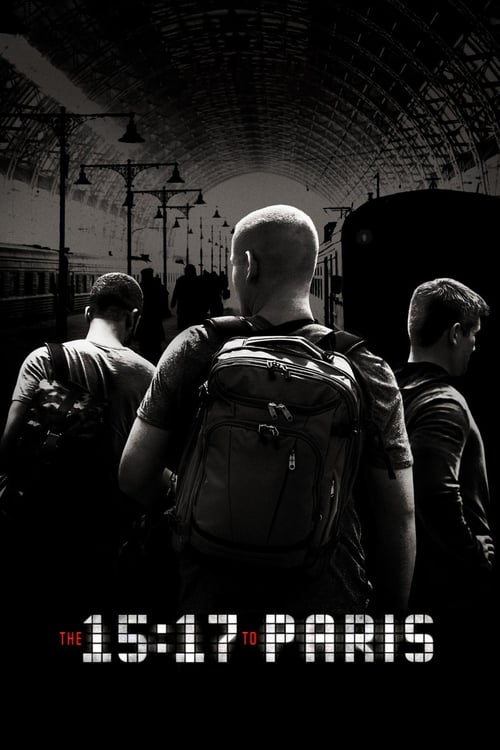
The 15:17 to Paris
2018 · Directed by Clint Eastwood
Woke Score
CriticCritic Score
Audience
Ultra Based
Critics rated this 45 points above its woke score. Among Ultra Based films, this critic score ranks #1259 of 1469.
Representation Casting
Score: 0/100
The film casts actual real-life heroes to play themselves, prioritizing authenticity over representation. While supporting cast includes some diversity, this appears incidental to the narrative rather than a conscious diversity initiative.
LGBTQ+ Themes
Score: 0/100
No LGBTQ+ themes, representation, or commentary are present in this straightforward action thriller about a terrorist attack.
Feminist Agenda
Score: 0/100
The film centers on three male heroes and their heroic actions without any apparent feminist framing or commentary about gender dynamics.
Racial Consciousness
Score: 0/100
While the cast includes people of color, there is no thematic exploration of racial consciousness, identity politics, or racial dynamics as part of the narrative.
Climate Crusade
Score: 0/100
A contemporary action thriller about a 2015 terrorist attack contains no environmental themes or climate-related content whatsoever.
Eat the Rich
Score: 0/100
The film contains no critique of economic systems, wealth inequality, or anti-capitalist messaging of any kind.
Body Positivity
Score: 0/100
The heroes are presented as athletic and able-bodied, performing physical feats. There is no body positivity messaging or representation of diverse body types.
Neurodivergence
Score: 0/100
No neurodivergent characters or themes are present in the film.
Revisionist History
Score: 0/100
The film presents the 2015 train attack straightforwardly based on actual events, without reinterpreting history through a contemporary ideological lens.
Lecture Energy
Score: 0/100
Eastwood's direction is lean and action-focused with character-driven dialogue rather than preachy exposition or lectures about social issues.


Synopsis
On Aug. 21, 2015, the world watches in stunned silence as the media reports a thwarted terrorist attack on a train that's bound for Paris -- an attempt prevented by three young Americans traveling together through Europe. The heroic and courageous actions of Anthony Sadler, Alek Skarlatos and Spencer Stone help to save the lives of more than 500 passengers on board.
Consciousness Assessment
Clint Eastwood's "The 15:17 to Paris" represents the apotheosis of narrative minimalism applied to a moment of genuine heroism. By casting the actual heroes to play themselves, Eastwood commits to a kind of documentary authenticity that sidesteps the entire apparatus of contemporary filmmaking self-consciousness. The film simply records what happened, without editorializing or contextualizing through the lens of modern cultural preoccupations. The supporting cast includes people of color in various roles, though this appears to reflect the actual composition of the event rather than a deliberate casting philosophy. For most of its runtime, the film functions as a character study of ordinary young men before collapsing into twenty minutes of action, a structural choice that feels audacious in its refusal to build toward anything like thematic resonance.
What results is a film so determinedly apolitical that it borders on the reactionary simply by existing. There is no discussion of systemic issues, no interrogation of power structures, no attempt to process the event through a contemporary lens of social consciousness. The three heroes are presented as fundamentally decent people who acted courageously when faced with danger. The film trusts this narrative without embellishment. This is either admirable restraint or profound incuriosity, depending on one's temperament. For a director in his late eighties, Eastwood seems uninterested in the cultural conversations his peers might feel obligated to engage with.
The film's complete indifference to modern progressive sensibilities is its most distinctive feature. There are no lectures about masculinity, terrorism, or the immigrant experience. The shooting sequence is handled with functional competence rather than cathartic release. One could watch this film and come away with no clear sense of what the director believes about anything. This is not necessarily a virtue in cinema, but it is refreshingly uncommon in 2018.
Analysis generated by our Consciousness Algorithm
Critic Reviews
“The 15:17 To Paris, like "Sully," "American Sniper" and (to a lesser extent) "Gran Torino" before it, combines such conceptions of late style: both harmonious and intransigent, resolute and difficult, defined by lively contradiction.”
“Mr. Eastwood, who has long favored a lean, functional directing style, practices an economy here that makes some of his earlier movies look positively baroque. He almost seems to be testing the limits of minimalism, seeing how much artifice he can strip away and still achieve some kind of dramatic impact.”
“The sections detailing the men’s childhood in Sacramento, with Judy Greer and Jenna Fischer playing beleaguered moms? Not so exciting. But then, the very averageness of these conscientious, gutsy guys is precisely the point.”
“One of the worst, most inexcusably poor movies Clint Eastwood has turned out in his career behind the camera and a possible contender for one of the worst films of the year. The 15:17 to Paris is so bad in so many ways that it’s impossible to recommend and that’s a crying shame.”
Consciousness Markers
The film casts actual real-life heroes to play themselves, prioritizing authenticity over representation. While supporting cast includes some diversity, this appears incidental to the narrative rather than a conscious diversity initiative.
No LGBTQ+ themes, representation, or commentary are present in this straightforward action thriller about a terrorist attack.
The film centers on three male heroes and their heroic actions without any apparent feminist framing or commentary about gender dynamics.
While the cast includes people of color, there is no thematic exploration of racial consciousness, identity politics, or racial dynamics as part of the narrative.
A contemporary action thriller about a 2015 terrorist attack contains no environmental themes or climate-related content whatsoever.
The film contains no critique of economic systems, wealth inequality, or anti-capitalist messaging of any kind.
The heroes are presented as athletic and able-bodied, performing physical feats. There is no body positivity messaging or representation of diverse body types.
No neurodivergent characters or themes are present in the film.
The film presents the 2015 train attack straightforwardly based on actual events, without reinterpreting history through a contemporary ideological lens.
Eastwood's direction is lean and action-focused with character-driven dialogue rather than preachy exposition or lectures about social issues.