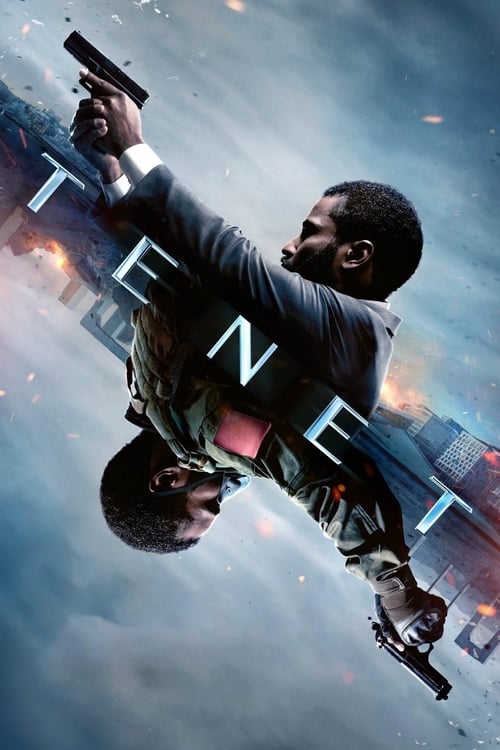
Tenet
2020 · Directed by Christopher Nolan
Woke Score
CriticCritic Score
Audience
Ultra Based
Critics rated this 51 points above its woke score. Among Ultra Based films, this critic score ranks #642 of 1469.
Representation Casting
Score: 45/100
The film features a racially diverse cast with John David Washington as the lead and Dimple Kapadia and Yuri Kolokolnikov in supporting roles. However, this diversity appears incidental to the narrative rather than thematic.
LGBTQ+ Themes
Score: 0/100
No LGBTQ+ themes, characters, or representation present in the film. Sexuality is entirely absent from the narrative.
Feminist Agenda
Score: 15/100
Elizabeth Debicki's character is depicted as a victim of domestic abuse seeking escape, but the script treats her primarily as a plot device rather than exploring feminist themes with any depth.
Racial Consciousness
Score: 5/100
Despite its diverse cast, the film demonstrates no awareness of or engagement with racial themes, identity, or consciousness. Characters exist without reference to their backgrounds.
Climate Crusade
Score: 0/100
No climate or environmental themes appear in the film. The narrative concerns time manipulation and espionage without reference to ecological concerns.
Eat the Rich
Score: 0/100
The film contains no anti-capitalist messaging or critique of economic systems. It is entirely apolitical regarding class and economics.
Body Positivity
Score: 0/100
No body positivity or body diversity messaging is present. The film shows no interest in challenging conventional beauty standards or body representation.
Neurodivergence
Score: 0/100
No neurodivergent characters or themes appear in the film. There is no representation of autism, ADHD, or other neurodivergent conditions.
Revisionist History
Score: 0/100
The film contains no historical narrative or revisionist historical elements. It is set in a fictional present day without reference to actual history.
Lecture Energy
Score: 10/100
While the film obsessively explains its time inversion mechanics through expository dialogue, it contains minimal moralizing or preachy messaging about social values.


Synopsis
Armed with only one word - Tenet - and fighting for the survival of the entire world, the Protagonist journeys through a twilight world of international espionage on a mission that will unfold in something beyond real time.
Consciousness Assessment
Tenet arrives as a monument to the principle that casting decisions alone do not constitute progressive sensibility. Christopher Nolan's temporal spy thriller deploys a racially diverse ensemble with the casual indifference of someone selecting background tiles for a casino lobby. John David Washington leads with considerable screen presence, yet the film demonstrates no interest in interrogating his protagonist's identity or experience. The narrative remains hermetically sealed against any consideration of social consciousness, existing instead as a pure mechanics puzzle where characters function as components in a plot about time inversion. One might charitably observe that the film's refusal to comment on anything whatsoever extends equally to all demographic categories.
Elizabeth Debicki occupies a functional role as an abused woman seeking agency, though the script treats her primarily as a device to generate stakes instead of as a character deserving substantive development. The film's commitment to apolitical spectacle is almost admirable in its totality. There is no climate crusade, no anti-capitalist sentiment, no body positivity messaging, no neurodivergent representation. Even the notion that representation casting constitutes progressive content seems to bore Nolan, who appears interested only in whether actors can deliver exposition while standing in front of expensive set pieces.
The result is a curious historical artifact: a major studio film from 2020 that manages to be simultaneously diverse in its casting and entirely indifferent to the cultural moment that diversity represents. Tenet scores modestly not because it commits sins of commission against progressive values, but because it commits none of those values at all. It is a film that exists in a vacuum, sealed against the world and its complications.
Analysis generated by our Consciousness Algorithm
Critic Reviews
“The depth, subtlety and wit of Pattinson and Debicki’s performances only becomes fully apparent once you know where Tenet is going, or perhaps that should be where it’s been. Still confused? Don’t be. Or rather do be, and savour it. This is a film that will cause many to throw up their hands in bamboozlement – and many more, I hope, to clasp theirs in awe and delight.”
“Tenet is a practically perfect (re)introduction to the big screen. Whether audiences are ready – where safe – to return to cinemas en masse is another question entirely. Certainly, Tenet’s a more challenging film than some may be comfortable with after a five-month absence, but this is an all-too-rare example of a master filmmaker putting everything on the table with, you sense, not a modicum of his vision compromised. The stakes have never been higher, but Tenet is exactly the film cinemas need right now.”
“For me, Tenet is preposterous in the tradition of Boorman’s Point Blank, or even Antonioni’s Zabriskie Point, a deadpan jeu d’esprit, a cerebral cadenza, a deadpan flourish of crazy implausibility – but supercharged with steroidal energy and imagination.”
“The master of cerebral action cinema is back, and whatever lessons were learnt about the triumph of the human spirit during the making of Dunkirk, they were swiftly forgotten for this new piece of filmic flimflammery.”
Consciousness Markers
The film features a racially diverse cast with John David Washington as the lead and Dimple Kapadia and Yuri Kolokolnikov in supporting roles. However, this diversity appears incidental to the narrative rather than thematic.
No LGBTQ+ themes, characters, or representation present in the film. Sexuality is entirely absent from the narrative.
Elizabeth Debicki's character is depicted as a victim of domestic abuse seeking escape, but the script treats her primarily as a plot device rather than exploring feminist themes with any depth.
Despite its diverse cast, the film demonstrates no awareness of or engagement with racial themes, identity, or consciousness. Characters exist without reference to their backgrounds.
No climate or environmental themes appear in the film. The narrative concerns time manipulation and espionage without reference to ecological concerns.
The film contains no anti-capitalist messaging or critique of economic systems. It is entirely apolitical regarding class and economics.
No body positivity or body diversity messaging is present. The film shows no interest in challenging conventional beauty standards or body representation.
No neurodivergent characters or themes appear in the film. There is no representation of autism, ADHD, or other neurodivergent conditions.
The film contains no historical narrative or revisionist historical elements. It is set in a fictional present day without reference to actual history.
While the film obsessively explains its time inversion mechanics through expository dialogue, it contains minimal moralizing or preachy messaging about social values.