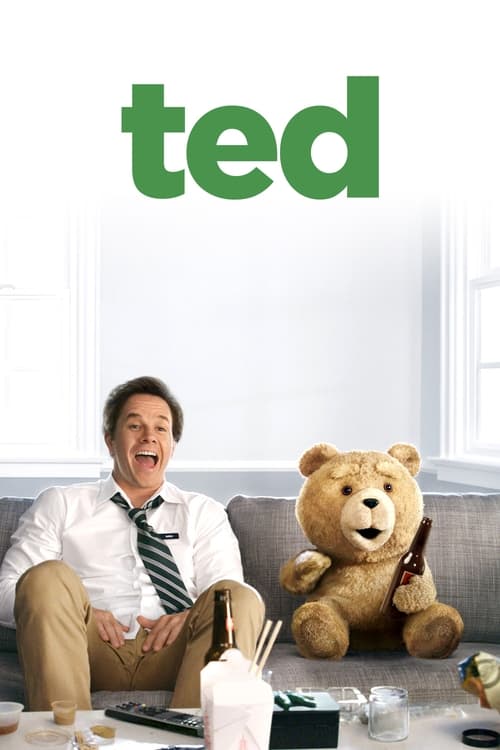
Ted
2012 · Directed by Seth MacFarlane
Woke Score
CriticCritic Score
Audience
Ultra Based
Critics rated this 62 points above its woke score. Among Ultra Based films, this critic score ranks #842 of 1469.
Representation Casting
Score: 0/100
The cast is predominantly white with no meaningful effort toward diverse representation. The ensemble features Mark Wahlberg, Mila Kunis, and supporting players who are uniformly from dominant demographic groups.
LGBTQ+ Themes
Score: 0/100
No LGBTQ+ themes, characters, or representation are present in the film. The narrative focuses exclusively on heterosexual romance and male friendship.
Feminist Agenda
Score: 0/100
The film is actively hostile to feminist sensibilities. The female lead is positioned as an obstacle to male bonding, and the humor frequently relies on crude sexual objectification without ironic distance or critical framing.
Racial Consciousness
Score: 0/100
No examination of race, racial identity, or racial dynamics appears in the film. The narrative operates in a colorblind space where such considerations are entirely absent.
Climate Crusade
Score: 0/100
Climate themes are entirely absent from the film. The narrative contains no environmental consciousness or climate-related messaging of any kind.
Eat the Rich
Score: 0/100
No anti-capitalist themes or critique of wealth, corporate power, or economic systems appear in the film. The narrative is apolitical regarding economic structures.
Body Positivity
Score: 0/100
The film contains no body positivity messaging. Physical appearance is treated through conventional comedic means without any progressive body consciousness.
Neurodivergence
Score: 0/100
No representation of neurodivergence or engagement with neurodivergent perspectives appears in the film. The narrative makes no meaningful effort in this direction.
Revisionist History
Score: 0/100
The film contains no historical narrative or revisionist engagement with history. It is set in a contemporary Boston without historical ambitions.
Lecture Energy
Score: 0/100
The film has no preachy or lecture-like quality. It is purely comedic entertainment without any intent to educate or promote a particular worldview.


Synopsis
John Bennett, a man whose childhood wish of bringing his teddy bear to life came true, now must decide between keeping the relationship with the bear or his girlfriend, Lori.
Consciousness Assessment
Ted is an aggressively conventional comedy from 2012, existing in a cultural moment before the modern constellation of progressive sensibilities became a dominant concern in mainstream filmmaking. The film concerns itself primarily with shock value humor and the eternal struggle between male friendship and romantic obligation, which it resolves by ultimately privileging the former. Seth MacFarlane's directorial debut operates entirely within pre-2015 comedy conventions, where crude sexual jokes and foul language constitute the entire comedic apparatus. The girlfriend character serves primarily as narrative obstacle rather than protagonist with interior life or perspective worth exploring.
The film's box office dominance (opening with $54.1 million and ultimately grossing $549 million worldwide) reflects the commercial viability of this particular comedic sensibility in 2012. MacFarlane's willingness to offend was then considered a feature rather than a bug. The humor relies on transgression for its own sake, not on any coherent political stance or social commentary. There is nothing here that suggests engagement with representation, diversity, or progressive values. The cast is uniformly white, the perspectives uniformly male-centric, and the overall thrust of the narrative actively hostile to the notion that a woman's needs might warrant consideration equal to a talking bear's.
Ted remains what it has always been: a successful specimen of mainstream comedy at the moment before cultural criticism and social consciousness became standard considerations in studio filmmaking. It is neither ahead of its time nor behind it. It is precisely of its time, which is to say, it is innocent of any particular progressive sensibility. One watches it now with the mild anthropological interest one brings to any artifact of a previous era, noting the jokes that landed then and would not land now, the assumptions about gender and sexuality that barely register, the complete absence of any cultural awareness beyond the immediate comedic impulse.
Analysis generated by our Consciousness Algorithm
Critic Reviews
“The funniest movie character so far this year is a stuffed teddy bear. And the best comedy screenplay so far is Ted, the saga of the bear's friendship with a 35-year-old manchild.”
“Ted is really a rather sweet examination of loyalty, friendship, and love. Wahlberg and Kunis are charming together (though not exactly in a Cary Grant / Audrey Hepburn kind of way), and both manage to play this thing - at least the challenges-of-a-serious-relationship part of this thing - straight. ”
“The surprise of Ted is that it goes for honest Spielbergian wonder, too, and even earns some tears. ”
“Seth MacFarlane's comedic modus operandi is to shock with outrageousness and pander with TV and movie citations via one non sequitur after another, a strategy that leads to a few laughs but nothing approaching lasting humor.”
Consciousness Markers
The cast is predominantly white with no meaningful effort toward diverse representation. The ensemble features Mark Wahlberg, Mila Kunis, and supporting players who are uniformly from dominant demographic groups.
No LGBTQ+ themes, characters, or representation are present in the film. The narrative focuses exclusively on heterosexual romance and male friendship.
The film is actively hostile to feminist sensibilities. The female lead is positioned as an obstacle to male bonding, and the humor frequently relies on crude sexual objectification without ironic distance or critical framing.
No examination of race, racial identity, or racial dynamics appears in the film. The narrative operates in a colorblind space where such considerations are entirely absent.
Climate themes are entirely absent from the film. The narrative contains no environmental consciousness or climate-related messaging of any kind.
No anti-capitalist themes or critique of wealth, corporate power, or economic systems appear in the film. The narrative is apolitical regarding economic structures.
The film contains no body positivity messaging. Physical appearance is treated through conventional comedic means without any progressive body consciousness.
No representation of neurodivergence or engagement with neurodivergent perspectives appears in the film. The narrative makes no meaningful effort in this direction.
The film contains no historical narrative or revisionist engagement with history. It is set in a contemporary Boston without historical ambitions.
The film has no preachy or lecture-like quality. It is purely comedic entertainment without any intent to educate or promote a particular worldview.