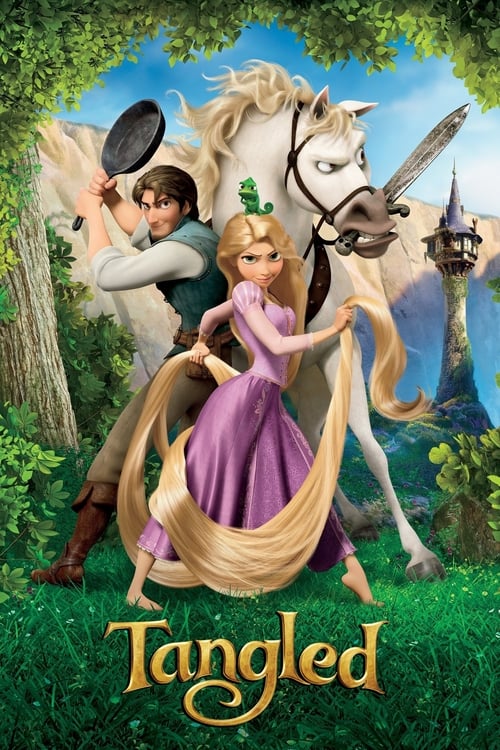
Tangled
2010 · Directed by Byron Howard
Woke Score
CriticCritic Score
Audience
Ultra Based
Critics rated this 53 points above its woke score. Among Ultra Based films, this critic score ranks #590 of 1469.
Representation Casting
Score: 15/100
The film features a white female protagonist in a fantasy setting with minimal racial diversity. While the cast is diverse in age and body type for animation, there is no meaningful engagement with contemporary representation concerns.
LGBTQ+ Themes
Score: 0/100
There are no LGBTQ+ themes, characters, or subtext present in the narrative. The film is entirely heteronormative in its romantic structure.
Feminist Agenda
Score: 35/100
Rapunzel demonstrates agency and pursues her own goals against parental authority. However, this reflects basic character motivation rather than explicit feminist framing or systemic critique of patriarchal structures.
Racial Consciousness
Score: 0/100
The film does not engage with racial themes or demonstrate awareness of racial dynamics. It exists as a fantasy narrative without racial commentary or consciousness.
Climate Crusade
Score: 0/100
There are no environmental themes, climate messaging, or ecological consciousness present in the film.
Eat the Rich
Score: 5/100
Flynn Rider is a thief, but the film does not critique capitalism or systemic economic inequality. The theft is a character trait rather than a statement about economic systems.
Body Positivity
Score: 0/100
Characters are drawn in idealized animated forms. There is no body diversity messaging, body positivity advocacy, or challenge to conventional aesthetic standards.
Neurodivergence
Score: 0/100
The film does not address neurodivergence, feature neurodivergent characters, or engage with disability representation in any form.
Revisionist History
Score: 5/100
The film reimagines a fairy tale but does not engage in historical revisionism. It is a fantasy adaptation that does not attempt to recontextualize actual historical events or narratives.
Lecture Energy
Score: 10/100
The film tells its story through narrative and character action. While there is some expository dialogue, it does not feature the preachy, explanatory tone that characterizes socially conscious cinema.


Synopsis
Feisty teenager Rapunzel, who has long and magical hair, wants to go and see sky lanterns on her eighteenth birthday, but she's bound to a tower by her overprotective mother. She strikes a deal with Flynn Rider, a charming wanted thief, and the duo set off on an action-packed escapade.
Consciousness Assessment
Tangled represents a transitional moment in animated storytelling, arriving at a cultural moment before the consolidation of contemporary progressive sensibilities into a coherent aesthetic framework. The film concerns itself with the standard business of fairy tale adaptation: a young woman escapes parental control, pursues her dreams, and finds romantic fulfillment. These are sympathetic themes, certainly, and Rapunzel's agency within the narrative is genuine. Yet the film does not interrogate these themes through the lens of systemic critique or cultural awareness. The tower is oppressive, but not as a metaphor for anything beyond itself. The mother is controlling, but not examined as a symptom of patriarchal structures.
What strikes the observer most forcefully is the film's comfortable position within the Disney mainstream. The animation is gorgeous, the songs are competent, and the narrative mechanics are well-oiled. None of this constitutes what contemporary cultural discourse would recognize as progressive sensibility. Rapunzel's hair is her defining characteristic, rendered in impossible golden lengths that serve the visual spectacle rather than any thematic purpose. Flynn Rider exists as a charming rogue, a romantic interest who requires no substantive character arc. The supporting cast performs its function without comment or complexity.
The film succeeds as entertainment and as a reasonably progressive reinterpretation of a classical tale, but it operates within the older grammar of character-driven storytelling rather than the newer language of social consciousness. It is, in this sense, a film made for a different era, when the concerns that now dominate cultural discourse had not yet crystallized into their current forms.
Analysis generated by our Consciousness Algorithm
Critic Reviews
“They really pulled out all the stops on this one.”
“Tangled would be a satisfying adventure on plot and 3D sensations alone.”
“And now with Tangled, a delightfully fresh spin on "Rapunzel," the entertainment powerhouse delivers its first classic-caliber computer animation outside the Pixar family.”
“There aren't that many songs this time - just a handful, reprised ad infinitum. You get to sing most of them, so I'm sure you've noticed how bland they are.”
Consciousness Markers
The film features a white female protagonist in a fantasy setting with minimal racial diversity. While the cast is diverse in age and body type for animation, there is no meaningful engagement with contemporary representation concerns.
There are no LGBTQ+ themes, characters, or subtext present in the narrative. The film is entirely heteronormative in its romantic structure.
Rapunzel demonstrates agency and pursues her own goals against parental authority. However, this reflects basic character motivation rather than explicit feminist framing or systemic critique of patriarchal structures.
The film does not engage with racial themes or demonstrate awareness of racial dynamics. It exists as a fantasy narrative without racial commentary or consciousness.
There are no environmental themes, climate messaging, or ecological consciousness present in the film.
Flynn Rider is a thief, but the film does not critique capitalism or systemic economic inequality. The theft is a character trait rather than a statement about economic systems.
Characters are drawn in idealized animated forms. There is no body diversity messaging, body positivity advocacy, or challenge to conventional aesthetic standards.
The film does not address neurodivergence, feature neurodivergent characters, or engage with disability representation in any form.
The film reimagines a fairy tale but does not engage in historical revisionism. It is a fantasy adaptation that does not attempt to recontextualize actual historical events or narratives.
The film tells its story through narrative and character action. While there is some expository dialogue, it does not feature the preachy, explanatory tone that characterizes socially conscious cinema.