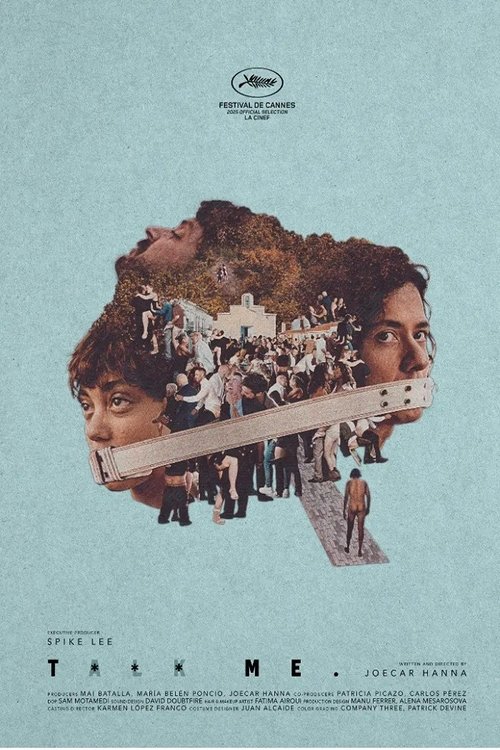
Talk Me
2026 · Directed by Joecar Hanna
Woke
Consciousness Score: 70%
Representation Casting
Score: 68/100
The film features a diverse cast and centers a queer relationship (Pedro and his husband) as foundational to the narrative. However, the casting appears to reflect organic storytelling rather than explicit representational mandate, and secondary characters receive minimal development.
LGBTQ+ Themes
Score: 75/100
The central relationship involves Pedro's marriage to his husband, positioning queerness as the baseline rather than as transgression. The emotional affair with Kira introduces ambiguity regarding orientation and desire, though the film does not explicitly interrogate these categories.
Feminist Agenda
Score: 55/100
Kira functions as a catalyst for Pedro's liberation and emotional awakening, which risks reproducing familiar romantic tropes. The film does not engage with explicit feminist critique, though its concern with emotional autonomy carries implicit feminist resonance.
Racial Consciousness
Score: 50/100
The filmmaker's stated interest in multicultural identity and the international production context suggest awareness of cultural difference. However, the film does not foreground race or ethnicity as explicit thematic concerns, treating them as background elements rather than sites of critical engagement.
Climate Crusade
Score: 0/100
No engagement with environmental themes, climate science, or ecological concerns.
Eat the Rich
Score: 35/100
The film's dystopian framework implies critique of systems of control, but does not specifically target capitalist structures. The outlawing of conversation suggests state repression rather than economic exploitation as the primary antagonist.
Body Positivity
Score: 0/100
No explicit engagement with body positivity, fat representation, or disability justice. The film does not address physical appearance or bodily autonomy in these contemporary terms.
Neurodivergence
Score: 20/100
No representation of neurodivergent characters or engagement with neurodiversity as a theme. The film does not address autism, ADHD, or other neurological conditions.
Revisionist History
Score: 10/100
The film operates in speculative rather than historical register. No attempt to reframe or reinterpret historical events through progressive frameworks.
Lecture Energy
Score: 45/100
The film demonstrates restraint in its use of explicit didacticism, preferring fable and metaphor to direct moral instruction. However, the speculative premise and thematic clarity occasionally border on allegory, which carries its own instructional quality.
Synopsis
Pedro, an outsider trapped in a passionless marriage, secretly escapes through music. When he meets Kira, another outsider who shares his yearning for true intimacy, they begin a risky conversational affair.
Consciousness Assessment
Talk Me arrives as a meticulously crafted short film that treats the mechanics of emotional repression with the gravity of a Foucauldian text, though its 20-minute runtime occasionally strains under the weight of its thematic ambitions. The film positions itself within a speculative framework where intimate conversation has been outlawed, a premise that functions as both literal dystopia and metaphor for contemporary alienation. Pedro's marriage to his husband provides the foundational queer relationship through which the narrative operates, yet the film's central tension concerns not the same-sex partnership itself but the suppression of emotional vulnerability across all human connection. The introduction of Kira and the subsequent "conversational affair" suggests that liberation emerges through the transgressive act of genuine dialogue, an idea that carries progressive resonance without descending into heavy-handed moralizing.
The film's engagement with multicultural identity remains somewhat oblique, anchored more in the casting and production (American-Spanish co-production with a diverse ensemble) than in explicit thematic treatment. Joecar Hanna's creative control across directing, writing, and starring roles grants the work a cohesive vision, though concentrated authority raises questions about whether sufficient distance exists for critical perspective on its own assumptions. The elevation of music as a vehicle for authentic selfhood, juxtaposed against the criminalization of speech, invites interpretation through frameworks of bodily autonomy and emotional freedom. Spike Lee's involvement as executive producer suggests institutional validation of the project's progressive sensibilities, though his presence also raises questions about whether such endorsement has become a marker of cultural legitimacy rather than substantive radical critique.
The film occupies a curious position: it demonstrates genuine concern with systems of control and emotional suppression, themes that align with contemporary progressive consciousness, yet it does not burden itself with explicit didacticism about systemic injustice or identity politics. Instead, it opts for fable and metaphor, which allows for interpretive generosity but also permits viewers to extract whatever ideological content they bring to the theater. For a short film, this restraint represents a modest achievement in avoiding the lecture-hall tone that plagues more ambitious social commentary.
Analysis generated by our Consciousness Algorithm
Consciousness Markers
The film features a diverse cast and centers a queer relationship (Pedro and his husband) as foundational to the narrative. However, the casting appears to reflect organic storytelling rather than explicit representational mandate, and secondary characters receive minimal development.
The central relationship involves Pedro's marriage to his husband, positioning queerness as the baseline rather than as transgression. The emotional affair with Kira introduces ambiguity regarding orientation and desire, though the film does not explicitly interrogate these categories.
Kira functions as a catalyst for Pedro's liberation and emotional awakening, which risks reproducing familiar romantic tropes. The film does not engage with explicit feminist critique, though its concern with emotional autonomy carries implicit feminist resonance.
The filmmaker's stated interest in multicultural identity and the international production context suggest awareness of cultural difference. However, the film does not foreground race or ethnicity as explicit thematic concerns, treating them as background elements rather than sites of critical engagement.
No engagement with environmental themes, climate science, or ecological concerns.
The film's dystopian framework implies critique of systems of control, but does not specifically target capitalist structures. The outlawing of conversation suggests state repression rather than economic exploitation as the primary antagonist.
No explicit engagement with body positivity, fat representation, or disability justice. The film does not address physical appearance or bodily autonomy in these contemporary terms.
No representation of neurodivergent characters or engagement with neurodiversity as a theme. The film does not address autism, ADHD, or other neurological conditions.
The film operates in speculative rather than historical register. No attempt to reframe or reinterpret historical events through progressive frameworks.
The film demonstrates restraint in its use of explicit didacticism, preferring fable and metaphor to direct moral instruction. However, the speculative premise and thematic clarity occasionally border on allegory, which carries its own instructional quality.