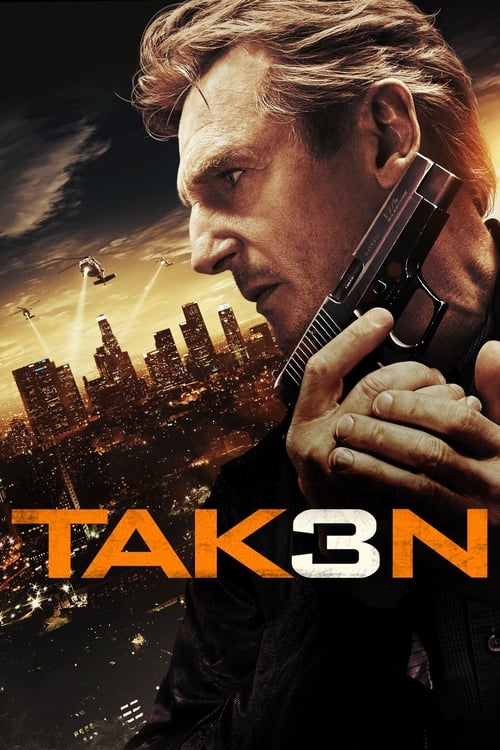
Taken 3
2014 · Directed by Olivier Megaton
Woke Score
CriticCritic Score
Audience
Ultra Based
Critics rated this 22 points above its woke score. Among Ultra Based films, this critic score ranks #1451 of 1469.
Representation Casting
Score: 15/100
Forest Whitaker appears in a substantial role as the police inspector, providing some racial diversity in casting, though his character is written as an antagonist rather than a vehicle for representation commentary.
LGBTQ+ Themes
Score: 0/100
No LGBTQ+ themes, characters, or subtext are present in the film.
Feminist Agenda
Score: 0/100
The film contains no feminist agenda or commentary. Female characters exist primarily as victims or supporting figures.
Racial Consciousness
Score: 0/100
Despite Whitaker's casting, the film demonstrates no engagement with racial consciousness or systemic racial issues.
Climate Crusade
Score: 0/100
No climate-related themes or environmental consciousness appear in the film.
Eat the Rich
Score: 0/100
The film contains no critique of capitalism, wealth disparity, or systemic economic injustice.
Body Positivity
Score: 0/100
No body positivity discourse or representation of diverse body types appears in the film.
Neurodivergence
Score: 0/100
No neurodivergent characters or themes related to neurodiversity are present.
Revisionist History
Score: 0/100
The film contains no historical revisionism or reexamination of historical narratives.
Lecture Energy
Score: 0/100
The film contains no preachy messaging or lecture-style exposition about social issues.


Synopsis
Ex-government operative Bryan Mills finds his life is shattered when he's falsely accused of a murder that hits close to home. As he's pursued by a savvy police inspector, Mills employs his particular set of skills to track the real killer and exact his unique brand of justice.
Consciousness Assessment
Taken 3 arrives as the terminal installment of a franchise that had long exhausted whatever creative possibilities it might have once contained. The film persists in the conviction that audiences require another round of Liam Neeson dispatching nameless antagonists across exotic locales, and to this end it dutifully obliges. Forest Whitaker's presence as the investigating inspector provides the film's only moment of casting substance, yet his character functions primarily as narrative obstacle rather than as any vehicle for meaningful representation or social commentary. The film remains indifferent to questions of identity, systemic power, or cultural critique.
What emerges is a thoroughly conventional action thriller, competently assembled but entirely unconcerned with the progressive sensibilities that increasingly animated contemporary cinema. The plot mechanics turn on personal vindication and revenge fantasy, neither of which require or invite engagement with broader social consciousness. The cinematography is serviceable, the action sequences are adequately choreographed, and the narrative resolves as expected. Beyond this, there is nothing to discuss.
The film's cultural inertia is its defining characteristic. It neither challenges nor embraces contemporary debates about representation, identity, or systemic justice. It simply exists as a functional entertainment product, indifferent to the cultural moment in which it was released. One might observe that this indifference is itself a form of statement, yet that would be to credit the film with more intentionality than it possesses.
Analysis generated by our Consciousness Algorithm
Critic Reviews
“It's a testament to Neeson's startling charisma as an action star that for all its storytelling flaws, large swaths of Taken 3 remain wildly entertaining.”
“Taken 3 scores over its predecessor on almost every level: the stakes are higher, the LA locations are nicely photographed and, best of all, there’s an actual plot, with twists and everything.”
“Taken 3 is exactly what one might anticipate from an unnecessary sequel in a mediocre franchise. ”
“Even Liam Neeson seems bored by the imbecilic, repetitive “Taken 3,” an action movie no one was clamoring for and no one will enjoy.”
Consciousness Markers
Forest Whitaker appears in a substantial role as the police inspector, providing some racial diversity in casting, though his character is written as an antagonist rather than a vehicle for representation commentary.
No LGBTQ+ themes, characters, or subtext are present in the film.
The film contains no feminist agenda or commentary. Female characters exist primarily as victims or supporting figures.
Despite Whitaker's casting, the film demonstrates no engagement with racial consciousness or systemic racial issues.
No climate-related themes or environmental consciousness appear in the film.
The film contains no critique of capitalism, wealth disparity, or systemic economic injustice.
No body positivity discourse or representation of diverse body types appears in the film.
No neurodivergent characters or themes related to neurodiversity are present.
The film contains no historical revisionism or reexamination of historical narratives.
The film contains no preachy messaging or lecture-style exposition about social issues.