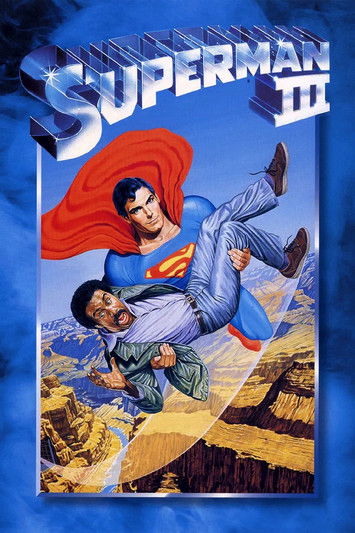
Superman III
1983 · Directed by Richard Lester
Woke Score
CriticCritic Score
Audience
Ultra Based
Critics rated this 36 points above its woke score. Among Ultra Based films, this critic score ranks #1290 of 1469.
Representation Casting
Score: 15/100
Richard Pryor's casting as Gus Gorman provides presence of a Black actor in a major role, but he functions primarily as comic relief without substantive character development or agency. His character's brilliance is framed through buffoonery rather than genuine respect.
LGBTQ+ Themes
Score: 0/100
No LGBTQ+ themes, characters, or references appear in the film. The narrative is entirely heteronormative with no acknowledgment of alternative identities or relationships.
Feminist Agenda
Score: 5/100
Female characters exist as romantic interests and supporting players. Annette O'Toole's Lana Lang represents the high school sweetheart archetype with minimal agency. There is no feminist consciousness or examination of gender dynamics.
Racial Consciousness
Score: 20/100
While Richard Pryor's presence could suggest racial representation, the film does not engage meaningfully with racial themes. His character's portrayal relies on comedic stereotypes rather than genuine cultural awareness or commentary on racial issues.
Climate Crusade
Score: 0/100
No climate-related themes appear in the narrative. Environmental concerns play no role in the plot, conflict, or resolution of the film.
Eat the Rich
Score: 10/100
The wealthy antagonist Ross Webster represents a mild critique of excess, but the film presents no systematic examination of capitalism or class structures. Wealth is treated as a personal flaw rather than a structural problem.
Body Positivity
Score: 0/100
The film makes no efforts toward body positivity or acceptance of diverse body types. Physical appearance conforms to conventional 1980s Hollywood standards without commentary or diversity.
Neurodivergence
Score: 0/100
No characters display neurodivergence or disability. The film contains no representation of autism, ADHD, mental illness, or physical disabilities.
Revisionist History
Score: 0/100
Superman III is a fictional superhero narrative with no historical content. No revisionist historical claims or reinterpretations appear in the film.
Lecture Energy
Score: 5/100
The film prioritizes entertainment and comedy over any preachy or educational impulse. There is minimal dialogue that feels preachy or lecture-like, though the screenplay contains no moral or philosophical depth whatsoever.


Synopsis
Aiming to defeat the Man of Steel, wealthy executive Ross Webster hires bumbling but brilliant Gus Gorman to develop synthetic kryptonite, which yields some unexpected psychological effects. Between rekindling romance with his high school sweetheart and saving himself, Superman must contend with a powerful supercomputer.
Consciousness Assessment
Superman III arrives as a curious artifact of early 1980s blockbuster sensibilities, a film that mistakes comedy for substance and confuses star power with character development. Richard Pryor's presence as Gus Gorman represents the era's approach to diversity in mainstream cinema: the Black character is funny, talented, and ultimately expendable within the narrative structure. There is nothing here that suggests conscious representation. Rather, Pryor serves as a comedic mechanism, a foil whose bumbling nature generates laughs through a lens that modern audiences would find uncomfortable.
The film's thematic concerns center on technology, wealth, and personal weakness rather than systemic inequality or progressive consciousness. Ross Webster exists as a generic wealthy antagonist without any genuine critique of capitalism or class structure. The synthetic kryptonite subplot, which corrupts Superman's morality, presents a psychological angle that could have been interesting but instead becomes a vehicle for slapstick humor and romantic subplots. Director Richard Lester prioritizes comedic timing over social commentary, and the result is a film that operates entirely within the mainstream blockbuster framework of its era.
Superman III is a work uninterested in cultural awareness or progressive sensibilities. The female characters remain secondary romantic interests. There is no acknowledgment of LGBTQ+ existence. Climate concerns do not factor into the narrative. Disability or neurodivergence plays no role. The film is simply a 1983 superhero comedy that happens to feature a prominent Black actor in a comedic role, without any deeper engagement with representation or social consciousness. It is a product of its time, and that time was not one of meaningful cultural interrogation.
Analysis generated by our Consciousness Algorithm
Critic Reviews
“Credit goes to Richard Lester, who is much more than an action director and whose erratic brilliance occasionally transcends this material, and to Reeve, who has manfully refused to let on that he is tired of the part (as opposed to the Jedi principals, who phoned theirs in). [17 June 1983, p.D1]”
“This is a cute, clever "Superman," without the epic audacity of Richard Donner's Supe I, one of the most underrated of movies, despite the $300 million it grossed. [20 June 1983, p.83]”
“Superman III is the kind of movie I feared the original "Superman" would be. It's a cinematic comic book, shallow, silly, filled with stunts and action, without much human interest.”
“Every composite shot in Superman III appears to be a careless affront to the willing suspension of disbelief. The flying sequences are a letdown, the cataclysms are a cheat, and even the settings are often exposed as a chintzy hoot. [17 June 1983, p.C1]”
Consciousness Markers
Richard Pryor's casting as Gus Gorman provides presence of a Black actor in a major role, but he functions primarily as comic relief without substantive character development or agency. His character's brilliance is framed through buffoonery rather than genuine respect.
No LGBTQ+ themes, characters, or references appear in the film. The narrative is entirely heteronormative with no acknowledgment of alternative identities or relationships.
Female characters exist as romantic interests and supporting players. Annette O'Toole's Lana Lang represents the high school sweetheart archetype with minimal agency. There is no feminist consciousness or examination of gender dynamics.
While Richard Pryor's presence could suggest racial representation, the film does not engage meaningfully with racial themes. His character's portrayal relies on comedic stereotypes rather than genuine cultural awareness or commentary on racial issues.
No climate-related themes appear in the narrative. Environmental concerns play no role in the plot, conflict, or resolution of the film.
The wealthy antagonist Ross Webster represents a mild critique of excess, but the film presents no systematic examination of capitalism or class structures. Wealth is treated as a personal flaw rather than a structural problem.
The film makes no efforts toward body positivity or acceptance of diverse body types. Physical appearance conforms to conventional 1980s Hollywood standards without commentary or diversity.
No characters display neurodivergence or disability. The film contains no representation of autism, ADHD, mental illness, or physical disabilities.
Superman III is a fictional superhero narrative with no historical content. No revisionist historical claims or reinterpretations appear in the film.
The film prioritizes entertainment and comedy over any preachy or educational impulse. There is minimal dialogue that feels preachy or lecture-like, though the screenplay contains no moral or philosophical depth whatsoever.