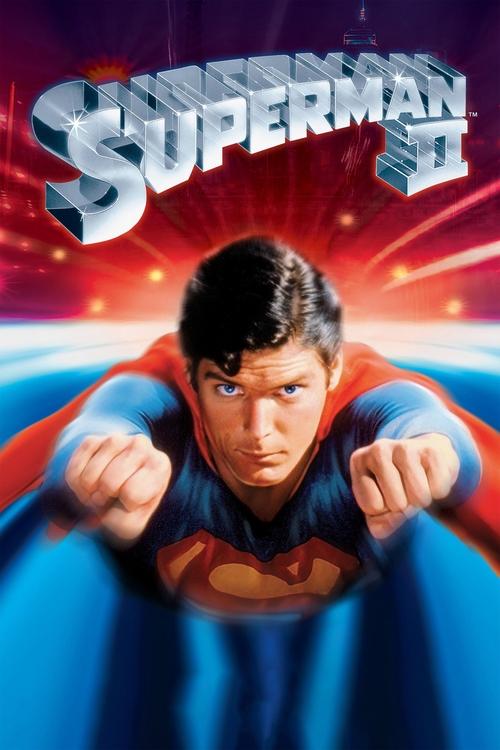
Superman II
1980 · Directed by Richard Lester
Woke Score
CriticCritic Score
Audience
Ultra Based
Critics rated this 79 points above its woke score. Among Ultra Based films, this critic score ranks #301 of 1469.
Representation Casting
Score: 15/100
The cast includes women and a few actors of color in minor roles, but this reflects 1980s Hollywood norms rather than any intentional commitment to diverse representation. No meaningful effort to center marginalized perspectives.
LGBTQ+ Themes
Score: 0/100
No LGBTQ+ themes, characters, or subtext present. The film is entirely heteronormative and shows no awareness of queer existence.
Feminist Agenda
Score: 5/100
Lois Lane exists primarily as a romantic interest and damsel in distress. Her agency is minimal, and the film shows no interest in feminist themes or female empowerment.
Racial Consciousness
Score: 0/100
The film contains no racial consciousness or examination of race relations. Racial dynamics are entirely absent from the narrative concerns.
Climate Crusade
Score: 0/100
Environmental or climate themes are completely absent. The film shows no concern with ecological issues.
Eat the Rich
Score: 0/100
No critique of capitalism or economic systems appears in the film. Lex Luthor's villainy is personal rather than systemic.
Body Positivity
Score: 0/100
The film contains no body positivity messaging or celebration of diverse body types. Standard 1980s Hollywood beauty standards prevail.
Neurodivergence
Score: 0/100
No representation of or commentary on neurodivergence. The concept is entirely absent from the film's worldview.
Revisionist History
Score: 0/100
Superman II contains no revisionist historical claims or reexaminations of historical events. It is a science fiction narrative untethered to actual history.
Lecture Energy
Score: 5/100
While the film contains some dialogue about morality and Superman's role, it never descends into overt preachiness or preachy social messaging.


Synopsis
Three Kryptonian criminals led by General Zod team up with Lex Luthor to conquer Earth, forcing a depowered Superman to regain his strength and stop them.
Consciousness Assessment
Superman II stands as a monument to pre-contemporary cinema, a film so thoroughly untouched by modern progressive sensibilities that it functions almost as an artifact. Released in 1980, the picture contains no detectable markers of the social consciousness that would come to dominate discourse four decades later. Richard Lester's film is interested in Superman punching things and Lex Luthor scheming, not in examining structural inequities or celebrating marginalized identities.
The female characters present themselves as window dressing rather than active agents in the narrative. Lois Lane spends much of the film as a romantic interest and a victim to be rescued, a role that feels less like intentional commentary on power dynamics and more like unremarkable 1980s filmmaking. The supporting women exist without any apparent consideration for representation or agency. This is not progressive filmmaking, nor is it attempting to be.
The villains, including the imposing General Zod, function purely as obstacles to overcome. There exists no commentary on colonialism, imperialism, or the ethics of Superman's role as a kind of benevolent dictator. The film concerns itself with spectacle and narrative momentum rather than ideological examination. For a work so completely divorced from contemporary cultural preoccupations, Superman II deserves recognition as a genuinely untroubled artifact of its era.
Analysis generated by our Consciousness Algorithm
Critic Reviews
“With his perfect pacing, elegant narrative design, and depth of characterization, Richard Lester has made as good a matinee movie as could be imagined: it's a big, generous, beautifully crafted piece of entertainment, with the distinctive Lester touch in the busy backgrounds and the throwaway dialogue.”
“It brings the fantastic into our everyday lives; it delights in showing us the reaction of the man on the street to Superman's latest stunt.”
“It boasts a more consistent tone, better special effects (such as villains throwing buses around like paper planes), and even an affecting love story.”
“The thrust of the film is to escalate the Superman idea to the point where the charm is no longer visible. A snide and knowing viewpoint has left a cloud of smudge over the original clean satire. [19 Jun 1981, p.19]”
Consciousness Markers
The cast includes women and a few actors of color in minor roles, but this reflects 1980s Hollywood norms rather than any intentional commitment to diverse representation. No meaningful effort to center marginalized perspectives.
No LGBTQ+ themes, characters, or subtext present. The film is entirely heteronormative and shows no awareness of queer existence.
Lois Lane exists primarily as a romantic interest and damsel in distress. Her agency is minimal, and the film shows no interest in feminist themes or female empowerment.
The film contains no racial consciousness or examination of race relations. Racial dynamics are entirely absent from the narrative concerns.
Environmental or climate themes are completely absent. The film shows no concern with ecological issues.
No critique of capitalism or economic systems appears in the film. Lex Luthor's villainy is personal rather than systemic.
The film contains no body positivity messaging or celebration of diverse body types. Standard 1980s Hollywood beauty standards prevail.
No representation of or commentary on neurodivergence. The concept is entirely absent from the film's worldview.
Superman II contains no revisionist historical claims or reexaminations of historical events. It is a science fiction narrative untethered to actual history.
While the film contains some dialogue about morality and Superman's role, it never descends into overt preachiness or preachy social messaging.