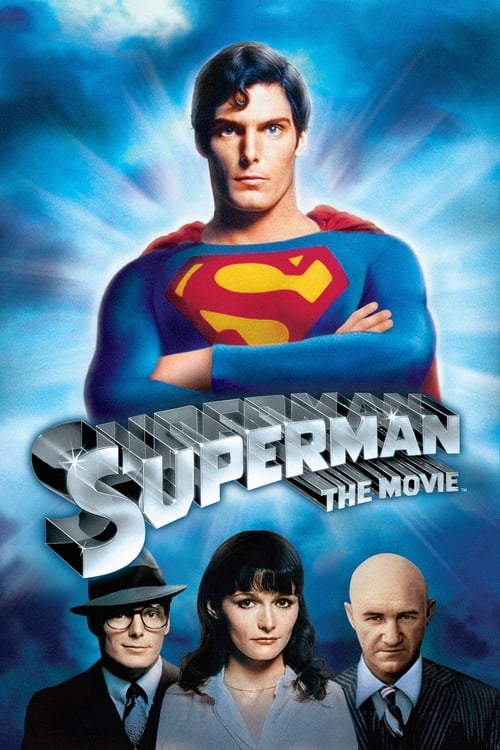
Superman
1978 · Directed by Richard Donner
Woke Score
CriticCritic Score
Audience
Ultra Based
Critics rated this 78 points above its woke score. Among Ultra Based films, this critic score ranks #325 of 1469.
Representation Casting
Score: 5/100
The cast is predominantly white with incidental minority roles. This reflects 1978 industry standards rather than any intentional commitment to diverse representation.
LGBTQ+ Themes
Score: 0/100
No LGBTQ+ themes, characters, or subtext. The film focuses entirely on heterosexual romance between Superman and Lois Lane.
Feminist Agenda
Score: 15/100
Lois Lane is a capable reporter but remains fundamentally a love interest. Her character arc culminates in rescue by Superman, reflecting pre-feminist narrative conventions.
Racial Consciousness
Score: 0/100
The film exhibits no awareness of or engagement with racial themes. The world presented is implicitly white with no meaningful representation or commentary.
Climate Crusade
Score: 0/100
Environmental concerns are entirely absent from the narrative. Climate issues do not factor into the plot or Superman's heroic mission.
Eat the Rich
Score: 5/100
Lex Luthor's villainy is rooted in personal megalomania and ambition rather than a critique of capitalism. His evil scheme reflects individual greed, not systemic critique.
Body Positivity
Score: 0/100
The film presents conventional 1970s Hollywood beauty standards with no engagement with body diversity or positive representation of non-traditional physiques.
Neurodivergence
Score: 0/100
No characters are portrayed as neurodivergent or disabled. The film contains no engagement with disability or neurodiversity themes.
Revisionist History
Score: 0/100
The film operates in a fictional universe and makes no attempt to reframe or reinterpret historical events.
Lecture Energy
Score: 5/100
While earnest in tone, the film does not lecture audiences about social issues. Superman's heroism is presented as universal good rather than a vehicle for contemporary political messaging.


Synopsis
Mild-mannered Clark Kent works as a reporter at the Daily Planet alongside his crush, Lois Lane. Clark must summon his superhero alter-ego when the nefarious Lex Luthor launches a plan to take over the world.
Consciousness Assessment
Richard Donner's Superman arrives from the late 1970s as a product of its era, which is to say it arrives almost entirely untouched by the social consciousness that would later come to define prestige cinema. The film is a triumph of spectacle and sincerity, a genuinely thrilling piece of entertainment that treats its subject matter with appropriate reverence. Christopher Reeve's performance remains one of cinema's great heroic turns, and the film's technical achievements were genuinely revolutionary for their time. Yet from the perspective of contemporary cultural analysis, Superman is a museum piece, an artifact of an era when films could be made about saving the world without interrogating the structures of the world being saved.
The film's gender politics belong entirely to the 1970s, which is not to say they are offensive by that era's standards but rather that they fail to engage with any modern conception of feminist consciousness. Margot Kidder's Lois Lane is written as a professional and an equal, yet the narrative ultimately positions her as an object to be rescued, a prize to be won by Superman. She exists to admire the male hero and to motivate his heroism through her peril. The supporting cast is uniformly white, a reflection of Hollywood's casting practices at the time instead of any deliberate statement about representation. Lex Luthor, played with theatrical malice by Gene Hackman, is a villain motivated by personal ambition and wounded pride, not by any systematic critique of wealth or power. He is simply evil because he is evil.
What remains striking about Superman is precisely what remains absent from it: any impulse to use its narrative machinery for contemporary political commentary. The film tells a story about a god-like being choosing to serve humanity, and it tells that story with complete earnestness. There is no lecture, no message beyond the simple proposition that heroism consists of helping others. This is not a fault, merely an observation. Superman is a film from before the contemporary era, and it wears that temporal displacement with dignity.
Analysis generated by our Consciousness Algorithm
Critic Reviews
“Boasts a smart screenplay by Robert Benton and David and Leslie Newman, striking cinematography by Geoffrey Unsworth (especially in the Smallville sequence), bright comic turns by Margot Kidder and Gene Hackman, and of course, that winning performance by Christopher Reeve in the title role. Believe a man can fly? You bet!”
“Superman is a pure delight, a wondrous combination of all the old-fashioned things we never really get tired of: adventure and romance, heroes and villains, earthshaking special effects, and -- you know what else? Wit.”
“If not the best superhero movie ever, it's definitely in the top 3. Reeve will forever be Superman to most of us.”
“Superman doesn’t have enough conviction or courage to be solidly square and dumb; it keeps pushing smarmy big emotions at us—but half-heartedly. It has a sour, scared undertone. ”
Consciousness Markers
The cast is predominantly white with incidental minority roles. This reflects 1978 industry standards rather than any intentional commitment to diverse representation.
No LGBTQ+ themes, characters, or subtext. The film focuses entirely on heterosexual romance between Superman and Lois Lane.
Lois Lane is a capable reporter but remains fundamentally a love interest. Her character arc culminates in rescue by Superman, reflecting pre-feminist narrative conventions.
The film exhibits no awareness of or engagement with racial themes. The world presented is implicitly white with no meaningful representation or commentary.
Environmental concerns are entirely absent from the narrative. Climate issues do not factor into the plot or Superman's heroic mission.
Lex Luthor's villainy is rooted in personal megalomania and ambition rather than a critique of capitalism. His evil scheme reflects individual greed, not systemic critique.
The film presents conventional 1970s Hollywood beauty standards with no engagement with body diversity or positive representation of non-traditional physiques.
No characters are portrayed as neurodivergent or disabled. The film contains no engagement with disability or neurodiversity themes.
The film operates in a fictional universe and makes no attempt to reframe or reinterpret historical events.
While earnest in tone, the film does not lecture audiences about social issues. Superman's heroism is presented as universal good rather than a vehicle for contemporary political messaging.