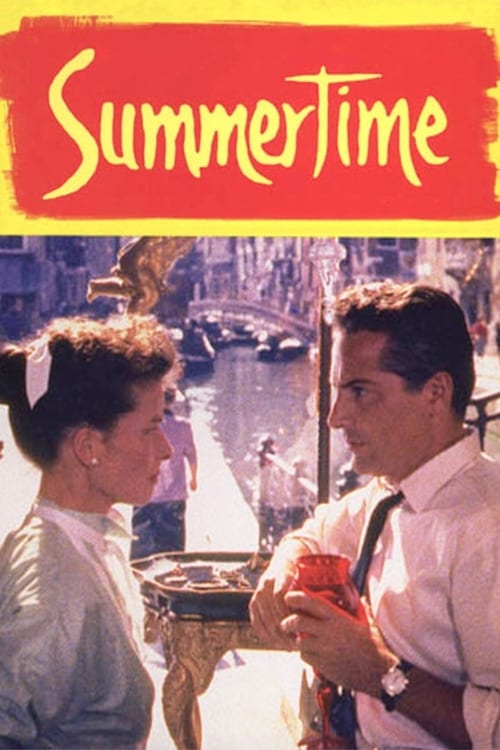
Summertime
1955 · Directed by David Lean
Woke Score
CriticCritic Score
Audience
Ultra Based
Critics rated this 70 points above its woke score. Among Ultra Based films, this critic score ranks #581 of 1469.
Representation Casting
Score: 0/100
The cast is entirely white with no representation of racial or ethnic minorities in any meaningful roles.
LGBTQ+ Themes
Score: 0/100
There is no LGBTQ+ representation or thematic engagement in the film.
Feminist Agenda
Score: 5/100
While the protagonist is a woman with agency and autonomy, her arc resolves through romantic attachment to a man, treating her unmarried status as a deficit requiring male validation rather than celebrating female independence.
Racial Consciousness
Score: 0/100
The film contains no engagement with racial consciousness, racial representation, or any interrogation of racial dynamics.
Climate Crusade
Score: 0/100
There is no climate consciousness or environmental concern evident in the film.
Eat the Rich
Score: 0/100
The film contains no critique of capitalism, class systems, or economic inequality.
Body Positivity
Score: 0/100
There is no engagement with body positivity or celebration of diverse body types.
Neurodivergence
Score: 0/100
There is no representation of or engagement with neurodivergence in the film.
Revisionist History
Score: 0/100
The film makes no attempt to revisit or reframe historical narratives or events.
Lecture Energy
Score: 0/100
The film contains no preachy or preachy elements designed to educate the audience about social issues.


Synopsis
Middle-aged Ohio secretary Jane Hudson has never found love and has nearly resigned herself to spending the rest of her life alone. But before she does, she uses her savings to finance a summer in romantic Venice, where she finally meets the man of her dreams, the elegant Renato Di Rossi.
Consciousness Assessment
Summertime presents itself as a romantic journey of self-discovery, centered on a middle-aged unmarried woman who travels alone to Venice in pursuit of romantic fulfillment. While the film grants its female protagonist autonomy and treats her desires with apparent seriousness, it operates entirely within a pre-contemporary progressive framework. Jane Hudson's unmarried status is positioned as a personal tragedy requiring resolution through romantic attachment to a man, rather than as a neutral or even desirable condition. The film contains no interrogation of gender hierarchies, no celebration of female independence as inherently valuable, and no awareness of systemic inequalities affecting women.
The narrative unfolds as a picturesque tourist romance, with Venice serving as backdrop rather than as a location worthy of cultural or historical analysis. The Italian characters, including the male love interest, are presented through a lens of exoticism and charm rather than through any framework examining cultural or economic power dynamics. The cast is entirely white, and the social universe of the film contains no racial consciousness, no examination of labor or class systems, no engagement with environmental concerns, and no acknowledgment of neurodivergence, body diversity, or LGBTQ+ identities. There is no lecture energy, no revisionist impulse, no climate consciousness, no anti-capitalist sentiment.
What we have here is a competent mid-century romantic drama that operates according to the sensibilities and blind spots of 1950s Hollywood. The film predates the specific constellation of cultural anxieties and frameworks that constitute contemporary progressive consciousness by several decades. Its sympathies lie entirely within the personal and emotional register, untouched by the systemic concerns that define modern progressive cultural production.
Analysis generated by our Consciousness Algorithm
Critic Reviews
“For all of its wise, welcome focus on the libidinal, Summertime additionally succeeds in presenting the liberationist fervor of the time without devolving into school-play pageantry.”
“Artfully calculated and authentically felt, the unexpectedly effective Summertime combines the conventional structure of classic movie romance with a sensual same-sex frankness that couldn't be more up-to-date.”
“While a romance on its surface, Catherine Corsini‘s Summertime is really about freedom.”
“Two dull people have a dull love affair in Summertime, a French drama that drags on like an August afternoon.”
Consciousness Markers
The cast is entirely white with no representation of racial or ethnic minorities in any meaningful roles.
There is no LGBTQ+ representation or thematic engagement in the film.
While the protagonist is a woman with agency and autonomy, her arc resolves through romantic attachment to a man, treating her unmarried status as a deficit requiring male validation rather than celebrating female independence.
The film contains no engagement with racial consciousness, racial representation, or any interrogation of racial dynamics.
There is no climate consciousness or environmental concern evident in the film.
The film contains no critique of capitalism, class systems, or economic inequality.
There is no engagement with body positivity or celebration of diverse body types.
There is no representation of or engagement with neurodivergence in the film.
The film makes no attempt to revisit or reframe historical narratives or events.
The film contains no preachy or preachy elements designed to educate the audience about social issues.