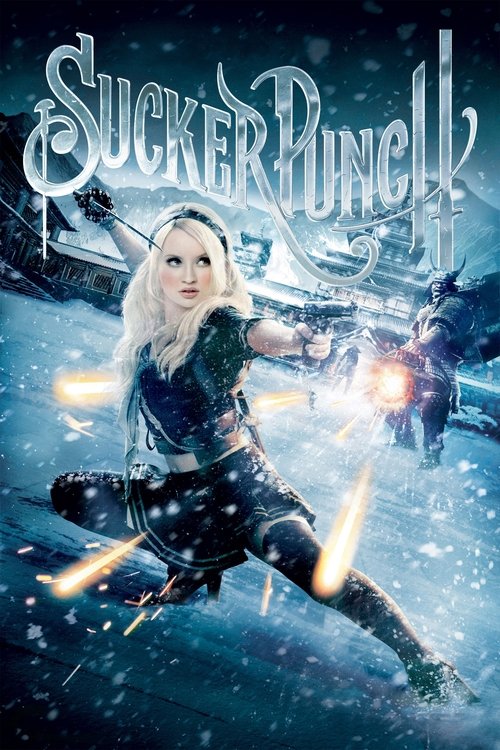
Sucker Punch
2011 · Directed by Zack Snyder
Woke Score
CriticCritic Score
Audience
Based
Critics rated this 5 points below its woke score. Among Based films, this critic score ranks #342 of 345.
Representation Casting
Score: 40/100
The cast is predominantly female with diverse ethnicities represented, but the characters are primarily defined by their appearance and physical performance rather than meaningful personality or agency.
LGBTQ+ Themes
Score: 0/100
There are no LGBTQ+ themes or characters present in the film.
Feminist Agenda
Score: 55/100
The film claims feminist themes through its narrative of female escape and resistance, but undermines this through heavy objectification, skimpy costuming, and prioritizing visual spectacle over genuine exploration of gender-based oppression.
Racial Consciousness
Score: 0/100
The film contains no meaningful engagement with racial themes or racial consciousness despite its diverse cast.
Climate Crusade
Score: 0/100
Climate issues are not present or relevant to this film.
Eat the Rich
Score: 0/100
The film contains no anti-capitalist messaging or critique of economic systems.
Body Positivity
Score: 15/100
All female characters conform to narrow beauty standards and are presented in highly sexualized, idealized bodies within skimpy costumes; no body diversity or body positivity messaging.
Neurodivergence
Score: 0/100
While the film involves an institutionalized character, there is no meaningful or respectful engagement with neurodivergence or mental health as themes.
Revisionist History
Score: 0/100
This is a fantasy film with no historical content to revise.
Lecture Energy
Score: 25/100
The film occasionally attempts to impart messages about female empowerment and resistance, though these moments feel preachy rather than organically integrated into the narrative.


Synopsis
A young woman, institutionalized by her abusive stepfather, retreats into a vivid fantasy world where she envisions a plan to escape. Gathering a group of fellow inmates, she embarks on a quest to collect five mystical items, blurring the lines between reality and imagination.
Consciousness Assessment
Sucker Punch presents itself as a meditation on female agency and liberation, a conceit that the film pursues with the subtlety of a sledgehammer wrapped in a school uniform. The narrative concerns five institutionalized women who band together to escape their captors, which on paper suggests progressive intentions. However, the execution reveals a fundamental contradiction between stated theme and visual language. The film drowns its female characters in fetishistic costuming and choreography that prioritizes spectacle over genuine character development, leaving us with an artifact that simultaneously claims to celebrate female empowerment while aestheticizing female bodies in ways that invite the very objectification the plot purports to critique. This is not incidental. It is the core tension that makes the film so emblematic of a particular strain of mid-2010s pseudo-progressivism.
The film's approach to its female characters suggests a filmmaker more interested in costume design than characterization. The women exist primarily as vessels for action sequences that feel designed for a particular audience demographic, their personalities thin enough to vanish between the fantasy sequences and the institutional setting. There is no meaningful exploration of how their gender affects their situation beyond surface-level acknowledgment. The sexual violence that precipitates the protagonist's descent into fantasy is presented as a plot device rather than something the film grapples with in any serious way. The male characters, by contrast, are granted complexity and motivation. The men in this narrative are allowed to be villainous or sympathetic or conflicted. The women are allowed to fight.
Sucker Punch mistakes visual style for substance. The film equates female characters in combat with female empowerment, a reductive equation that leaves the actual work of feminist cinema undone. A truly progressive film might have interrogated the male gaze it reproduces so eagerly. Instead, Snyder doubles down on it, suggesting that if we simply frame objectification as fantasy, it becomes something else entirely. It does not.
Analysis generated by our Consciousness Algorithm
Critic Reviews
“A wonderfully wild provocation - an imperfect, overlong, intemperate and utterly absorbing romp through the id that I wouldn't have missed for the world.”
“Sucker Punch doesn't all work by a long shot, but it confirms my sense that Snyder belongs near the top of a very short list of directors who are trying to reinvent a personal, auteurist vision of cinema at the most commercial, mass-market, attention-disordered end of the spectrum.”
“It's a film that's at once too much and not enough, laughable and groovy, dead serious and a total joke. And I mean no disrespect by any of that.”
“It's all megalomaniacal junk from Snyder, but that isn't his most offensive move.”
Consciousness Markers
The cast is predominantly female with diverse ethnicities represented, but the characters are primarily defined by their appearance and physical performance rather than meaningful personality or agency.
There are no LGBTQ+ themes or characters present in the film.
The film claims feminist themes through its narrative of female escape and resistance, but undermines this through heavy objectification, skimpy costuming, and prioritizing visual spectacle over genuine exploration of gender-based oppression.
The film contains no meaningful engagement with racial themes or racial consciousness despite its diverse cast.
Climate issues are not present or relevant to this film.
The film contains no anti-capitalist messaging or critique of economic systems.
All female characters conform to narrow beauty standards and are presented in highly sexualized, idealized bodies within skimpy costumes; no body diversity or body positivity messaging.
While the film involves an institutionalized character, there is no meaningful or respectful engagement with neurodivergence or mental health as themes.
This is a fantasy film with no historical content to revise.
The film occasionally attempts to impart messages about female empowerment and resistance, though these moments feel preachy rather than organically integrated into the narrative.