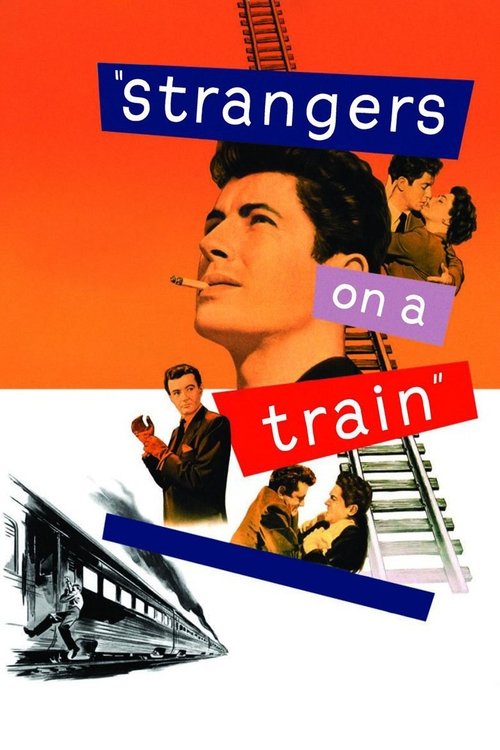
Strangers on a Train
1951 · Directed by Alfred Hitchcock
Woke Score
CriticCritic Score
Audience
Ultra Based
Critics rated this 84 points above its woke score. Among Ultra Based films, this critic score ranks #186 of 1469.
Representation Casting
Score: 0/100
All-white cast reflecting 1951 Hollywood standards with no conscious representation agenda. No effort to diversify the ensemble or challenge casting norms.
LGBTQ+ Themes
Score: 15/100
Contemporary scholars identify homoerotic subtext in the dynamic between male leads, but the film itself contains no explicit LGBTQ+ themes, representation, or commentary. The queerness is interpretive overlay on a heteronormative narrative.
Feminist Agenda
Score: 0/100
Female characters serve functional roles in the plot without any feminist consciousness or agenda. Ruth Roman's character exists as object rather than agent of her own story.
Racial Consciousness
Score: 0/100
The film contains no engagement with racial themes, representation, or consciousness of any kind. Racial issues are entirely absent from both narrative and visual language.
Climate Crusade
Score: 0/100
No environmental themes, climate consciousness, or ecological commentary appears anywhere in the film. The setting is entirely incidental to the thriller mechanics.
Eat the Rich
Score: 0/100
While the plot involves murder for profit, this is a standard thriller device rather than social critique. No commentary on economic systems or wealth inequality is present.
Body Positivity
Score: 0/100
The film contains no body positivity messaging, diverse body representation, or challenge to conventional beauty standards. Bodies are simply bodies serving the narrative.
Neurodivergence
Score: 0/100
No representation of neurodivergent characters or engagement with neurodiversity themes. The psychopath protagonist is portrayed as simply evil rather than neurodivergent.
Revisionist History
Score: 0/100
This is a fictional thriller with no historical setting or revisionist historical agenda. Questions of how history is told do not arise.
Lecture Energy
Score: 0/100
The film operates as pure entertainment with no pedagogical impulse, no pauses for instruction, and no desire to educate the audience on any social matter.


Synopsis
A charming psychopath tries to coerce a tennis star into his theory that two strangers can commit the perfect crime by exchanging murders—each killing the other's most-hated person.
Consciousness Assessment
Strangers on a Train arrives as a masterwork of mid-century thriller cinema, which is to say it arrives almost entirely innocent of the social consciousness that would later preoccupy filmmakers. Hitchcock's 1951 exercise in psychological manipulation remains primarily interested in the mechanics of suspense, the geometry of moral compromise, and the visual language of cinema itself. The homoerotic subtext that contemporary scholars have identified in the interplay between its two male leads is genuine enough, a consequence of Hitchcock's visual grammar and the film's intense focus on masculine antagonism, yet it operates entirely as subtext. The picture contains no explicit engagement with sexual identity, no pedagogical impulse toward enlightenment, no desire to correct the audience's understanding of anything whatsoever.
What we have instead is a period artifact that happened to be made during the lavender scare, a film that by its very existence as an entertainment product carries certain unspoken tensions and silences. These tensions are there for the modern viewer to excavate and interpret, but they were not consciously constructed as progressive commentary. The film simply is what it is: a brilliant exercise in moral vertigo that uses two men and a woman as chess pieces in a game about the seductive appeal of amorality. No character exists to educate us. No scene pauses to instruct. The women in the film are not empowered, the marginalized are not centered, and the whole enterprise operates with the casual indifference to social justice that one expects from entertainment designed to thrill rather than reform.
This is not a criticism. It is, rather, an observation about the film's historical position. Strangers on a Train is a work of cinema before it is a work of social commentary. Its score remains low not because the film is bad, but because it was made when such concerns barely existed as a category for filmmakers to consider.
Analysis generated by our Consciousness Algorithm
Critic Reviews
“Strangers on a Train is not a psychological study, however, but a first-rate thriller with odd little kinks now and then. It proceeds, as Hitchcock's films so often do, with a sense of private scores being settled just out of sight.”
“Director Hitchcock toys with this plot as lovingly as the crack-brained murderer, plays it for wry irony and unexpected humor as well as suspense. But he seems less interested in making his audiences believe in the story's outrageously rigged situations than in teasing, tricking and dazzling them with the masterful touch of a talented cinematic showoff.”
“Strangers on a Train ranks at the top of Hitchcock's most accomplished works, a masterpiece that is so carefully constructed and its characters so well developed that the viewer is quickly intimate and comfortable with the story long before Bruno turns killer. ”
“Mr. Hitchcock again is tossing a crazy murder story in the air and trying to con us into thinking that it will stand up without support.”
Consciousness Markers
All-white cast reflecting 1951 Hollywood standards with no conscious representation agenda. No effort to diversify the ensemble or challenge casting norms.
Contemporary scholars identify homoerotic subtext in the dynamic between male leads, but the film itself contains no explicit LGBTQ+ themes, representation, or commentary. The queerness is interpretive overlay on a heteronormative narrative.
Female characters serve functional roles in the plot without any feminist consciousness or agenda. Ruth Roman's character exists as object rather than agent of her own story.
The film contains no engagement with racial themes, representation, or consciousness of any kind. Racial issues are entirely absent from both narrative and visual language.
No environmental themes, climate consciousness, or ecological commentary appears anywhere in the film. The setting is entirely incidental to the thriller mechanics.
While the plot involves murder for profit, this is a standard thriller device rather than social critique. No commentary on economic systems or wealth inequality is present.
The film contains no body positivity messaging, diverse body representation, or challenge to conventional beauty standards. Bodies are simply bodies serving the narrative.
No representation of neurodivergent characters or engagement with neurodiversity themes. The psychopath protagonist is portrayed as simply evil rather than neurodivergent.
This is a fictional thriller with no historical setting or revisionist historical agenda. Questions of how history is told do not arise.
The film operates as pure entertainment with no pedagogical impulse, no pauses for instruction, and no desire to educate the audience on any social matter.