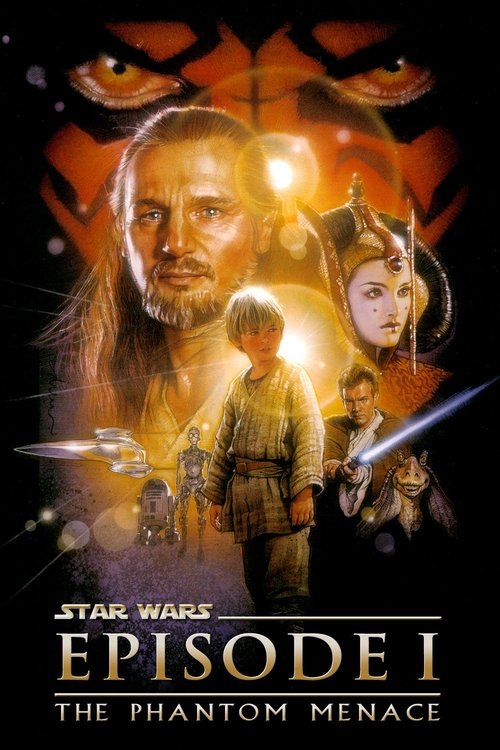
Star Wars: Episode I - The Phantom Menace
1999 · Directed by George Lucas
Woke Score
CriticCritic Score
Audience
Ultra Based
Critics rated this 33 points above its woke score. Among Ultra Based films, this critic score ranks #1141 of 1469.
Representation Casting
Score: 35/100
The film features diverse alien races and some non-white human cast members, but their casting appears incidental to the story rather than a deliberate statement about representation. Portman is the only prominent female character in a position of authority.
LGBTQ+ Themes
Score: 0/100
No LGBTQ+ themes, representation, or subtext. The film is entirely heteronormative in its romantic and relationship dynamics.
Feminist Agenda
Score: 20/100
Queen Amidala demonstrates political agency and military command, but the narrative consistently frames her through romantic and maternal lenses. Her character arc prioritizes her role as a potential love interest over her political authority.
Racial Consciousness
Score: 15/100
While slavery is mentioned as Anakin's background, the film treats it as plot device rather than exploring systemic racial dynamics. Certain alien character designs have been retrospectively criticized as embodying ethnic stereotypes, though this reflects pre-2015 sensibilities rather than deliberate commentary.
Climate Crusade
Score: 0/100
No climate consciousness or environmental themes. The film contains no commentary on ecological systems, sustainability, or planetary health.
Eat the Rich
Score: 5/100
The film depicts trade disputes and corporate entities, but presents them as narrative obstacles rather than platforms for critiquing capitalism itself. There is no ideological position against economic systems.
Body Positivity
Score: 0/100
No body positivity messaging. The film presents conventional idealized bodies for human characters and uses alien body types for comedic or villainous effect without any conscious body-positive framing.
Neurodivergence
Score: 0/100
No neurodivergent representation or themes. No characters are coded as neurodivergent, nor does the film engage with disability or neurodiversity as a subject.
Revisionist History
Score: 10/100
The film presents a fictional history of the Force and Jedi order, but this is worldbuilding rather than revisionist history. There is no reexamination of actual historical events through a contemporary lens.
Lecture Energy
Score: 25/100
The film contains exposition about politics, the Jedi order, and philosophical concepts, but this is delivered through plot mechanics rather than as moral instruction to the audience. The tone is more adventure than lecture.


Synopsis
Anakin Skywalker, a young slave strong with the Force, is discovered on Tatooine. Meanwhile, the evil Sith have returned, enacting their plot for revenge against the Jedi.
Consciousness Assessment
The Phantom Menace occupies a peculiar position in the woke canon: a 1999 film made before contemporary progressive sensibilities had coalesced, yet one that contains elements which would later become flashpoints for cultural debate. The film presents itself as a grand space opera unconcerned with the identity politics of the modern age, which is to say it is largely unconcerned with such matters altogether. What progressive elements exist are incidental rather than ideological. Natalie Portman's Queen Amidala commands armies and makes political decisions, though the film treats her primarily as a romantic prospect for a Jedi and a mother figure for Anakin, rather than exploring her agency with any depth. The film contains numerous alien races and cultures, but this diversity serves the narrative machinery of a galaxy far away rather than functioning as a statement about representation or inclusion.
The more substantive cultural criticism concerns the film's casting and character design choices, which have aged poorly under contemporary scrutiny. Ahmed Best's motion-captured Jar Jar Binks and the trade federation aliens, with their vaguely Asian-coded accents and mannerisms, have been subject to retrospective analysis as embodying problematic stereotypes. Yet these elements were not created with the deliberate social consciousness that would characterize modern progressive cinema. They emerge instead from a pre-2015 sensibility about what constituted acceptable alien characterization. The film's treatment of slavery (Anakin's backstory) is presented as tragic backdrop rather than as a platform for exploring systemic oppression. The narrative accepts the existence of slavery in the universe without interrogating it, much as a medieval fantasy might.
In terms of the specific markers of contemporary progressive cultural sensibility, The Phantom Menace barely registers. There is no LGBTQ+ content, no climate consciousness, no body positivity discourse, no neurodivergent representation, and no lecture energy about the systems it depicts. The feminist agenda is muted at best. The film is, in short, a product of its time, which is precisely the point. It cannot be scored as though it were made in 2024. The score reflects not moral condemnation but rather an honest assessment of how little the film engages with the specific cultural preoccupations of the 2020s progressive sensibility that defines "wokeness" in the contemporary sense.
Analysis generated by our Consciousness Algorithm
Critic Reviews
“Phantom may not be the best entry in the series, but it's the most technically accomplished, and it makes you as hungry for the next film as you've been for this one.”
“An astonishing achievement in imaginative filmmaking.”
“Forget the hype, and the backlash. The Phantom Menace is captivating.”
“It's difficult to discern precisely where this all went wrong, and even more difficult to speculate about possible improvements.”
Consciousness Markers
The film features diverse alien races and some non-white human cast members, but their casting appears incidental to the story rather than a deliberate statement about representation. Portman is the only prominent female character in a position of authority.
No LGBTQ+ themes, representation, or subtext. The film is entirely heteronormative in its romantic and relationship dynamics.
Queen Amidala demonstrates political agency and military command, but the narrative consistently frames her through romantic and maternal lenses. Her character arc prioritizes her role as a potential love interest over her political authority.
While slavery is mentioned as Anakin's background, the film treats it as plot device rather than exploring systemic racial dynamics. Certain alien character designs have been retrospectively criticized as embodying ethnic stereotypes, though this reflects pre-2015 sensibilities rather than deliberate commentary.
No climate consciousness or environmental themes. The film contains no commentary on ecological systems, sustainability, or planetary health.
The film depicts trade disputes and corporate entities, but presents them as narrative obstacles rather than platforms for critiquing capitalism itself. There is no ideological position against economic systems.
No body positivity messaging. The film presents conventional idealized bodies for human characters and uses alien body types for comedic or villainous effect without any conscious body-positive framing.
No neurodivergent representation or themes. No characters are coded as neurodivergent, nor does the film engage with disability or neurodiversity as a subject.
The film presents a fictional history of the Force and Jedi order, but this is worldbuilding rather than revisionist history. There is no reexamination of actual historical events through a contemporary lens.
The film contains exposition about politics, the Jedi order, and philosophical concepts, but this is delivered through plot mechanics rather than as moral instruction to the audience. The tone is more adventure than lecture.