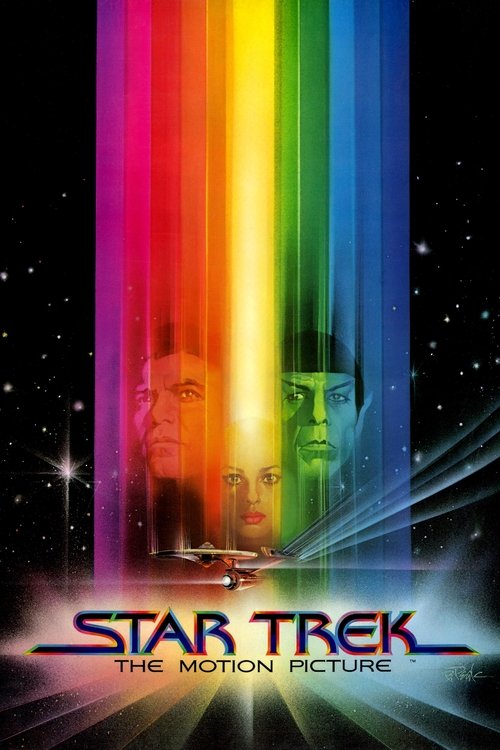
Star Trek: The Motion Picture
1979 · Directed by Robert Wise
Woke Score
CriticCritic Score
Audience
Ultra Based
Critics rated this 42 points above its woke score. Among Ultra Based films, this critic score ranks #1171 of 1469.
Representation Casting
Score: 35/100
The cast includes integrated representation with Nichelle Nichols and George Takei, progressive for 1979 but presented without explicit discussion of diversity. No conscious effort to highlight or celebrate marginalized casting.
LGBTQ+ Themes
Score: 0/100
No LGBTQ+ themes, characters, or representation present in the film. The 1979 context would have made this unlikely regardless of intent.
Feminist Agenda
Score: 0/100
No discernible feminist agenda. Female characters exist in traditional professional roles without narrative emphasis on gender dynamics or women's liberation themes.
Racial Consciousness
Score: 10/100
While the cast includes actors of color, the film contains no explicit racial consciousness, discussion of systemic inequality, or acknowledgment of racial identity as a narrative element.
Climate Crusade
Score: 0/100
No climate-related themes or environmental consciousness present in the film's narrative or thematic concerns.
Eat the Rich
Score: 0/100
No anti-capitalist messaging or critique of wealth inequality. The film operates within a post-scarcity Star Trek universe but does not explicitly critique capitalist systems.
Body Positivity
Score: 0/100
No body positivity messaging or discussion of body diversity and acceptance. Standard 1970s casting and costuming conventions apply throughout.
Neurodivergence
Score: 0/100
No representation of or discussion regarding neurodivergent characters or conditions. Not a contemporary concern in 1979 science fiction filmmaking.
Revisionist History
Score: 0/100
No attempt to reframe historical events or narratives. The film is purely speculative science fiction set in a future timeline.
Lecture Energy
Score: 15/100
The film contains philosophical exposition about consciousness and existence, but this is presented as scientific inquiry rather than moral instruction. Some preachy moments but not in service of contemporary social messaging.


Synopsis
When an unidentified alien destroys three powerful Klingon cruisers, Captain James T. Kirk returns to the newly transformed U.S.S. Enterprise to take command.
Consciousness Assessment
Star Trek: The Motion Picture arrives as a relic of a bygone era, one in which diversity was considered progressive without requiring additional commentary or self-congratulation. The film retains the original series' integrated cast, a detail that was genuinely forward-thinking for 1966 but represents merely baseline representation by modern standards. Nichelle Nichols and George Takei appear in the ensemble without fanfare, their presence neither fetishized nor made the subject of narrative discussion. This is not progressive consciousness, however. This is simply the residual progressivism of the Kennedy-era space race optimism, before the specific cultural markers of 2020s consciousness had calcified into their current form.
The film itself concerns itself with philosophical questions about consciousness, technology, and humanity's place in the cosmos. These are serious themes, executed with the ponderous gravity that characterized Robert Wise's approach. Yet none of this constitutes what we would recognize as contemporary social consciousness. There is no explicit feminist agenda, no climate consciousness, no revisionist history, no performative acknowledgment of marginalized identities. The film simply exists in a time before such frameworks became mandatory elements of cultural production.
We are left with a film that was progressive for its moment but registers as almost innocent when measured against current expectations. It neither champions nor critiques the social structures that would later become targets of progressive cultural work. This is not a deficiency. It is merely a temporal accident, a movie made before the contemporary vocabulary of social consciousness had been established. The Motion Picture thus scores low not because it is regressive, but because it predates the very concept being measured.
Analysis generated by our Consciousness Algorithm
Critic Reviews
“Producer Gene Roddenberry and director Robert Wise have corralled an enormous technical crew, and the result is state-of-the-art screen magic.”
“It’s a bit overextended but very watchable with flourishes of exotic invention.”
“Star Trek: The Motion Picture is probably about as good as we could have expected. It lacks the dazzling brilliance and originality of 2001 (which was an extraordinary one-of-a-kind film). But on its own terms it's a very well-made piece of work, with an interesting premise.”
“This 1979 movie adaptation of the cult TV series is blandness raised to an epic scale. Robert Wise's bloodless direction drains all the air from the Enterprise.”
Consciousness Markers
The cast includes integrated representation with Nichelle Nichols and George Takei, progressive for 1979 but presented without explicit discussion of diversity. No conscious effort to highlight or celebrate marginalized casting.
No LGBTQ+ themes, characters, or representation present in the film. The 1979 context would have made this unlikely regardless of intent.
No discernible feminist agenda. Female characters exist in traditional professional roles without narrative emphasis on gender dynamics or women's liberation themes.
While the cast includes actors of color, the film contains no explicit racial consciousness, discussion of systemic inequality, or acknowledgment of racial identity as a narrative element.
No climate-related themes or environmental consciousness present in the film's narrative or thematic concerns.
No anti-capitalist messaging or critique of wealth inequality. The film operates within a post-scarcity Star Trek universe but does not explicitly critique capitalist systems.
No body positivity messaging or discussion of body diversity and acceptance. Standard 1970s casting and costuming conventions apply throughout.
No representation of or discussion regarding neurodivergent characters or conditions. Not a contemporary concern in 1979 science fiction filmmaking.
No attempt to reframe historical events or narratives. The film is purely speculative science fiction set in a future timeline.
The film contains philosophical exposition about consciousness and existence, but this is presented as scientific inquiry rather than moral instruction. Some preachy moments but not in service of contemporary social messaging.