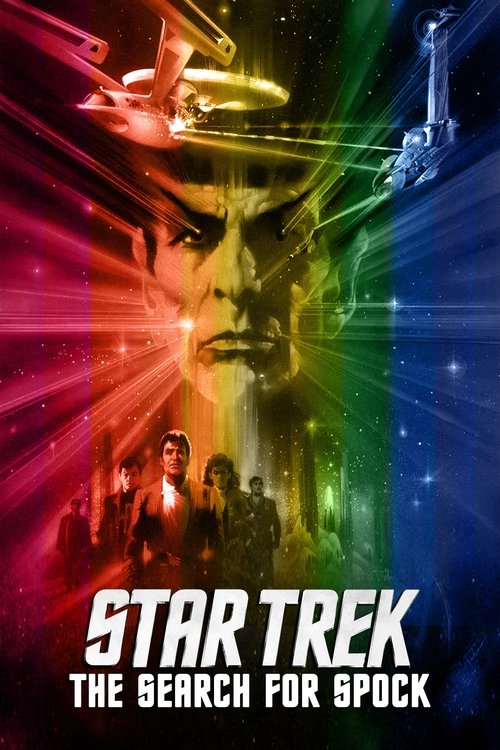
Star Trek III: The Search for Spock
1984 · Directed by Leonard Nimoy
Woke Score
CriticCritic Score
Audience
Ultra Based
Critics rated this 54 points above its woke score. Among Ultra Based films, this critic score ranks #974 of 1469.
Representation Casting
Score: 15/100
The cast includes actors of color in established roles from the original series, but this reflects 1960s-70s progressive casting rather than contemporary representation activism. The diversity is present but unremarked upon.
LGBTQ+ Themes
Score: 0/100
No LGBTQ+ themes, characters, or subtext appear in the film. The relationships depicted are strictly professional and heterosexual.
Feminist Agenda
Score: 5/100
While Nichelle Nichols' character Uhura participates in the crew's mission, the film contains no feminist messaging or commentary. Gender dynamics are not interrogated.
Racial Consciousness
Score: 0/100
The film contains no examination of racial issues, systemic racism, or contemporary racial consciousness. Racial diversity exists in the casting but not in the narrative.
Climate Crusade
Score: 0/100
No climate-related themes, environmental messaging, or ecological consciousness appears in this space adventure.
Eat the Rich
Score: 0/100
The film presents no critique of capitalism, wealth inequality, or economic systems. The Federation operates in the background without commentary.
Body Positivity
Score: 0/100
No body positivity messaging or discussion of non-standard bodies appears. The film contains no engagement with this contemporary concern.
Neurodivergence
Score: 5/100
Spock's logical thinking could be read as neurodivergent coding, but the film does not engage with this concept or use it as a framework for understanding neurodivergence.
Revisionist History
Score: 0/100
The film contains no reinterpretation of historical events or revisionist framing. It is set in a fictional future with no historical commentary.
Lecture Energy
Score: 2/100
Leonard Nimoy's direction emphasizes humor and action over philosophical monologuing. The film avoids preachy moments typical of more message-heavy cinema.


Synopsis
A surprise visit from Spock's father provides a startling revelation: McCoy is harboring Spock's living essence.
Consciousness Assessment
Star Trek III represents the peculiar challenge of assessing a 1984 film through a 2020s lens. The ensemble cast, featuring Nichelle Nichols and George Takei, carries forward a tradition of racial and ethnic diversity established during the original series' groundbreaking run in the 1960s. Yet this diversity, while admirably present for the era, exists primarily as natural casting rather than as a vehicle for contemporary progressive messaging. The film itself concerns a straightforward rescue mission: recovering Spock's essence from McCoy's body. Leonard Nimoy, directing his second Trek film, steers the narrative toward comedy and character interplay rather than social commentary. There are no lectures about systemic injustice, no revisionist historical framings, no contemporary causes woven into the plot. The Klingons serve as antagonists, but the film does not engage with them as a metaphor for any modern political struggle. What we have is a competent space adventure that happens to feature a diverse cast, which is not the same as a film animated by progressive cultural consciousness. The Enterprise crew, regardless of their backgrounds, functions as a unified team bound by loyalty and shared purpose. This was progressive thinking for 1984, but it is not progressive thinking by 2024 standards.
Analysis generated by our Consciousness Algorithm
Critic Reviews
“It features as ghastly a group of interstellar pirates, the Klingons, as ever entered the star log, plus a spectacularly self-destructive planet and plenty of technically adroit and sometimes witty special effects. These are classic directorial occasions, and Nimoy rises to them with fervor, in effect beaming his film up onto a higher pictorial plane than either of its predecessors.”
“You can even forgive the franchise for cheating the issue of Spock’s death, though another death seems forgotten relatively quickly. The original cast members bring a certain gravitas.”
“This is a good but not great Star Trek movie, a sort of compromise between the first two.”
“Star Trek III or The Search for Schlock: a mission that renders the eyelids heavy. What else can you say about a movie whose mechanically inept, gelatinous monsters out-act everyone on the screen and whose poignant moments are simply guffawful. Not to put too fine a Vulcan point on it, it was ba-a-a-d. [2 June 1984]”
Consciousness Markers
The cast includes actors of color in established roles from the original series, but this reflects 1960s-70s progressive casting rather than contemporary representation activism. The diversity is present but unremarked upon.
No LGBTQ+ themes, characters, or subtext appear in the film. The relationships depicted are strictly professional and heterosexual.
While Nichelle Nichols' character Uhura participates in the crew's mission, the film contains no feminist messaging or commentary. Gender dynamics are not interrogated.
The film contains no examination of racial issues, systemic racism, or contemporary racial consciousness. Racial diversity exists in the casting but not in the narrative.
No climate-related themes, environmental messaging, or ecological consciousness appears in this space adventure.
The film presents no critique of capitalism, wealth inequality, or economic systems. The Federation operates in the background without commentary.
No body positivity messaging or discussion of non-standard bodies appears. The film contains no engagement with this contemporary concern.
Spock's logical thinking could be read as neurodivergent coding, but the film does not engage with this concept or use it as a framework for understanding neurodivergence.
The film contains no reinterpretation of historical events or revisionist framing. It is set in a fictional future with no historical commentary.
Leonard Nimoy's direction emphasizes humor and action over philosophical monologuing. The film avoids preachy moments typical of more message-heavy cinema.