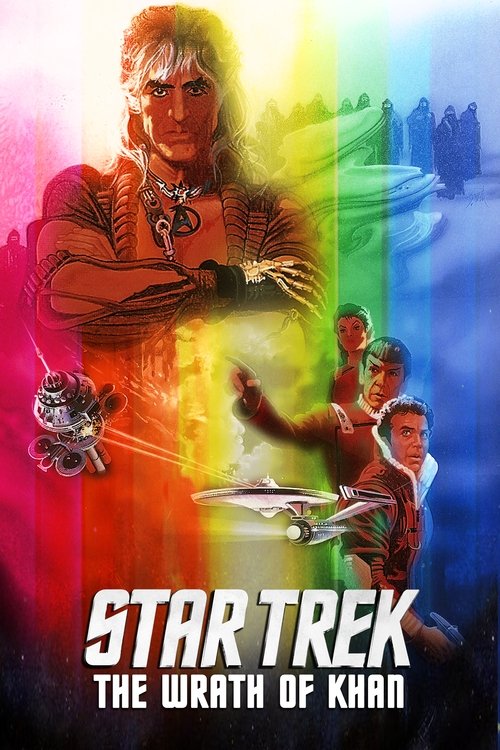
Star Trek II: The Wrath of Khan
1982 · Directed by Nicholas Meyer
Woke Score
CriticCritic Score
Audience
Ultra Based
Critics rated this 64 points above its woke score. Among Ultra Based films, this critic score ranks #695 of 1469.
Representation Casting
Score: 5/100
The film features a racially diverse bridge crew that was progressive for the original series but unremarkable by 1982. Diversity appears incidental rather than intentional representation.
LGBTQ+ Themes
Score: 0/100
No LGBTQ+ themes, representation, or subtext present in the film. The narrative concerns itself entirely with heterosexual romantic dynamics and male rivalry.
Feminist Agenda
Score: 2/100
Female characters exist in supporting roles with minimal agency. Dr. Carol Marcus and Uhura are present but not central to decision-making or the plot's resolution.
Racial Consciousness
Score: 3/100
The diverse cast reflects 1960s-era tokenism carried forward to 1982. No racial themes are explored or acknowledged; characters are simply written without regard to their ethnicity.
Climate Crusade
Score: 0/100
No environmental or climate-related themes whatsoever. The film's concerns are purely military and interpersonal.
Eat the Rich
Score: 0/100
The film shows no critique of capitalism or class systems. It operates within a military framework that it treats as natural and necessary.
Body Positivity
Score: 0/100
No body positivity messaging present. The film celebrates physical fitness and traditional masculine physique without commentary on alternative body types.
Neurodivergence
Score: 0/100
No representation of neurodivergence or disability except as plot points. Spock's Vulcan logic is treated as alien difference rather than neurodivergent representation.
Revisionist History
Score: 0/100
The film makes no attempt to reframe historical events or narratives. It operates in a fictional universe with no real-world historical commentary.
Lecture Energy
Score: 0/100
The film prioritizes action and character drama over exposition. No characters pause to explain social positions or deliver speeches about justice or equality.


Synopsis
The starship Enterprise and its crew is pulled back into action when old nemesis, Khan, steals a top secret device called Project Genesis.
Consciousness Assessment
Star Trek II arrives in 1982 as a product of its era, a military science fiction film concerned primarily with spectacle, honor, and the collision of titanic male egos. Khan and Kirk engage in a battle of wills that is Shakespearean in scope if not in execution, and the film treats this conflict with utmost solemnity. The crew of the Enterprise operates as a military hierarchy, with clear chains of command and traditional power structures that go largely unexamined. Spock's death scene carries emotional weight precisely because it reinforces masculine stoicism as a virtue, a value system that the film never questions.
The film's representation of women remains incidental to its purposes. Nichelle Nichols appears as Uhura, a communications officer whose role has evolved little since the original series, while Bibi Besch's Dr. Carol Marcus functions primarily as a plot device and romantic interest. Neither character drives the narrative or makes decisions of consequence. The film is not hostile to women; rather, it simply does not consider them particularly relevant to its concerns about duty, sacrifice, and the masculine code of honor that Kirk and Spock embody. This is honest cinema, which in some respects makes it easier to categorize.
One should acknowledge that the original Star Trek series, which premiered in 1966, took considerable care to include a racially diverse bridge crew at a time when American television had not yet caught up to such integration. By 1982, this diversity reads as baseline rather than adventurous, a reflection of how quickly cultural norms shift. The film itself shows no particular consciousness of representation as a value in itself, treating its cast as characters rather than symbols. This is precisely the sort of film that scores low on contemporary metrics not because it is actively hostile to progressive values but because it simply predates the entire framework by which such films are evaluated.
Analysis generated by our Consciousness Algorithm
Critic Reviews
“The second Star Trek movie is swift, droll and adventurous, not to mention appealingly gadget-happy. It's everything the first one should have been and wasn't.”
“The Wrath of Khan is a top-notch, fast-paced adventure that can be enjoyed equally by fans of the series and those who have never seen an episode.”
“A funnier, faster, altogether more energetic film than Star Trek I, The Wrath of Khan doesn't linger over its modest special effects. This is really down-home week with Captain - now Admiral - Kirk and the boys. [5 June 1982]”
“Foregoing the special effects bonanza of its predecessor, it settles for low camp humanoid melodrama.”
Consciousness Markers
The film features a racially diverse bridge crew that was progressive for the original series but unremarkable by 1982. Diversity appears incidental rather than intentional representation.
No LGBTQ+ themes, representation, or subtext present in the film. The narrative concerns itself entirely with heterosexual romantic dynamics and male rivalry.
Female characters exist in supporting roles with minimal agency. Dr. Carol Marcus and Uhura are present but not central to decision-making or the plot's resolution.
The diverse cast reflects 1960s-era tokenism carried forward to 1982. No racial themes are explored or acknowledged; characters are simply written without regard to their ethnicity.
No environmental or climate-related themes whatsoever. The film's concerns are purely military and interpersonal.
The film shows no critique of capitalism or class systems. It operates within a military framework that it treats as natural and necessary.
No body positivity messaging present. The film celebrates physical fitness and traditional masculine physique without commentary on alternative body types.
No representation of neurodivergence or disability except as plot points. Spock's Vulcan logic is treated as alien difference rather than neurodivergent representation.
The film makes no attempt to reframe historical events or narratives. It operates in a fictional universe with no real-world historical commentary.
The film prioritizes action and character drama over exposition. No characters pause to explain social positions or deliver speeches about justice or equality.