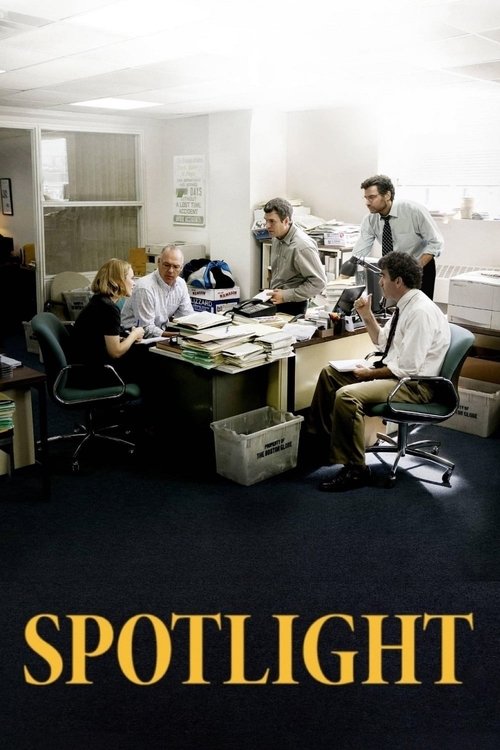
Spotlight
2015 · Directed by Tom McCarthy
Woke Score
CriticCritic Score
Audience
Ultra Based
Critics rated this 78 points above its woke score. Among Ultra Based films, this critic score ranks #79 of 1469.
Representation Casting
Score: 25/100
The cast is predominantly white and male, reflecting the historical reality of 2002 Boston journalism but without contemporary efforts toward broader representation. Female journalists are present but not foregrounded as a statement about inclusion.
LGBTQ+ Themes
Score: 0/100
No LGBTQ+ themes, characters, or subtext present in the film. Sexual orientation is not a thematic element.
Feminist Agenda
Score: 15/100
Female characters exist as competent professionals within the narrative, but the film makes no explicit feminist statements or examinations of gender dynamics. Their presence is normalized rather than celebrated.
Racial Consciousness
Score: 0/100
The film does not engage with racial themes or consciousness. The investigation focuses on institutional abuse without examining racial dimensions of the scandal or systemic racism.
Climate Crusade
Score: 0/100
No climate-related themes, messaging, or environmental consciousness present in the film.
Eat the Rich
Score: 20/100
The film critiques institutional power and corruption within the Catholic Church, but this is framed as institutional accountability rather than anti-capitalist messaging. The critique does not extend to economic systems.
Body Positivity
Score: 0/100
No body positivity themes or commentary present. The film does not engage with body image, appearance, or related social issues.
Neurodivergence
Score: 0/100
No representation of neurodivergent characters or themes related to neurodiversity.
Revisionist History
Score: 0/100
The film presents historical events as they were documented and reported, without revising history or reinterpreting past events through contemporary ideological frameworks.
Lecture Energy
Score: 10/100
The film maintains a documentary-like restraint and avoids preachy moralizing. Characters rarely lecture one another or the audience about right and wrong, preferring to let facts speak for themselves.


Synopsis
The true story of how the Boston Globe uncovered the massive scandal of child molestation and cover-up within the local Catholic Archdiocese, shaking the entire Catholic Church to its core.
Consciousness Assessment
Spotlight is a masterwork of institutional critique that arrives at its conclusions through meticulous reporting rather than ideological insistence. The film documents how the Boston Globe's Spotlight team methodically dismantled the Catholic Church's machinery of concealment, and in doing so, it performs a service to clarity itself. The narrative is built on procedure, on the grinding work of fact-checking and source verification, which proves far more devastating to power than any amount of rhetorical grandstanding could achieve.
The ensemble cast consists almost entirely of white men in positions of institutional authority, which accurately reflects both the newsroom of 2002 and the church hierarchy being investigated. This is not, however, a film preoccupied with interrogating its own composition or the broader structures of representation. There are no moments of self-conscious diversity auditing, no supporting characters who exist primarily to deliver lessons about identity. Rachel McAdams and another female reporter occupy the investigative team, but they are integrated into the narrative as professionals doing professional work, which remains refreshingly uncommon in cinema.
What emerges is a film that cares nothing for the aesthetic markers of contemporary social consciousness. It is interested in power, certainly, but only insofar as power can be documented and exposed. The abuse itself is treated with appropriate gravity, the victims with respect, but there is no attempt to center the film's moral weight on identity categories or to perform progressive sensibilities. This is a film about adults doing a job. The restraint is almost bracing.
Analysis generated by our Consciousness Algorithm
Critic Reviews
“Like any creative endeavor a film is the sum of its parts. In the most elementary terms it needs a screenplay as a base, a cast to bring the script to life and a director to orchestrate the pieces into something of considerable impact. Excuse the hyperbole, but Tom McCarthy's Spotlight is an example of when all those pieces fit together almost perfectly.”
“It’s a more subtle, damning film for implicating the media – as much as the church, the courts, the legal profession and other Boston institutions – in the systematic, wider cultural cover-up it describes.”
“Spotlight feels both timeless and modern, a dexterously crafted film that could have been made anytime but somehow feels perfect for right now.”
“This material cant help but be interesting, even compelling up to a point, but its prosaic presentation suggests that the story's full potential, encompassing deep, disturbing and enduring pain on all sides of the issue, has only begun to be touched.”
Consciousness Markers
The cast is predominantly white and male, reflecting the historical reality of 2002 Boston journalism but without contemporary efforts toward broader representation. Female journalists are present but not foregrounded as a statement about inclusion.
No LGBTQ+ themes, characters, or subtext present in the film. Sexual orientation is not a thematic element.
Female characters exist as competent professionals within the narrative, but the film makes no explicit feminist statements or examinations of gender dynamics. Their presence is normalized rather than celebrated.
The film does not engage with racial themes or consciousness. The investigation focuses on institutional abuse without examining racial dimensions of the scandal or systemic racism.
No climate-related themes, messaging, or environmental consciousness present in the film.
The film critiques institutional power and corruption within the Catholic Church, but this is framed as institutional accountability rather than anti-capitalist messaging. The critique does not extend to economic systems.
No body positivity themes or commentary present. The film does not engage with body image, appearance, or related social issues.
No representation of neurodivergent characters or themes related to neurodiversity.
The film presents historical events as they were documented and reported, without revising history or reinterpreting past events through contemporary ideological frameworks.
The film maintains a documentary-like restraint and avoids preachy moralizing. Characters rarely lecture one another or the audience about right and wrong, preferring to let facts speak for themselves.