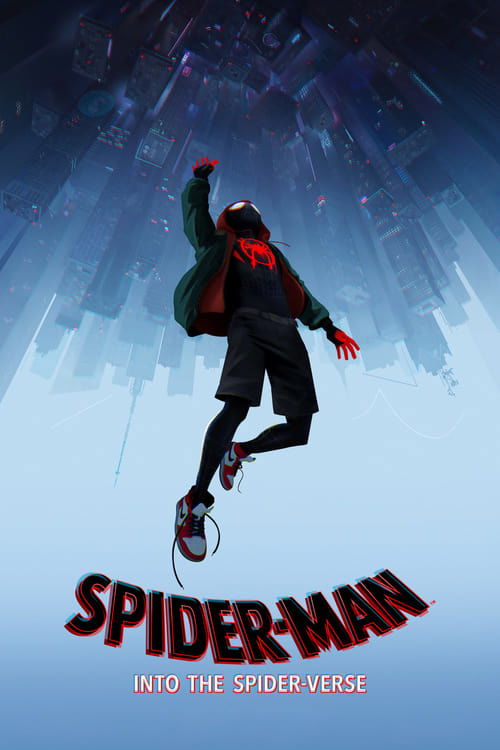
Spider-Man: Into the Spider-Verse
2018 · Directed by Bob Persichetti
Woke Score
CriticCritic Score
Audience
Woke-Adjacent
Critics rated this 29 points above its woke score. Among Woke-Adjacent films, this critic score ranks #17 of 151.
Representation Casting
Score: 75/100
Miles Morales serves as the protagonist, a biracial Afro-Latino hero who carries the film. The supporting cast features substantial ethnic diversity including Mahershala Ali and Brian Tyree Henry.
LGBTQ+ Themes
Score: 0/100
No significant LGBTQ+ themes or representation present in the narrative.
Feminist Agenda
Score: 25/100
Gwen Stacy appears as Spider-Gwen, a capable female character, but remains secondary to Miles' narrative and does not drive the film's central thematic concerns.
Racial Consciousness
Score: 70/100
The film explicitly engages with Miles facing systemic pressures, police suspicion, and the specific burdens of his mixed-race identity in ways that move beyond mere incidental representation.
Climate Crusade
Score: 0/100
No climate-related themes or environmental messaging present.
Eat the Rich
Score: 15/100
Kingpin serves as the antagonist, but this follows standard superhero convention rather than articulating any coherent anti-capitalist ideology.
Body Positivity
Score: 0/100
No meaningful engagement with body positivity themes or representation.
Neurodivergence
Score: 0/100
No representation of neurodivergent characters or thematic engagement with neurodiversity.
Revisionist History
Score: 0/100
Not applicable to this superhero origin story, which does not engage with historical revisionism.
Lecture Energy
Score: 35/100
While the film addresses identity and representation, these themes emerge primarily through character and narrative development rather than explicit messaging or exposition. The approach remains relatively organic.


Synopsis
Struggling to find his place in the world while juggling school and family, Brooklyn teenager Miles Morales is unexpectedly bitten by a radioactive spider and develops unfathomable powers just like the one and only Spider-Man. While wrestling with the implications of his new abilities, Miles discovers a super collider created by the madman Wilson "Kingpin" Fisk, causing others from across the Spider-Verse to be inadvertently transported to his dimension.
Consciousness Assessment
Spider-Man: Into the Spider-Verse occupies that peculiar space where cultural significance and commercial entertainment converge without entirely collapsing into one another. The film centers a biracial protagonist, Miles Morales, in a landscape where such characters had occupied supporting roles or existed as footnotes. This is not incidental. The narrative architecture explicitly addresses the particular pressures Miles faces, from police suspicion to family expectation, grounding his superhero origin in material specificity rather than abstraction. The supporting cast reflects genuine diversity, and the film's visual language, however unconventional its animation style, serves the story's themes of identity and belonging.
Yet we must distinguish between a film that features diverse representation and a film that deploys representation as a vehicle for contemporary progressive messaging. Into the Spider-Verse succeeds primarily as a superhero narrative that happens to center a character of color and engages meaningfully with questions of identity. It does not subordinate its plot to lecture, nor does it weaponize its characters as mouthpieces for ideological instruction. The ensemble of Spider-People across the multiverse remains largely free of preachy weight. Gwen Stacy's presence, while welcome, functions more as narrative convenience than as feminist statement.
The film's modest score reflects this distinction. It earns points for representation and racial consciousness, for the genuine attempt to depict systemic obstacles that prior Spider-Man films simply did not acknowledge. But it does not deploy the full constellation of contemporary progressive markers. There is no LGBTQ+ content, no environmental crusade, no body positivity arc, no revisionist history, no substantial anti-capitalist framework. What we find is a well-crafted entertainment that takes representation seriously without converting that representation into ideological apparatus. In 2018, this was enough to be noteworthy. It remains so.
Analysis generated by our Consciousness Algorithm
Critic Reviews
“A joyful, trippy new incarnation of Spider-Man that you didn’t know you needed, brimming with wit, soul and jaw-dropping visuals.”
“Fresh, funny and frequently bonkers, Into The Spider-Verse is an astonishing shot of cinematic superhero adrenaline. For such an over-familiar character, somehow, this feels original and entirely new.”
“Besides the huge smiles on your faces, Spider-Man: Into the Spider-Verse offers mainstream moviegoers an overwhelming feeling of optimism. If this kind of risk-taking and artist-driven creativity can exist in Hollywood’s biggest money-making genre, then our superhero movie future is filled with hope.”
“No, Sony Animation should not have let Spider-Man: Into the Spiderverse out its doors and onto big screens in this blurred, jerky, pixelated condition.”
Consciousness Markers
Miles Morales serves as the protagonist, a biracial Afro-Latino hero who carries the film. The supporting cast features substantial ethnic diversity including Mahershala Ali and Brian Tyree Henry.
No significant LGBTQ+ themes or representation present in the narrative.
Gwen Stacy appears as Spider-Gwen, a capable female character, but remains secondary to Miles' narrative and does not drive the film's central thematic concerns.
The film explicitly engages with Miles facing systemic pressures, police suspicion, and the specific burdens of his mixed-race identity in ways that move beyond mere incidental representation.
No climate-related themes or environmental messaging present.
Kingpin serves as the antagonist, but this follows standard superhero convention rather than articulating any coherent anti-capitalist ideology.
No meaningful engagement with body positivity themes or representation.
No representation of neurodivergent characters or thematic engagement with neurodiversity.
Not applicable to this superhero origin story, which does not engage with historical revisionism.
While the film addresses identity and representation, these themes emerge primarily through character and narrative development rather than explicit messaging or exposition. The approach remains relatively organic.