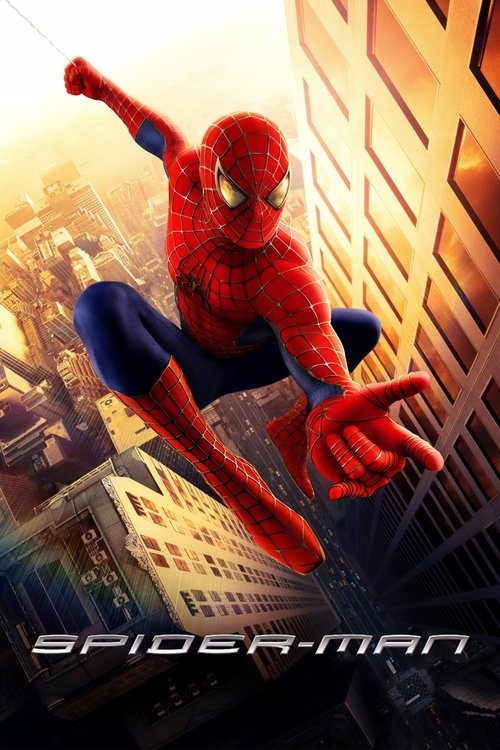
Spider-Man
2002 · Directed by Sam Raimi
Woke Score
CriticCritic Score
Audience
Ultra Based
Critics rated this 69 points above its woke score. Among Ultra Based films, this critic score ranks #535 of 1469.
Representation Casting
Score: 5/100
Cast is predominantly white with no meaningful diversity. Female character exists but is secondary to male protagonist.
LGBTQ+ Themes
Score: 0/100
No LGBTQ+ characters or themes present in the film.
Feminist Agenda
Score: 10/100
MJ is a romantic interest who requires rescue. She is passive rather than agentic, typical of early-2000s superhero convention.
Racial Consciousness
Score: 0/100
No racial commentary or consciousness present. Race is not addressed as a meaningful theme.
Climate Crusade
Score: 0/100
Climate change or environmental concerns are not addressed.
Eat the Rich
Score: 5/100
Villain is a capitalist industrialist, but the narrative frames him as a personal antagonist rather than a symbol of systemic exploitation.
Body Positivity
Score: 0/100
Film presents idealized male superhero physique without comment on body diversity or acceptance.
Neurodivergence
Score: 0/100
No representation of neurodivergent characters or themes.
Revisionist History
Score: 0/100
Not applicable to fictional superhero origin story.
Lecture Energy
Score: 0/100
Film is straightforward entertainment with no preachy intent or moral lecturing.


Synopsis
After being bitten by a genetically altered spider at Oscorp, nerdy but endearing high school student Peter Parker is endowed with amazing powers to become the superhero known as Spider-Man.
Consciousness Assessment
Spider-Man occupies that peculiar position in cinema history where it is neither progressive nor regressive, simply indifferent to matters of social consciousness. Sam Raimi's 2002 origin story concerns itself with the mechanics of power and responsibility, not with representation or systemic critique. The film features a female character of some significance, though MJ exists primarily as a romantic motivation and rescue object, which was entirely conventional for superhero films of the era. The villainous industrialist Norman Osborn might suggest capitalist critique, but the narrative reduces him to a personal antagonist instead of a symbol of systemic exploitation.
The casting is uniformly white, the power fantasy unambiguously masculine, and the social world of the film presents itself as a given instead of something requiring interrogation. There are no LGBTQ+ characters, no discussion of climate, no neurodivergent representation, and certainly no lecture energy. The film is what it is: a technical achievement in translating comic book action to screen, executed with craft and entertainment value. That it lacks any dimension of contemporary social awareness is not a failure of the film itself, but rather a reflection of early-2000s blockbuster conventions.
What prevents this from scoring even lower is the mere fact of its existence as a mainstream entertainment product. The film contains no actively retrograde messaging, no hateful rhetoric, and no calculated engagement with social issues in a regressive direction. It is, in the most literal sense, apolitical. For a 2002 film of this budget and scope, such indifference to progressive sensibilities is the default position. Spider-Man asks us to enjoy spectacle and emotion, not to reconsider our assumptions about power, gender, or society.
Analysis generated by our Consciousness Algorithm
Critic Reviews
“It's hard to recall the last time a big-ticket summer movie delivered so fully on its promise.”
“The effects are smashing, yet there's a heart behind them.”
“Reminds us of just how exciting and satisfying the fantasy cinema can be when it's approached with imagination and flair.”
“Perhaps the real question, then, isn't how you update Spider-Man but why you would even try. Introduced in 1962, the original superhero helped to initiate the age of modern comics. Raimi hasn't figured out how to reconfigure him for the blockbuster age, and there are suggestions.”
Consciousness Markers
Cast is predominantly white with no meaningful diversity. Female character exists but is secondary to male protagonist.
No LGBTQ+ characters or themes present in the film.
MJ is a romantic interest who requires rescue. She is passive rather than agentic, typical of early-2000s superhero convention.
No racial commentary or consciousness present. Race is not addressed as a meaningful theme.
Climate change or environmental concerns are not addressed.
Villain is a capitalist industrialist, but the narrative frames him as a personal antagonist rather than a symbol of systemic exploitation.
Film presents idealized male superhero physique without comment on body diversity or acceptance.
No representation of neurodivergent characters or themes.
Not applicable to fictional superhero origin story.
Film is straightforward entertainment with no preachy intent or moral lecturing.