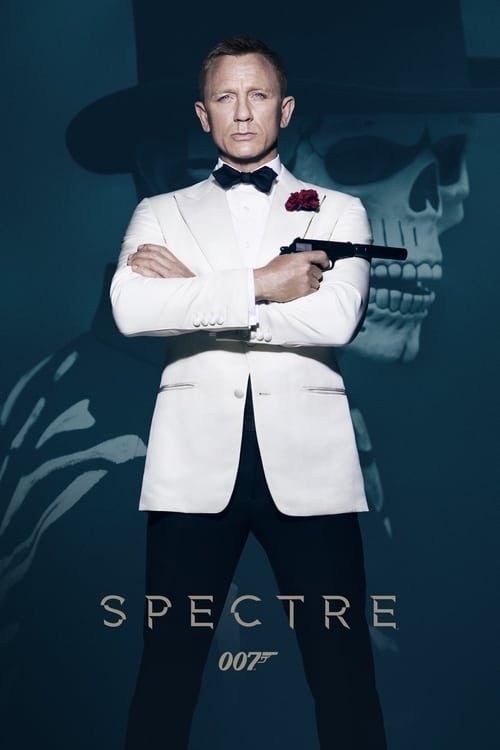
Spectre
2015 · Directed by Sam Mendes
Woke Score
CriticCritic Score
Audience
Ultra Based
Critics rated this 42 points above its woke score. Among Ultra Based films, this critic score ranks #901 of 1469.
Representation Casting
Score: 45/100
The cast includes Naomie Harris in a substantive role and Monica Bellucci as a romantic interest at an advanced age, both unusual for Bond films. However, the supporting cast remains predominantly white and male.
LGBTQ+ Themes
Score: 0/100
No LGBTQ+ themes or characters are present in the film. The narrative remains exclusively heterosexual.
Feminist Agenda
Score: 25/100
Léa Seydoux's character receives more agency than typical Bond girls, but the plot fundamentally centers male desire and action. Female characters serve supporting roles in a male-dominated espionage narrative.
Racial Consciousness
Score: 15/100
While the cast includes actors of color in supporting roles, there is no interrogation of race, imperialism, or the franchise's historical racial attitudes. Representation exists without consciousness.
Climate Crusade
Score: 0/100
No environmental themes or climate consciousness are present in the narrative.
Eat the Rich
Score: 10/100
The villain's motivations involve personal revenge rather than systemic critique. The film celebrates state apparatus and espionage infrastructure without questioning their moral foundations.
Body Positivity
Score: 5/100
The film features conventionally attractive actors in idealized physical forms. Monica Bellucci's presence challenges age-based beauty standards minimally, but there is no broader body diversity.
Neurodivergence
Score: 0/100
No neurodivergent characters or themes are present in the narrative.
Revisionist History
Score: 0/100
The film makes no attempt to reexamine or reinterpret historical events or the franchise's own problematic history.
Lecture Energy
Score: 5/100
The film contains minimal preachy moralizing about social issues. Its progressive elements emerge subtly through casting choices rather than explicit thematic argument.


Synopsis
A cryptic message from Bond's past sends him on a trail to uncover a sinister organization. While M battles political forces to keep the secret service alive, Bond peels back the layers of deceit to reveal the terrible truth behind SPECTRE.
Consciousness Assessment
Spectre occupies an interesting position in the Bond franchise's slow march toward cultural awareness, though it ultimately retreats into the comfortable conventions that have sustained the series for six decades. The film deserves credit for casting Monica Bellucci at fifty-one as a romantic interest, a decision that quietly undermines one of Hollywood's most rigid age-gap formulas, and for featuring Naomie Harris and Ben Whishaw in significant roles that avoid cartoonish stereotyping. Léa Seydoux's Madeleine Swann is presented as something approaching an equal partner rather than a prize to be collected, and the film's narrative architecture at least gestures toward romantic reciprocity.
Yet these incremental improvements cannot obscure the film's fundamental conservatism. The plot machinery remains powered by masculine agency and espionage tradecraft, with female characters existing primarily as extensions of Bond's emotional and professional landscape. Ralph Fiennes, Christoph Waltz, and the ensemble male cast dominate both screen time and narrative consequence. The film's racial composition, while not offensive, follows the path of least resistance, with supporting roles distributed across a predictable spectrum. There is no interrogation of the franchise's historical attitudes toward women or non-Western cultures, no self-awareness about its own traditions. Sam Mendes directs with technical competence but ideological passivity.
What makes Spectre moderately notable is that it arrived at precisely the moment when such passivity was becoming culturally conspicuous. By 2015, the language of representation and progressive casting had become mainstream discourse. The film's modest steps forward feel less like conviction and more like defensive positioning. It is a Bond film for an audience that has begun asking uncomfortable questions, but only uncomfortable enough to trigger minor adjustments to the formula. The result is a movie that satisfies neither those who love the franchise for its traditional certainties nor those hoping it might evolve into something more thoughtful about power, gender, and desire.
Analysis generated by our Consciousness Algorithm
Critic Reviews
“It’s deeply silly but uproariously entertaining. At the end, I almost felt guilty for enjoying it all quite so much - almost.”
“One of the great satisfactions of Spectre is that, in addition to all the stirring action, and all the timely references to a secret organization out to steal everyone’s personal information, we get to believe in Bond as a person.”
“Perhaps some of the goofiness was intentional — you can’t always tell from this production’s wavering tone — but Spectre is full of not-good things, and some oppressively bad things that may come to feel like drill bits twirling in your skull.”
Consciousness Markers
The cast includes Naomie Harris in a substantive role and Monica Bellucci as a romantic interest at an advanced age, both unusual for Bond films. However, the supporting cast remains predominantly white and male.
No LGBTQ+ themes or characters are present in the film. The narrative remains exclusively heterosexual.
Léa Seydoux's character receives more agency than typical Bond girls, but the plot fundamentally centers male desire and action. Female characters serve supporting roles in a male-dominated espionage narrative.
While the cast includes actors of color in supporting roles, there is no interrogation of race, imperialism, or the franchise's historical racial attitudes. Representation exists without consciousness.
No environmental themes or climate consciousness are present in the narrative.
The villain's motivations involve personal revenge rather than systemic critique. The film celebrates state apparatus and espionage infrastructure without questioning their moral foundations.
The film features conventionally attractive actors in idealized physical forms. Monica Bellucci's presence challenges age-based beauty standards minimally, but there is no broader body diversity.
No neurodivergent characters or themes are present in the narrative.
The film makes no attempt to reexamine or reinterpret historical events or the franchise's own problematic history.
The film contains minimal preachy moralizing about social issues. Its progressive elements emerge subtly through casting choices rather than explicit thematic argument.