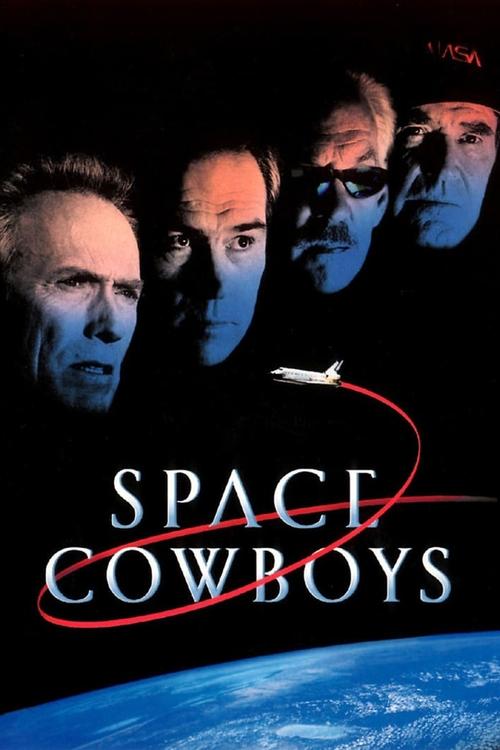
Space Cowboys
2000 · Directed by Clint Eastwood
Woke Score
CriticCritic Score
Audience
Ultra Based
Critics rated this 65 points above its woke score. Among Ultra Based films, this critic score ranks #538 of 1469.
Representation Casting
Score: 15/100
The film features Courtney B. Vance in the cast, but the narrative remains overwhelmingly centered on four white male protagonists in lead roles. Female representation is minimal with Marcia Gay Harden in a supporting part.
LGBTQ+ Themes
Score: 0/100
No LGBTQ+ themes, representation, or subtext present in the film. The plot focuses entirely on heterosexual relationships and male camaraderie.
Feminist Agenda
Score: 5/100
Marcia Gay Harden appears in a supporting role, but the film does not center feminist themes or meaningfully explore gender dynamics. Her presence is incidental rather than thematic.
Racial Consciousness
Score: 10/100
While Courtney B. Vance appears in the cast, his character exists without any explicit racial narrative or consciousness. His inclusion reflects basic diversity casting rather than intentional racial consciousness.
Climate Crusade
Score: 0/100
No climate-related themes or environmental consciousness present. The film is a straightforward action-adventure narrative with no engagement with environmental issues.
Eat the Rich
Score: 0/100
The film contains no anti-capitalist critique or examination of economic systems. It is a conventional action film with no political economic dimension.
Body Positivity
Score: 0/100
No body positivity messaging or discussion of body image present. The film does not engage with this framework.
Neurodivergence
Score: 0/100
No representation of or thematic engagement with neurodivergence. The film contains no relevant content.
Revisionist History
Score: 0/100
The film depicts space program history in a conventional manner without attempting to revise historical narratives or center previously marginalized perspectives.
Lecture Energy
Score: 5/100
The film contains minimal preachy messaging. While it occasionally references historical facts about the space program, it does not lecture audiences about social issues or progressive values.


Synopsis
Frank Corvin, 'Hawk' Hawkins, Jerry O'Neill and 'Tank' Sullivan were hotdog members of Project Daedalus, the Air Force's test program for space travel, but their hopes were dashed in 1958 with the formation of NASA and the use of trained chimps. They blackmail their way into orbit when Russia's mysterious 'Ikon' communications satellite's orbit begins to degrade and threatens to crash to Earth.
Consciousness Assessment
Space Cowboys arrives as a film almost entirely indifferent to the cultural sensibilities that would later define a particular strain of social consciousness. Directed by and starring Clint Eastwood in 2000, it concerns four aging test pilots who muscle their way into a space mission through blackmail and cunning. The narrative is driven entirely by masculine ego and nostalgia, a celebration of the rugged individualist who resents being sidelined by institutional progress. The film operates within a framework that predates contemporary progressive frameworks in mainstream action cinema.
The cast includes Courtney B. Vance and Marcia Gay Harden, though their presence functions as a matter of basic demographic representation rather than any sustained engagement with identity or social consciousness. Vance's character exists within the narrative without reference to his race, while Harden's role remains subordinate to the four male leads and their interpersonal dynamics. The film shows no interest in interrogating its own homogeneity or the historical exclusion of women and people of color from the space program. It is simply a movie about old white men doing what old white men do in action films.
There is nothing here that suggests awareness of climate change, economic exploitation, neurodivergence, or any other marker of contemporary progressive consciousness. The film operates within a purely transactional universe where the only stakes are personal honor and national competition. It serves as a useful historical artifact of mainstream cinema before such concerns became commonplace, a snapshot of a moment when a film about space could be made without any obligation to acknowledge the broader cultural conversation. Space Cowboys is a perfect specimen of the pre-awakening action film: competent, entertaining, and utterly unconscious of anything beyond its own immediate narrative concerns.
Analysis generated by our Consciousness Algorithm
Critic Reviews
“One of the best entertainments this season has yet offered.”
“It blends tension and emotion, computer wizardry and dramatic skill in a vigorous climax--and the most impressive, haunting final shot of the movie year.”
“An implausible action adventure with the most geriatric payload since a community of retirees lifted off in "Cocoon."”
Consciousness Markers
The film features Courtney B. Vance in the cast, but the narrative remains overwhelmingly centered on four white male protagonists in lead roles. Female representation is minimal with Marcia Gay Harden in a supporting part.
No LGBTQ+ themes, representation, or subtext present in the film. The plot focuses entirely on heterosexual relationships and male camaraderie.
Marcia Gay Harden appears in a supporting role, but the film does not center feminist themes or meaningfully explore gender dynamics. Her presence is incidental rather than thematic.
While Courtney B. Vance appears in the cast, his character exists without any explicit racial narrative or consciousness. His inclusion reflects basic diversity casting rather than intentional racial consciousness.
No climate-related themes or environmental consciousness present. The film is a straightforward action-adventure narrative with no engagement with environmental issues.
The film contains no anti-capitalist critique or examination of economic systems. It is a conventional action film with no political economic dimension.
No body positivity messaging or discussion of body image present. The film does not engage with this framework.
No representation of or thematic engagement with neurodivergence. The film contains no relevant content.
The film depicts space program history in a conventional manner without attempting to revise historical narratives or center previously marginalized perspectives.
The film contains minimal preachy messaging. While it occasionally references historical facts about the space program, it does not lecture audiences about social issues or progressive values.