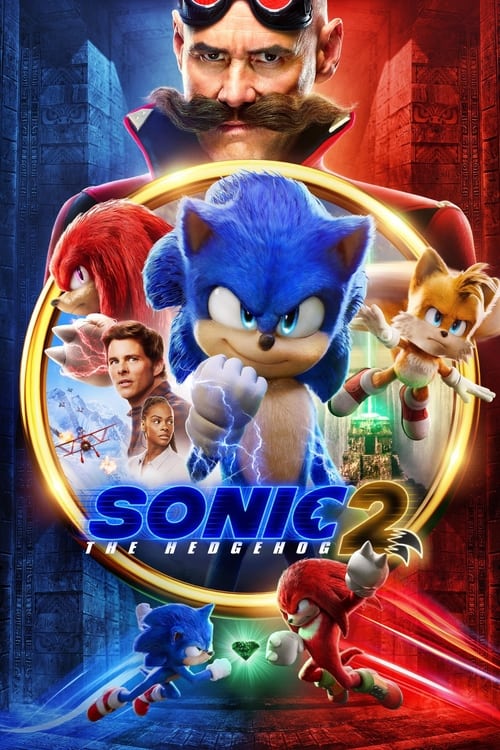
Sonic the Hedgehog 2
2022 · Directed by Jeff Fowler
Woke Score
CriticCritic Score
Audience
Ultra Based
Critics rated this 39 points above its woke score. Among Ultra Based films, this critic score ranks #1217 of 1469.
Representation Casting
Score: 35/100
The cast includes Black actors (Idris Elba, Shemar Moore) and other minorities in supporting roles, reflecting contemporary Hollywood diversity standards. However, this casting appears incidental to the narrative rather than thematically explored.
LGBTQ+ Themes
Score: 0/100
No LGBTQ+ themes, representation, or subtext are present in the film. It is a straightforward family adventure with no engagement with sexual orientation or gender identity beyond traditional characters.
Feminist Agenda
Score: 15/100
Female characters like Tails and Maddie are present and capable, but this reflects conventional action-adventure representation rather than explicit feminist commentary or gender consciousness.
Racial Consciousness
Score: 10/100
While the cast includes racial diversity, the film contains no thematic exploration of race, racial identity, or racial dynamics. Characters function without racial context or commentary.
Climate Crusade
Score: 0/100
No climate-related themes, environmental messaging, or ecological consciousness appear in the film. The plot concerns a magical emerald and standard good-versus-evil conflict.
Eat the Rich
Score: 0/100
While Dr. Robotnik is a corporate villain, the film presents no systemic critique of capitalism, labor, or economic exploitation. This is conventional fantasy villainy, not political commentary.
Body Positivity
Score: 0/100
The film contains no messaging around body diversity, fat acceptance, or disability representation. Characters are presented without comment on physical difference.
Neurodivergence
Score: 0/100
No neurodivergent characters, representation, or themes are present. The film makes no engagement with autism, ADHD, dyslexia, or other neurodivergent identities.
Revisionist History
Score: 0/100
This is a fantasy adventure with no historical setting or revisionist historical claims. The film contains no reinterpretation of historical events or figures.
Lecture Energy
Score: 0/100
The film contains no expository dialogue explaining social issues, no characters delivering speeches about injustice, and no moments of preachy social messaging.


Synopsis
After settling in Green Hills, Sonic is eager to prove he has what it takes to be a true hero. His test comes when Dr. Robotnik returns, this time with a new partner, Knuckles, in search for an emerald that has the power to destroy civilizations. Sonic teams up with his own sidekick, Tails, and together they embark on a globe-trotting journey to find the emerald before it falls into the wrong hands.
Consciousness Assessment
Sonic the Hedgehog 2 presents itself as a contemporary family film with a notably diverse ensemble cast, yet this diversity functions primarily as window dressing rather than thematic substance. Idris Elba voices Knuckles, Shemar Moore appears in a supporting role, and Natasha Rothwell provides comic relief, but the film makes no particular effort to center or examine their identities within its narrative. The movie is essentially a cheerful, fast-paced adventure that dutifully adapts the video game source material without interrogating any social questions whatsoever.
The film's relationship to progressive sensibilities is incidental rather than intentional. Its female characters (Tails, Tika Sumpter's Maddie) are present and capable, but they exist in a fundamentally traditional action-adventure framework that has accommodated such representation since at least the 1990s. There are no moments of explicit social commentary, no lectures about systemic inequality, no climate anxieties, no examination of capitalism or corporate malfeasance beyond the stock villain trope of the evil industrialist. Even Dr. Robotnik's characterization, played with scenery-chewing abandon by Jim Carrey, is rooted in classic cartoon villainy rather than any contemporary critique.
What we have here is a film that accidentally satisfies baseline contemporary casting expectations while maintaining a thoroughly apolitical stance. It is neither hostile to progressive values nor particularly interested in advancing them. Sonic the Hedgehog 2 wants only to entertain families, crack jokes, showcase action sequences, and send audiences home satisfied. In the context of cultural analysis, this makes it a neutral artifact: competent in its execution, unremarkable in its sensibilities.
Analysis generated by our Consciousness Algorithm
Critic Reviews
“Sonic the Hedgehog 2 is the confident sequel the original left me hoping for, with a sharper script and jokes that'll leave you giggling. It maintains the original's family friendly tone and dives into the classic games to create a cinematic universe for Sega's beloved icon.”
“Sonic the Hedgehog 2 might momentarily lose itself to for-the-kids wackiness, which certainly leaves some plotlines frayed, but the reasons we’re here—Knuckles, Tails, Sonic, more Eggman—are all enthusiastically respected. I’m a happy Sonic fan after Fowler’s high-speed sequel.”
“The big-screen series has smartly keyed into the character’s long-running (and fast-running) appeal. Like its predecessor, Sonic the Hedgehog 2 knows when to go big, but more important, it knows when to stay small. Go ahead, put a ring on it.”
“There’s a joke where people say, “This film’s plot could’ve been written on the back of a napkin!” Yet for Sonic 2, a napkin seems like the equivalent of multi-volumed antiquarian tome, as there is so little of substance to this depressingly rote endeavour. ”
Consciousness Markers
The cast includes Black actors (Idris Elba, Shemar Moore) and other minorities in supporting roles, reflecting contemporary Hollywood diversity standards. However, this casting appears incidental to the narrative rather than thematically explored.
No LGBTQ+ themes, representation, or subtext are present in the film. It is a straightforward family adventure with no engagement with sexual orientation or gender identity beyond traditional characters.
Female characters like Tails and Maddie are present and capable, but this reflects conventional action-adventure representation rather than explicit feminist commentary or gender consciousness.
While the cast includes racial diversity, the film contains no thematic exploration of race, racial identity, or racial dynamics. Characters function without racial context or commentary.
No climate-related themes, environmental messaging, or ecological consciousness appear in the film. The plot concerns a magical emerald and standard good-versus-evil conflict.
While Dr. Robotnik is a corporate villain, the film presents no systemic critique of capitalism, labor, or economic exploitation. This is conventional fantasy villainy, not political commentary.
The film contains no messaging around body diversity, fat acceptance, or disability representation. Characters are presented without comment on physical difference.
No neurodivergent characters, representation, or themes are present. The film makes no engagement with autism, ADHD, dyslexia, or other neurodivergent identities.
This is a fantasy adventure with no historical setting or revisionist historical claims. The film contains no reinterpretation of historical events or figures.
The film contains no expository dialogue explaining social issues, no characters delivering speeches about injustice, and no moments of preachy social messaging.