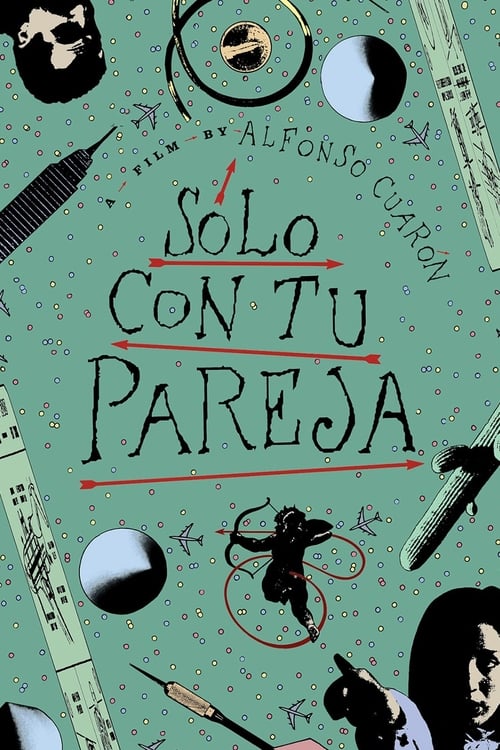
Sólo con tu pareja
1991 · Directed by Alfonso Cuarón
Woke Score
CriticCritic Score
Ultra Based
Critics rated this 67 points above its woke score. Among Ultra Based films, this critic score ranks #483 of 1469.
Representation Casting
Score: 10/100
The film features an all-Mexican cast in a Mexican production, but this reflects the film's national origin rather than intentional progressive casting strategy.
LGBTQ+ Themes
Score: 15/100
AIDS is central to the plot but treated as a universal threat rather than a specifically queer issue. The film does not center LGBTQ+ characters or themes.
Feminist Agenda
Score: 20/100
A woman initiates the revenge plot, but the male protagonist remains the focus. The film does not advance feminist arguments about gender relations or power dynamics.
Racial Consciousness
Score: 10/100
The film satirizes Mexican cultural clichés with some self-awareness about national identity, but this does not constitute modern progressive racial consciousness.
Climate Crusade
Score: 0/100
No evidence of climate-related themes or environmental consciousness in the film.
Eat the Rich
Score: 35/100
The film critiques yuppie excess and consumer culture, with commentary on Mexico's NAFTA-era trajectory. These elements suggest some anti-capitalist sensibility, though not explicitly ideological.
Body Positivity
Score: 0/100
No evidence of body positivity themes or representation in the film.
Neurodivergence
Score: 0/100
No evidence of neurodivergence representation or themes in the film.
Revisionist History
Score: 0/100
While the film satirizes Mexican cultural clichés, it does not engage in revisionist historical narratives.
Lecture Energy
Score: 5/100
The film employs dark comedy and satire rather than preachy moralizing, though the AIDS plot does carry some heavy-handed messaging about consequences.


Synopsis
Tomás Tomás is a young yuppie playboy with a string of discarded girlfriends. But when Silvia, the victim of one of his adventures, tries to get revenge by typing "positive" on his AIDS test, Tomás experiences for the first time the realities of love and death.
Consciousness Assessment
Alfonso Cuarón's directorial debut arrives as a satire so committed to its own cynicism that it occasionally mistakes cruelty for insight. The film presents itself as a meditation on mortality and redemption, but its central conceit, a fake AIDS diagnosis deployed as romantic comeuppance, belongs to an era when the epidemic could still be treated as a plot mechanism rather than a catastrophe. The protagonist's transformation feels less like genuine moral awakening and more like the inevitable arc of a romantic comedy, dressed up in the language of existential dread.
The film's satirical targets are more interesting than its earnest ones. Cuarón levels sharp criticism at Mexican consumer culture, yuppie excess, and the hollow performance of national identity through cultural clichés. There is something bracing about watching a Mexican film mock its own country's mythologies rather than genuflect before them. The NAFTA-era critique embedded in the narrative suggests a filmmaker already thinking structurally about power, commerce, and authenticity.
Yet the work remains a product of its moment. The AIDS crisis is invoked as a device for character development, not as a rupture in the social fabric or a concentrated site of injustice. The women exist primarily as victims of the protagonist's carelessness. The film wants to have it both ways, offering social satire while protecting its hero from real consequence. This is not a moral failure so much as a historical one. The film simply does not possess the cultural vocabulary or urgency that later generations would bring to these questions.
Analysis generated by our Consciousness Algorithm
Critic Reviews
“This sex-farce with political overtones is very amusing, poignant and at times downright funny.”
Consciousness Markers
The film features an all-Mexican cast in a Mexican production, but this reflects the film's national origin rather than intentional progressive casting strategy.
AIDS is central to the plot but treated as a universal threat rather than a specifically queer issue. The film does not center LGBTQ+ characters or themes.
A woman initiates the revenge plot, but the male protagonist remains the focus. The film does not advance feminist arguments about gender relations or power dynamics.
The film satirizes Mexican cultural clichés with some self-awareness about national identity, but this does not constitute modern progressive racial consciousness.
No evidence of climate-related themes or environmental consciousness in the film.
The film critiques yuppie excess and consumer culture, with commentary on Mexico's NAFTA-era trajectory. These elements suggest some anti-capitalist sensibility, though not explicitly ideological.
No evidence of body positivity themes or representation in the film.
No evidence of neurodivergence representation or themes in the film.
While the film satirizes Mexican cultural clichés, it does not engage in revisionist historical narratives.
The film employs dark comedy and satire rather than preachy moralizing, though the AIDS plot does carry some heavy-handed messaging about consequences.